
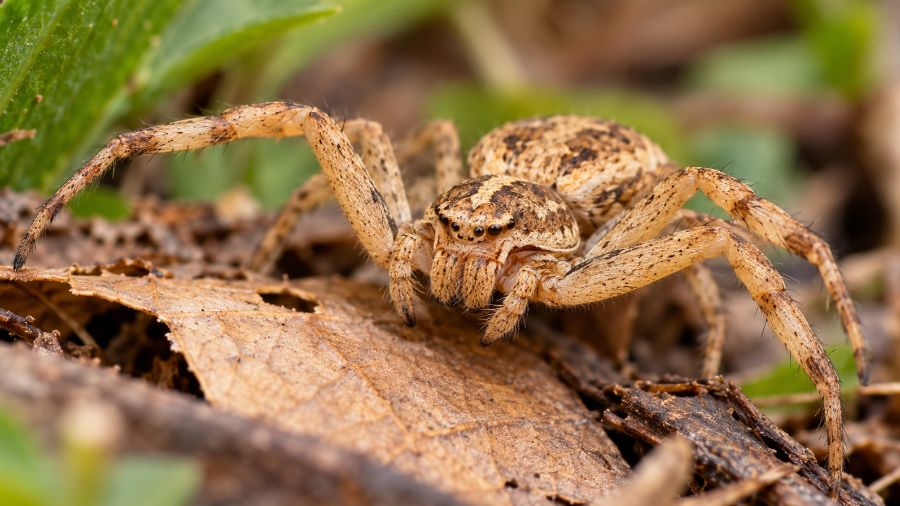
Tan Crab is a name commonly associated with the tan crab spider, scientifically identified as Xysticus ferox, a small hunting spider belonging to the family Thomisidae. Despite its name, this creature is not an actual crab but an arachnid recognised for its crab-like appearance, sideways movements, and ability to capture insects without building traditional prey-catching webs. Its brownish and tan colouring helps it blend into natural surroundings, making it difficult to notice among leaves, soil, grass, and other ground-level habitats. Understanding the tan crab spider provides an interesting look at spider identification, hunting behaviour, natural habitats, reproduction, and its role in controlling insect populations.
What Is a Tan Crab?
The tan crab commonly refers to the tan crab spider, Xysticus ferox, also known as the brown crab spider or a ground crab spider. It belongs to the family Thomisidae, a group of spiders recognised for their distinctive body shapes and crab-like movements. Unlike marine crabs, which are crustaceans, this animal has eight legs, two main body sections, and no antennae. Its scientific classification places it within the order Araneae, which includes all true spiders. The name tan crab describes its appearance rather than a separate crab species. Its natural colouring and compact body help it remain concealed while waiting for small insects and other suitable prey to approach.
Scientific Classification of the Tan Crab Spider
The tan crab spider belongs to the animal kingdom and is classified within the arachnid group. Its scientific name, Xysticus ferox, distinguishes it from other members of the same genus and the wider crab spider family. Scientific classification is important because several unrelated-looking spiders share the common name ground crab spider, while different crab species may also have tan or brown colouring. The accepted scientific name is particularly useful when researching its distribution, identification, and biological characteristics.
The classification of this species follows the established taxonomic system used by arachnologists and scientific catalogues. It belongs to the genus Xysticus, which contains numerous ground-dwelling crab spider species. The World Spider Catalog recognises Xysticus ferox as an accepted species and records its distribution across Alaska, Canada, and the United States. This scientific identification helps distinguish it from other similarly coloured spiders.
Physical Appearance and Identifying Features
The tan crab spider has a relatively small, flattened body, sideways-oriented legs, and natural brown or tan colouring. These features give it a crab-like appearance, particularly when viewed from above. Its body is designed for moving across surfaces and gripping prey rather than constructing large webs. Although its overall colour can make it difficult to distinguish from other ground spiders, its body structure and characteristic markings provide useful identification clues.
Body Shape and Colour
The body of Xysticus ferox is generally brownish, tan, or muted in colour, allowing it to blend into soil, dead vegetation, and other natural surfaces. Its flattened appearance helps it move through narrow spaces beneath leaves and other ground cover. Darker markings on the upper body can also contribute to its identification. However, colour alone is not a reliable way to identify this species because other crab spiders can have similar shades and patterns. Proper identification requires examining several physical characteristics rather than relying on one colour description.
Legs and Movement
One of the most noticeable features of a tan crab spider is the way its legs extend sideways from its body. This arrangement resembles the walking posture of a crab and gives the spider considerable flexibility when moving across surfaces. Its front legs are particularly useful for holding and controlling prey. The spider can move sideways as well as forwards and backwards, making it effective at navigating vegetation and uneven ground. These movements explain why crab spiders have received their common name.
Eyes and Body Structure
Like other true spiders, the tan crab spider has eight eyes arranged in a pattern characteristic of its group. Its body consists of a cephalothorax, which combines the head and thorax, and an abdomen. It also possesses specialised mouthparts called chelicerae, which contain the structures used to deliver venom during prey capture. Its sensory hairs help detect movement and vibrations in the surrounding environment. These adaptations support its hunting lifestyle and help it respond quickly when potential prey approaches.
Size Differences Between Males and Females
Male and female tan crab spiders are relatively small, although females are generally larger than males in this species. The North Carolina spider identification database records adult females at approximately 6–7 millimetres in total body length, while males measure around 5–6 millimetres. These measurements exclude the legs. Individual size can vary, and immature spiders may look different from fully developed adults. Because the species is small, observing its detailed physical features often requires close examination or magnification.
Natural Habitat of the Tan Crab Spider
The tan crab spider is associated with terrestrial environments where it can find shelter, suitable hunting surfaces, and access to small insects. Members of the genus Xysticus commonly inhabit areas close to the ground, including leaf litter, grasses, vegetation, and spaces beneath rocks or fallen wood. These environments provide natural camouflage and opportunities to ambush passing prey. The spider does not depend on a permanent web to survive, so it can occupy different ground-level locations depending on available food and shelter.
Ground-Level Environments
Ground-level habitats are particularly important for ground crab spiders because they provide numerous places to hide and hunt. Fallen leaves, loose soil, decaying vegetation, and small gaps beneath stones create useful shelter. Their flattened bodies and subdued colours help them remain concealed in these surroundings. This camouflage reduces the likelihood of detection by predators and allows them to wait for insects to move within striking distance.
Gardens and Outdoor Spaces
Crab spiders belonging to the genus Xysticus can also occur in gardens, fields, and other outdoor spaces where insects are available. They may be encountered near low-growing plants, fences, buildings, and areas containing leaf litter. However, finding a tan-coloured crab spider in a garden does not automatically establish that it is Xysticus ferox. Several related species share similar appearances, so careful identification is necessary before assigning a scientific name.
Geographic Distribution
According to the World Spider Catalog, Xysticus ferox has a recorded distribution covering Alaska, Canada, and the United States. Regional records provide additional information about its occurrence in different parts of North America. For example, North Carolina’s official arachnid identification database records the species across a broad geographical range extending from Alaska and Nova Scotia southward into parts of the United States. Its distribution should not be confused with that of all tan-coloured crab spiders, which belong to several different species.
What Does the Tan Crab Spider Eat?
The tan crab spider is a carnivorous predator that primarily feeds on small insects and other spiders. Instead of building a large web to trap flying insects, it relies on camouflage, patience, and quick movements to catch prey. Its hunting strategy allows it to remain close to the ground or among vegetation while waiting for a suitable target. Once an insect approaches, the spider uses its front legs to grab it and its venom to subdue it. This feeding behaviour makes ground crab spiders useful predators in many natural environments.
Common Prey
Small insects and other arthropods make up an important part of the diet of ground crab spiders. Depending on the available food, potential prey can include flies, small beetles, insect larvae, and other spiders. The precise diet of an individual Xysticus ferox depends on its size, habitat, and the organisms available nearby. It generally targets animals that it can successfully capture and overpower.
How It Captures Prey
The spider uses an ambush-based hunting strategy rather than depending on a conventional prey-catching web. It remains relatively still while its natural colouring helps conceal its presence. When an insect moves close enough, the spider rapidly extends its legs and grabs the target. It then uses its chelicerae to bite and introduce venom, helping immobilise the prey. This method reduces the need for constant movement and makes effective use of the spider’s camouflage and specialised front legs.
Role in Natural Pest Control
By feeding on insects and other small arthropods, the tan crab spider contributes to the regulation of invertebrate populations. Its presence in gardens, grasslands, and other natural habitats forms part of a wider ecological system involving predators and prey. However, it should not be described as a specialised pest-control species because its diet is opportunistic. It captures suitable prey rather than targeting only insects considered harmful to people or plants.
Hunting Behaviour and Survival Strategies
The tan crab spider has several adaptations that help it survive without relying on a traditional web. Its most important hunting advantages include camouflage, patience, flexible movement, and strong front legs. These characteristics allow it to remain close to potential prey while reducing unnecessary exposure to predators. Its behaviour is particularly suited to environments containing vegetation, leaf litter, and other surfaces where small insects regularly move.
Ambush Hunting
Ambush hunting involves waiting for prey instead of actively pursuing it over long distances. The tan crab spider uses this approach by positioning itself in a suitable location and remaining relatively motionless. Its natural colouring makes it less noticeable against brown and tan backgrounds. When prey approaches, it can respond quickly and use its front legs to secure the target. This approach is energy-efficient compared with continuously searching for food.
Camouflage and Concealment
Camouflage is an important survival feature for small ground-dwelling spiders. Tan and brown shades can help the spider blend into dry leaves, soil, bark, and other natural materials. Its flattened body also allows it to remain close to surfaces and hide in narrow spaces. However, camouflage does not make the spider completely invisible. Birds, larger spiders, insects, and other predators may still detect it through movement or other sensory cues.
Avoiding Predators
Like other small spiders, Xysticus ferox faces threats from larger predators and environmental conditions. Its first line of defence is often avoiding detection by remaining still or moving into sheltered spaces. Its small size allows it to hide beneath vegetation and other ground cover. If disturbed, it may attempt to escape rather than confront a much larger animal. These behaviours help improve its chances of survival in environments where it must compete with other small predators.
Reproduction and Life Cycle
The tan crab spider follows the general reproductive pattern of true spiders, although detailed species-specific information about every stage of its life cycle is limited. Like other members of its family, reproduction involves mating between adult males and females, followed by egg production. Female spiders protect their developing offspring by placing eggs inside a silk egg sac. The young spiders eventually emerge and develop through successive growth stages before reaching adulthood.
Mating Behaviour
Adult male and female spiders must locate one another during the reproductive period. Males use sensory information and movement to identify potential mates. Spider mating behaviour can involve specialised courtship movements that help reduce the risk of being mistaken for prey. The exact courtship sequence of Xysticus ferox should not be assumed to match every other crab spider species because reproductive behaviour can vary within the family.
Egg Production and Protection
After successful mating, a female spider produces eggs that develop inside a protective silk structure. The egg sac provides a degree of physical protection against environmental conditions and potential predators. Female spiders in many crab spider groups guard their egg sacs, although the precise details of parental care can differ between species. The eggs eventually hatch, producing small spiderlings that resemble miniature versions of the adults.
Spiderling Development
Young spiders grow through a process called moulting, during which they shed their external covering as their bodies increase in size. This process is necessary because a spider’s rigid outer covering does not expand continuously like the soft tissues inside its body. Spiderlings gradually develop the physical characteristics needed for independent hunting and reproduction. Their early survival depends on suitable environmental conditions, access to prey, and avoiding predators.
Is the Tan Crab Spider Dangerous to Humans?
The tan crab spider is not generally considered dangerous to humans. Like other spiders, it possesses venom that helps it subdue prey, but this does not mean it presents a significant medical threat to people. Its small size and hunting behaviour make human encounters largely incidental. It generally has no reason to approach or attack humans, and it is more likely to retreat when disturbed. As with other spiders, handling it unnecessarily is best avoided.
Can It Bite Humans?
A tan crab spider may bite if it is trapped against the skin or handled roughly. However, spiders generally use their venom to capture prey rather than defend themselves against large animals. A bite from a small crab spider would not normally be expected to cause serious harm to a healthy adult. Individual reactions can vary, and the exact spider species should be confirmed before making assumptions about the potential effects of a bite.
Possible Bite Symptoms
A spider bite, when it occurs, may cause local discomfort, redness, itching, or mild swelling. These symptoms are not specific to spider bites and can also result from other insect bites or skin irritation. A serious reaction should not automatically be attributed to a tan crab spider without proper medical assessment. Anyone experiencing severe pain, spreading swelling, breathing difficulty, or signs of an allergic reaction should seek appropriate medical attention.
Should You Remove It From Your Home?
If a small crab spider appears indoors, there is usually no need to panic. It can be carefully relocated outdoors using a container and a piece of stiff paper, provided it can be handled safely without direct contact. Removing unnecessary clutter and reducing the number of insects around indoor spaces may also discourage spiders from entering. Avoid crushing or handling unfamiliar spiders with bare hands, particularly when their identification is uncertain.
Difference Between a Tan Crab Spider and a Real Crab
One of the most important points about the tan crab is that the name can create confusion between spiders and actual crabs. Although both animals may have sideways-oriented legs and a somewhat similar appearance, they belong to completely different biological groups. A tan crab spider is an arachnid, while a true crab is a crustacean. Understanding this distinction helps prevent incorrect information when researching the animal.
Biological Classification
The tan crab spider belongs to the class Arachnida, which also includes scorpions, ticks, and mites. Real crabs belong to the class Malacostraca within the subphylum Crustacea. These animals have different body structures, developmental patterns, and evolutionary histories. Spiders possess eight legs and two principal body sections, whereas true crabs generally have ten legs, including their front claws.
Physical Differences
A tan crab spider has a small body, eight legs, and no large external claws like those of a typical marine crab. A real crab usually has a broad shell, a pair of pincers, and four pairs of walking legs. Crabs also possess gills and are commonly associated with aquatic or semi-aquatic habitats, although some species live primarily on land. The spider, by comparison, breathes through specialised respiratory structures and belongs to an entirely different animal group.
Habitat Differences
The tan crab spider lives in terrestrial environments such as fields, gardens, forests, and areas containing ground vegetation. Real crabs occupy a much wider variety of habitats, including oceans, freshwater environments, beaches, and mangrove ecosystems. Some crab species also live on land for much of their lives. Therefore, the word crab in the spider’s common name refers to its appearance and movement rather than its natural habitat or biological classification.
Ecological Importance of the Tan Crab Spider
The tan crab spider contributes to the ecological balance of its environment through its role as a small predator. By feeding on insects and other spiders, it participates in natural food webs and influences the movement of energy between different organisms. It also serves as potential prey for larger animals, making it part of a broader ecological network. Although it is small and often overlooked, its presence represents one of the many interactions that help maintain biodiversity in terrestrial habitats.
Contribution to Biodiversity
Biodiversity includes the variety of living organisms found within an ecosystem, from plants and insects to larger predators. Ground crab spiders add to this diversity by occupying a specialised position among small terrestrial hunters. Different species may prefer different microhabitats, prey types, and environmental conditions. Their presence contributes to the complexity of natural communities and demonstrates how even small organisms have ecological roles.
Natural Predator-Prey Relationships
The tan crab spider participates in predator-prey relationships by capturing insects and other small arthropods. At the same time, it can become food for birds, larger spiders, and other predators. These interactions help regulate populations and maintain ecological connections between organisms. Changes in habitat quality, food availability, and environmental conditions can influence the survival of individual spiders and the wider communities in which they live.
Why Its Habitat Matters
Ground vegetation, leaf litter, and natural hiding places provide important resources for many small predators. Removing excessive vegetation or disturbing soil can affect the availability of shelter and prey for ground-dwelling spiders. Maintaining varied outdoor habitats supports many invertebrates, including spiders that contribute to natural insect regulation. Protecting these environments is useful not only for the tan crab spider but also for numerous other organisms that depend on similar conditions.
Common Misconceptions About the Tan Crab
The tan crab spider is sometimes misunderstood because its common name includes the word crab. This can lead people to assume that it is a marine animal, a type of crustacean, or a species that lives near the ocean. In reality, Xysticus ferox is a true spider with a terrestrial lifestyle. Another misconception is that every brown or tan crab-like spider belongs to this species. Several members of the family Thomisidae share similar physical characteristics, making scientific identification important.
It is also incorrect to assume that every spider uses a web to capture food. The tan crab spider is an ambush predator, meaning it catches prey through direct physical action rather than depending on a conventional trapping web. Finally, its venom should not automatically be considered dangerous to humans. Venom is a normal biological adaptation used by spiders to subdue prey, and the presence of venom alone does not establish that a species poses a serious medical risk.
Conservation and Environmental Considerations
The tan crab spider depends on suitable habitats, available prey, and environmental conditions that support its survival. Although there is no reason to assume that this particular species faces a major conservation crisis, habitat disturbance can affect ground-dwelling spiders generally. Excessive pesticide use, vegetation removal, and destruction of natural ground cover may reduce the number of suitable places where these animals can hunt and reproduce. Maintaining diverse outdoor environments can help support local spider populations and the wider invertebrate communities that depend on them.
Conservation assessments should always be based on reliable species-specific evidence rather than general assumptions about all crab spiders. The availability of distribution records does not necessarily establish population size, long-term stability, or conservation status. Researchers need additional ecological observations and population studies to understand how particular species respond to environmental changes. Responsible habitat management remains a useful approach for protecting small predators and preserving terrestrial biodiversity.
Conclusion
The tan crab is commonly associated with the tan crab spider, Xysticus ferox, a small ground-dwelling predator recognised for its crab-like appearance, brownish colouring, and ambush hunting behaviour. Despite its name, it is a true spider rather than a marine crab, and its natural habitat includes terrestrial environments across North America. Its ability to capture insects, remain concealed, and adapt to ground-level surroundings makes it an interesting member of the Thomisidae family. Learning about its identification, diet, reproduction, and ecological importance helps distinguish it from similar spiders while providing a better understanding of the role small predators play in maintaining healthy natural ecosystems.
Also read: Gastrosophisch: Exploring the Philosophy, Wisdom, and Culture of Food
FAQs
1. Is a tan crab a real crab or a spider?
The tan crab commonly refers to Xysticus ferox, a true spider belonging to the Thomisidae family, rather than an actual marine or freshwater crab.
2. What is the scientific name of the tan crab spider?
The scientific name is Xysticus ferox, an accepted species classified within the genus Xysticus and the spider family Thomisidae.
3. Where does the tan crab spider live?
The tan crab spider is recorded across Alaska, Canada, and the United States, inhabiting ground-level environments and suitable natural vegetation.
4. What does a tan crab spider eat?
It primarily eats small insects and other spiders, capturing suitable prey through ambush hunting rather than relying on conventional insect-catching webs.
5. Is the tan crab spider poisonous to humans?
It possesses venom for capturing prey, but it is not generally considered dangerous to humans. Avoid handling unfamiliar spiders unnecessarily.
6. Why is it called a tan crab spider?
Its common name describes its tan or brownish appearance and sideways leg positioning, which resemble the movements and posture of an actual crab.