
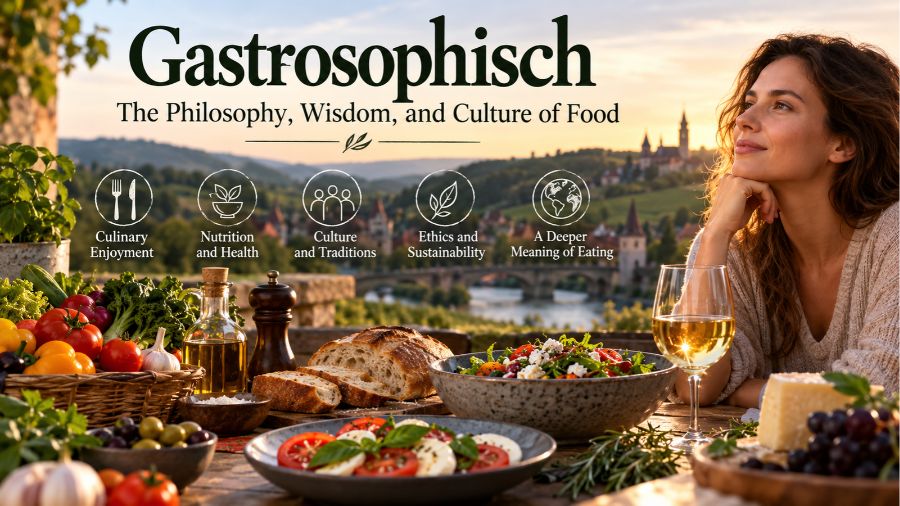
What Does Gastrosophisch Mean?
Gastrosophisch is a German-language adjective derived from the noun Gastrosophie. The term relates to the thoughtful and philosophical understanding of food, eating habits, and culinary experiences. Its meaning extends beyond conventional gastronomy because it considers not only how meals are prepared or served but also why people eat particular foods, how eating influences society, and what responsibilities come with producing and consuming food. In English, it can be understood through expressions such as gastrosophical, food philosophy, or the wisdom of eating. The word is associated with a broader intellectual approach that connects culinary pleasure with knowledge, health, cultural awareness, and ethical decision-making.
Understanding Gastrosophie and Its Connection to Gastrosophisch
Gastrosophie provides the conceptual foundation for understanding the adjective gastrosophisch. The word combines the Greek roots associated with the stomach and wisdom, suggesting a thoughtful approach to nourishment and culinary enjoyment. Rather than treating food exclusively as a biological necessity or commercial product, Gastrosophie examines eating as a complex human activity. It considers the relationship between ingredients, preparation, taste, traditions, social environments, and individual well-being. Consequently, something described as gastrosophisch may involve a thoughtful food culture, responsible culinary choices, or a philosophical discussion about eating. The concept brings together ideas from philosophy, cultural studies, nutrition, history, sociology, and gastronomy without being limited to one academic discipline.
The Historical Background of Gastrosophie
The history of Gastrosophie reflects the gradual recognition that eating deserves intellectual and cultural attention. One important historical reference is the German writer Baron Eugen von Vaerst, whose 1851 book Gastrosophie oder die Lehre von den Freuden der Tafel explored the pleasures of dining and the qualities of a thoughtful food enthusiast. His work helped establish the term within German culinary literature by presenting eating as an art that involves judgment, enjoyment, and consideration of personal well-being. Earlier European thinkers also explored relationships between taste, pleasure, digestion, and human behavior. Over time, these discussions developed into broader conversations about food ethics, culinary traditions, and the social importance of nourishment.
The Influence of Nineteenth-Century Food Philosophy
Nineteenth-century culinary writing helped connect gastrosophical thinking with the intellectual appreciation of dining. Writers and food enthusiasts increasingly discussed the relationship between ingredients, preparation techniques, table manners, and the enjoyment of meals. Rather than judging a dish only by how much food it provided, this perspective encouraged attention to quality, presentation, balance, and the circumstances surrounding a meal. Eugen von Vaerst’s historical contribution is particularly relevant because his work distinguished different approaches to food enjoyment and described the gastrosoph as someone who combines culinary appreciation with thoughtful selection.
Modern Interpretations of Gastrosophie
Modern interpretations have expanded the concept considerably. Gastrosophie now provides a framework for examining food through cultural studies, philosophy, nutrition, environmental awareness, economics, and social research. Contemporary discussions consider everything from agricultural production and food distribution to restaurant experiences, consumer behavior, and the future of sustainable diets. The German-language adjective gastrosophisch can therefore describe ideas or practices that examine eating from several connected perspectives rather than focusing exclusively on cooking or taste.
The Main Principles Behind a Gastrosophisch Approach
A gastrosophisch approach is based on the idea that meaningful food experiences involve more than satisfying hunger. It encourages people to consider the origins of ingredients, nutritional qualities, cultural significance, environmental consequences, and enjoyment associated with meals. These considerations do not require expensive restaurants, complicated recipes, or specialist culinary knowledge. A simple homemade meal can reflect gastrosophical thinking when someone appreciates its ingredients, preparation, cultural background, and contribution to everyday well-being. The central principle is to approach food with curiosity, awareness, and a balanced understanding of its wider importance.
Food Quality and Culinary Enjoyment
Food quality is an important element of gastrosophical thinking because the experience of eating depends on several characteristics working together. Freshness, aroma, texture, flavor, ingredient quality, and preparation methods can influence how people experience a meal. Culinary enjoyment also depends on personal preferences and cultural backgrounds, meaning that the same dish may create different experiences for different individuals. A gastrosophisch perspective recognizes these differences instead of treating expensive ingredients or complicated presentation as universal measures of quality. It values thoughtful preparation and enjoyable eating experiences while recognizing that good food can be simple, accessible, and deeply connected to everyday traditions.
Nutrition and Personal Well-Being
Nutrition introduces another important dimension by connecting culinary enjoyment with the body’s requirements. Food provides energy and nutrients, while eating patterns influence overall health and daily functioning. A thoughtful approach considers variety, portion sizes, food composition, and individual nutritional needs without turning every meal into a restrictive calculation. Gastrosophical thinking does not replace evidence-based nutrition science or medical dietary advice. Instead, it encourages a wider appreciation of how nutritional knowledge can coexist with flavor, satisfaction, cultural preferences, and practical eating habits. This distinction is important because enjoying food and making informed nutritional choices do not have to be opposing goals.
Cultural Awareness and Food Traditions
Food is closely connected to cultural identity, family traditions, regional history, and social relationships. Recipes often pass between generations, preserving memories and reflecting the ingredients available in particular locations. A gastrosophisch perspective recognizes that traditional dishes carry meanings that extend beyond their nutritional composition. For example, a family meal during a religious celebration may represent hospitality, belonging, and shared identity as much as culinary enjoyment. Studying these traditions helps explain why food practices differ across communities and why preserving regional culinary knowledge can contribute to cultural understanding.
Ethical and Environmental Responsibility
Ethical awareness encourages people to examine how food production affects animals, workers, communities, and natural resources. Agricultural practices, transportation, packaging, food waste, and consumer demand all influence the wider food system. A gastrosophisch approach brings these considerations into discussions about everyday eating without assuming that every consumer has identical financial resources or access to alternatives. It encourages informed decisions and recognizes the importance of responsible production, fair working conditions, animal welfare, and environmental protection. This broader perspective makes food choices part of a larger conversation about how societies use resources and organize their food systems.
How Gastrosophisch Thinking Differs From Traditional Gastronomy
Gastrosophie and gastronomy are closely related, but they do not emphasize exactly the same questions. Gastronomy commonly focuses on culinary arts, food preparation, dining experiences, ingredients, and the appreciation of good food. Gastrosophie takes a broader philosophical approach by examining the meaning and consequences of eating within human society. It asks questions about where ingredients originate, how food traditions develop, why people prefer particular flavors, and what responsibilities accompany food production and consumption. The distinction is not absolute because modern gastronomy also considers culture, sustainability, and nutrition. However, gastrosophisch thinking places particular emphasis on connecting these subjects through reflection and interdisciplinary understanding.
Gastrosophisch Versus Gastronomisch
The German word gastronomisch generally relates to gastronomy, culinary establishments, food preparation, and dining experiences. The adjective gastrosophisch, by comparison, describes something associated with the wisdom or thoughtful enjoyment of eating. A gastronomic discussion might examine the ingredients, techniques, and presentation of a restaurant dish, whereas a gastrosophical discussion could also explore its cultural origins, nutritional qualities, environmental impact, and social meaning. Both perspectives value food, but the second explicitly encourages a wider examination of its place in human life.
Gastrosophisch Versus Nutritional Science
Nutritional science investigates how nutrients, dietary patterns, and food components interact with the human body. It uses scientific methods to examine subjects such as metabolism, deficiencies, dietary requirements, and relationships between eating patterns and health outcomes. Gastrosophisch thinking incorporates an interest in nutrition but also considers cultural traditions, pleasure, ethics, and the social organization of food. The two perspectives can complement one another, although they should not be confused. Nutritional recommendations require appropriate scientific evidence, while philosophical reflections help people consider the wider meaning and consequences of their eating habits.
The Role of Gastrosophisch Thinking in Everyday Life
Gastrosophisch thinking can be applied to ordinary meals without requiring major lifestyle changes. It begins with paying attention to what people eat, where their ingredients come from, how meals are prepared, and what experiences accompany eating. Someone preparing vegetables from a local market, learning a traditional family recipe, or choosing ingredients with less unnecessary packaging may be applying elements of this approach. It also encourages people to slow down, appreciate flavors, and understand how food connects them with other people. The value lies in developing a more conscious relationship with everyday nourishment rather than following a rigid set of culinary rules.
Making More Thoughtful Food Choices
Thoughtful food choices involve considering several factors before purchasing or preparing ingredients. Consumers may examine freshness, seasonal availability, nutritional composition, price, production methods, and packaging. These considerations can help people understand the consequences of their decisions and identify options that suit their circumstances. However, responsible eating should remain realistic because income, location, availability, allergies, and personal dietary requirements influence what individuals can choose. A gastrosophisch perspective does not suggest that everyone must purchase premium organic products or prepare elaborate meals. Instead, it emphasizes making informed decisions within practical limitations.
Appreciating Meals Through the Senses
Eating involves more than the sense of taste. Aroma, texture, appearance, temperature, and even the sounds associated with food can influence the overall dining experience. Paying attention to these qualities can make familiar meals more interesting and encourage a deeper appreciation of culinary preparation. For instance, the crisp texture of fresh vegetables, the aroma of traditional spices, and the contrast between different ingredients contribute to the character of a dish. A gastrosophisch perspective treats these sensory experiences as meaningful parts of eating rather than insignificant details.
Strengthening Social Connections Through Food
Shared meals have an important place in family life, friendships, hospitality, and community celebrations. Preparing and eating food together creates opportunities for conversation, cultural exchange, and cooperation. A gastrosophisch approach recognizes that the meaning of a meal often depends on the people involved and the traditions surrounding it. A modest home-cooked dinner shared with family may provide a stronger sense of connection than an expensive restaurant experience. This social dimension demonstrates why food should not be understood exclusively through individual taste preferences or nutritional measurements.
Gastrosophisch Thinking Across Different Industries
The influence of gastrosophisch ideas extends beyond individual eating habits into industries involved in food production, distribution, hospitality, education, and communication. Food businesses increasingly operate within discussions about ingredient sourcing, consumer expectations, environmental responsibility, cultural identity, and product quality. Restaurants, agricultural organizations, food manufacturers, and educational institutions can all benefit from understanding these connections. Although gastrosophie is not a single standardized professional discipline, its interdisciplinary perspective provides a useful way to examine the relationships between culinary practices and wider economic and social systems.
Restaurants and Hospitality
Restaurants provide a natural setting for applying gastrosophisch principles because their work involves ingredients, preparation, service, atmosphere, and customer experiences. A restaurant can reflect this approach by paying attention to ingredient origins, preserving regional recipes, reducing unnecessary waste, and explaining the cultural background of selected dishes. Hospitality also involves creating welcoming environments where people can enjoy meals and share experiences. These elements demonstrate that dining quality depends on more than presentation or price. Thoughtful hospitality connects culinary skills with cultural understanding, responsible sourcing, and genuine attention to the dining experience.
Agriculture and Food Production
Agriculture is an essential part of gastrosophical discussion because the quality and availability of food depend on production systems. Farming methods influence soil conditions, biodiversity, water use, animal welfare, and the characteristics of agricultural products. Understanding these relationships helps consumers recognize that food begins long before it reaches a supermarket or restaurant. A gastrosophisch perspective encourages discussion about seasonal ingredients, responsible resource management, local food traditions, and the economic conditions affecting agricultural communities. It also highlights the importance of balancing environmental objectives with food affordability and reliable production.
Food Education and Culinary Communication
Education can introduce gastrosophical ideas by helping students understand the connections between cooking, nutrition, history, culture, and sustainability. Culinary schools may explore ingredient knowledge and traditional preparation techniques, while broader educational programs can examine food systems and consumer behavior. Journalism, documentaries, cookbooks, and digital publications also contribute by explaining where food comes from and how culinary practices develop. Clear communication is particularly valuable because many people encounter conflicting information about nutrition and sustainability. A balanced gastrosophisch approach encourages curiosity, critical thinking, and a distinction between established evidence and personal opinions.
Benefits of Applying a Gastrosophisch Perspective
A gastrosophisch perspective offers several benefits because it encourages a more complete understanding of food and its place in everyday life. It can improve awareness of ingredient quality, encourage appreciation of cultural traditions, support more informed purchasing decisions, and create opportunities for meaningful social experiences. It also helps people recognize connections between personal eating habits and wider environmental or economic issues. However, these benefits depend on how the principles are applied. Gastrosophie is best understood as an approach to thinking about food rather than a guaranteed method for improving health, reducing expenses, or solving environmental problems.
Challenges and Limitations of Gastrosophie
Despite its broad intellectual appeal, Gastrosophie faces challenges when philosophical ideas are translated into everyday decisions. Food choices are influenced by income, geography, time, availability, cultural expectations, and individual health requirements. Not everyone has equal access to fresh ingredients or the resources needed to prioritize particular production methods. Another limitation is that Gastrosophie does not have one universally accepted academic definition or a standardized scientific methodology. Its interdisciplinary nature can make the concept difficult to measure or distinguish from gastronomy, food studies, and nutritional research. Therefore, its ideas are most useful when supported by reliable evidence and realistic expectations rather than presented as universal rules.
Accessibility and Economic Differences
One important challenge involves making thoughtful food choices accessible to different income groups. Premium ingredients, specialty products, and certain sustainable alternatives can cost more than conventional options. Promoting an ideal food culture without considering affordability risks excluding people who face financial limitations. A practical gastrosophisch approach recognizes these differences and values accessible ingredients, home cooking, seasonal choices, and traditional recipes. It also considers the responsibilities of businesses and policymakers in improving food availability. Meaningful food awareness should encourage better understanding without making people feel that expensive purchasing decisions are necessary for responsible eating.
Balancing Culinary Pleasure and Health
Another challenge is finding a sensible balance between enjoyment and nutritional considerations. Some discussions about food place excessive emphasis on indulgence, while others focus so heavily on restriction that eating becomes associated with guilt. Gastrosophisch thinking offers an opportunity to consider both perspectives without treating them as incompatible. People can appreciate flavors and culinary traditions while also following dietary guidance appropriate to their circumstances. However, philosophical appreciation should never replace medical advice or evidence-based nutrition, particularly when someone has a diagnosed condition or specific dietary requirements.
The Future of Gastrosophisch Thinking
The future of gastrosophisch thinking is closely connected to changing attitudes toward food, environmental responsibility, technology, and cultural preservation. Consumers increasingly encounter questions about ingredient transparency, food waste, agricultural sustainability, and the origins of everyday products. These developments create opportunities for a broader philosophy of eating that considers individual experiences alongside the consequences of food production and consumption. Digital platforms, food research, culinary education, and international cultural exchange may also expand public discussions about eating. Nevertheless, Gastrosophie will remain most useful when it combines philosophical reflection with reliable scientific knowledge, practical understanding, and respect for different food traditions.
Technology and Changing Food Experiences
Technology is changing how food is produced, purchased, prepared, and discussed. Online grocery services, agricultural monitoring systems, food traceability platforms, and digital restaurant services influence the relationship between consumers and food businesses. Food technology can also support research into alternative ingredients, preservation methods, and production efficiency. From a gastrosophisch perspective, these developments raise important questions about convenience, transparency, accessibility, and the preservation of traditional culinary knowledge. Technology should be evaluated not only through efficiency but also through its effects on food quality, consumer choices, and society.
Sustainability and the Global Food System
Sustainability is likely to remain an important part of future gastrosophical discussions because food systems depend on natural resources and interconnected international supply chains. Agricultural production, food transportation, packaging, and waste management all create environmental considerations. A thoughtful approach examines these factors while recognizing the importance of food security, affordability, and farmers’ livelihoods. It also encourages discussion about seasonal production, responsible consumption, and reducing avoidable waste. Rather than promoting one universal dietary model, Gastrosophie provides a framework for understanding the complex decisions involved in building more responsible food systems.
Conclusion
Gastrosophisch is a meaningful German adjective associated with the philosophy and wisdom of eating. Rooted in Gastrosophie, it describes an approach that connects culinary enjoyment with nutrition, cultural traditions, ethics, sustainability, and social understanding. Its significance lies in recognizing that food is much more than a basic requirement for survival. It influences personal experiences, family relationships, economic systems, and cultural identities. Although Gastrosophie is not a standardized scientific discipline, its interdisciplinary perspective provides valuable ways to examine modern food culture. Understanding gastrosophisch thinking encourages a more thoughtful relationship with food, combining enjoyment with awareness, knowledge, and responsibility.
Also read: Pappedeckel Explained: Meaning, Uses, Origins, and German Variations
FAQs
1. What does gastrosophisch mean in English?
Gastrosophisch translates approximately as gastrosophical, describing something connected with the philosophy, wisdom, thoughtful enjoyment, and cultural understanding of food.
2. Is gastrosophisch a German word?
Yes, gastrosophisch is a recognized German adjective listed in Duden, where it refers to enjoying the pleasures of dining thoughtfully.
3. What is the difference between Gastrosophie and gastronomy?
Gastrosophie explores the philosophical, cultural, ethical, and social dimensions of eating, while gastronomy primarily concerns culinary arts and food enjoyment.
4. Who introduced the concept of Gastrosophie?
Baron Eugen von Vaerst popularized the term through his 1851 book about dining pleasures, while later thinkers expanded its philosophical interpretations.
5. Is Gastrosophie an academic discipline?
Gastrosophie is an interdisciplinary field of study rather than a universally standardized scientific discipline, drawing ideas from philosophy, nutrition, sociology, and cultural studies.
6. How can someone practice gastrosophisch thinking?
People can practice gastrosophisch thinking by appreciating food traditions, understanding ingredient origins, considering nutrition, reducing unnecessary waste, and making informed culinary choices.