
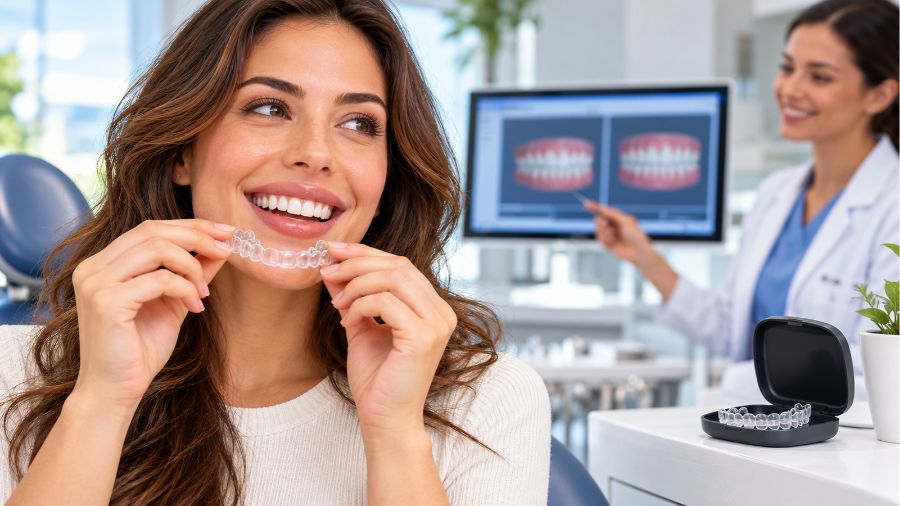
Clear Aligners Near Me is a popular search for people in the United States who want straighter teeth without the noticeable appearance of traditional metal braces. Whether you are dealing with crowded teeth, unwanted gaps, or minor bite problems, clear aligners offer a discreet and removable orthodontic treatment option. Finding the right provider nearby is just as important as choosing the aligner brand because successful treatment depends on an accurate dental assessment, a personalized treatment plan, and professional monitoring. This guide explains how clear aligners work, what they cost, how to compare local dentists and orthodontists, and what to consider before starting treatment.
What Are Clear Aligners?
Clear aligners are custom-made, transparent plastic trays designed to gradually move teeth into better positions. Unlike traditional braces, which use brackets and wires attached to the teeth, these removable trays fit over the upper and lower teeth and apply controlled pressure to specific areas. Each aligner in a treatment series makes small adjustments, gradually working toward the desired alignment. Clear aligners are commonly used to address crowded teeth, spacing problems, crooked teeth, and certain bite irregularities. They are popular among adults and teenagers who prefer a less noticeable alternative to conventional braces. However, treatment suitability depends on the patient’s dental condition, gum health, bite, and the complexity of the required tooth movements.
Why Search for Clear Aligners Near Me?
Searching for a nearby clear aligner provider makes it easier to access consultations, dental examinations, treatment adjustments, and progress appointments. Although many orthodontic providers offer digital consultations and remote monitoring, orthodontic treatment still benefits from appropriate in-person professional care. A local dentist or orthodontist can examine your teeth, assess your bite, identify potential dental problems, and determine whether clear aligners are appropriate. Choosing a conveniently located practice can also make it easier to attend appointments consistently and address problems such as damaged trays, unexpected discomfort, or aligners that no longer fit correctly. Instead of selecting a provider solely because of an attractive online advertisement, compare qualifications, experience, treatment options, patient communication, and the availability of ongoing care.
How Do Clear Aligners Work?
Clear aligner treatment uses a planned sequence of removable trays to move teeth gradually. Before treatment begins, a dentist or orthodontist examines the patient’s mouth and creates a customized plan based on the desired tooth movements. Digital scans or traditional dental impressions may be used to create a three-dimensional representation of the teeth. Specialized treatment-planning software helps determine the intended movement for each stage, allowing a series of aligners to be manufactured for the individual patient.
Initial Dental Examination and Consultation
The first step is a comprehensive dental assessment. Your provider evaluates tooth alignment, bite relationships, gum health, existing dental restorations, and any other conditions that could affect orthodontic treatment. Dental X-rays may also be recommended when necessary to assess structures that cannot be evaluated through photographs or surface scans alone. This examination helps identify issues such as untreated cavities, gum disease, or other problems that should be addressed before moving teeth. The dentist or orthodontist then explains whether clear aligners are suitable and discusses alternative treatments if necessary.
Digital Scanning and Treatment Planning
After confirming that the patient is a suitable candidate, the dental professional may use an intraoral scanner to create a detailed digital model of the teeth. This information helps develop a treatment plan showing the intended movement of individual teeth throughout the process. Some providers offer a digital preview of the projected result, which can help patients understand the treatment goals. However, a computer-generated simulation represents a planned outcome rather than a guarantee of the final result. Actual tooth movement can vary depending on biological factors, treatment complexity, and patient compliance.
Receiving and Wearing Custom Aligners
Once the treatment plan is finalized, the custom aligners are manufactured and provided according to the treatment schedule. Patients generally wear each tray for a specified period before progressing to the next one. Many treatment plans require approximately 20 to 22 hours of daily wear, although the exact instructions depend on the provider and individual system. Aligners are removed for meals, beverages other than plain water, brushing, and flossing. Consistent use is essential because teeth cannot move according to the treatment plan when trays are regularly left out.
Progress Monitoring and Follow-Up Visits
Regular monitoring allows the dental professional to check whether the teeth are moving as expected. During follow-up appointments, the provider may examine aligner fit, assess bite changes, and determine whether adjustments are needed. Some patients require additional aligners, commonly called refinement trays, to address movements that have not progressed as planned. If an aligner becomes damaged, stops fitting properly, or causes unexpected problems, patients should contact their provider rather than independently changing the treatment sequence.
Which Dental Problems Can Clear Aligners Treat?
Clear aligners can address several common orthodontic concerns, although their suitability depends on the severity and nature of each condition. They are frequently used for mild to moderate alignment problems and selected bite irregularities. An orthodontist evaluates the entire bite rather than focusing exclusively on the appearance of the front teeth because proper tooth alignment involves how the upper and lower teeth meet.
Crowded and Crooked Teeth
Crowding occurs when there is insufficient space for all the teeth to sit comfortably in their intended positions. This can cause overlapping, twisting, or irregular alignment. Clear aligners may gradually reposition selected teeth and improve their arrangement when the case is suitable. Correcting crowding may also make certain areas easier to clean, although patients still need consistent brushing, flossing, and professional dental care.
Gaps Between Teeth
Spacing problems occur when noticeable gaps develop between individual teeth. These spaces may result from differences between tooth size and jaw dimensions, missing teeth, or other dental factors. Clear aligners can sometimes bring separated teeth closer together through planned movements. However, the dentist must identify the underlying cause of the spacing to determine whether orthodontic treatment alone is appropriate.
Overbite and Underbite
An overbite involves excessive vertical overlap of the upper front teeth over the lower front teeth, while an underbite occurs when the lower front teeth extend beyond the upper front teeth. Certain cases can be treated with clear aligners, sometimes alongside attachments or orthodontic elastics. More complex bite problems may require braces, combined orthodontic treatment, or other interventions depending on the underlying dental and skeletal relationship.
Crossbite and Open Bite
A crossbite occurs when some upper teeth sit inside the corresponding lower teeth instead of outside them. An open bite describes a situation where certain upper and lower teeth do not meet when the mouth closes. Clear aligners can help manage selected cases, but these conditions require careful diagnosis. Treatment decisions depend on the location, severity, and cause of the bite problem.
Benefits of Choosing Clear Aligners
One of the biggest advantages of clear aligners is their discreet appearance. Their transparent material makes them less noticeable than traditional metal braces, which can appeal to adults and teenagers concerned about their appearance at work, school, or social events. Their removable design also makes everyday eating and oral hygiene more convenient because patients can take them out when necessary. Unlike fixed braces, aligners do not have conventional brackets and wires that can break or irritate the inside of the mouth. Digital treatment planning can also help patients understand the intended stages of their orthodontic treatment. Nevertheless, these advantages do not mean clear aligners are automatically better than braces. The most appropriate option depends on the patient’s dental needs and ability to follow the treatment instructions.
Clear Aligners vs Traditional Braces
Clear aligners and traditional braces both aim to correct tooth alignment and improve bite relationships, but they use different methods. Aligners rely on removable plastic trays, whereas braces use brackets and wires attached to the teeth to apply controlled forces. Clear aligners are generally more discreet and allow patients to remove their appliances when eating and cleaning their teeth. Traditional braces remain useful for a wide range of orthodontic conditions, including some complicated tooth movements that may be less predictable with aligners. Braces also do not depend on patients remembering to put their appliances back in after meals. On the other hand, braces require additional attention when cleaning around brackets and wires. Your orthodontist can explain which approach is more suitable after evaluating your teeth, bite, and treatment goals.
How Much Do Clear Aligners Cost in the USA?
The cost of clear aligners in the United States varies according to treatment complexity, provider fees, geographic location, the brand used, and the length of treatment. A straightforward alignment case may cost considerably less than a complicated case involving significant bite correction or additional treatment stages. The quoted price may include consultations, digital scans, the initial aligner series, follow-up appointments, and some refinement trays, but inclusions differ between practices. Retainers, replacement trays, dental procedures required before treatment, and additional appointments may involve separate charges. Because there is no single price that applies to every patient, requesting an individualized written estimate is the most reliable way to understand the financial commitment.
Factors That Influence Treatment Pricing
Several factors affect the final cost of clear aligner treatment. The number and complexity of tooth movements can influence the amount of planning and the number of trays required. Provider experience, practice location, laboratory arrangements, and the aligner system selected may also affect pricing. Patients who need additional procedures, such as fillings or periodontal treatment, may have separate dental expenses before orthodontic treatment begins. Some practices provide payment plans, monthly installments, or financing options, although eligibility and terms vary.
Does Dental Insurance Cover Clear Aligners?
Some dental insurance plans in the United States include orthodontic benefits that may help cover a portion of clear aligner treatment. However, coverage depends on the specific policy, age restrictions, lifetime orthodontic maximums, waiting periods, and whether the selected provider or treatment system qualifies. Certain plans may apply similar benefits to clear aligners and traditional braces, while others have additional restrictions. Before beginning treatment, contact your insurance provider and request confirmation of orthodontic coverage, expected out-of-pocket expenses, and any documentation required from your dentist.
How to Find the Best Clear Aligner Provider Near You
Finding a reliable local provider requires more than searching for the closest dental office. You should look for a licensed dental professional who can assess your oral health, explain treatment limitations, and supervise the movement of your teeth throughout the process. Start by reviewing local dental practices and orthodontic clinics that specifically offer clear aligner treatment. Check their professional qualifications, patient reviews, consultation arrangements, and the availability of follow-up appointments. It is also helpful to compare more than one treatment plan when your dental condition allows it. A trustworthy provider should explain the expected results, possible complications, treatment duration, total cost, and alternative options without promising a perfect smile or guaranteed results.
Check Professional Qualifications and Experience
Before selecting a provider, verify that the dentist or orthodontist holds an active professional license in the state where treatment will be provided. You can use the relevant state dental board’s resources to check licensing information and disciplinary records where available. Consider whether the provider has appropriate orthodontic training and experience treating cases similar to yours. Board certification and specialist credentials can also be useful when comparing orthodontic practices. A qualified professional should be willing to discuss their approach to diagnosis, treatment planning, and managing complications.
Read Patient Reviews Carefully
Online reviews can provide useful information about communication, appointment scheduling, staff behavior, and overall patient satisfaction. Look for patterns across multiple independent review platforms rather than relying on one unusually positive or negative comment. Pay attention to feedback about follow-up care, unexpected costs, treatment delays, and how the practice responds when patients experience problems. Reviews cannot establish whether a particular clinical treatment plan is appropriate, but they can help you understand what to expect from the practice.
Compare Consultations and Treatment Plans
A consultation gives you an opportunity to ask questions and understand how a provider intends to manage your orthodontic needs. Compare the proposed treatment goals, expected duration, number of aligner stages, follow-up schedule, and whether refinement trays are included. Ask whether attachments, elastics, or other appliances might be necessary. A detailed explanation is more valuable than a quick sales presentation because orthodontic treatment should be based on clinical findings rather than a standard package offered to every patient.
Popular Clear Aligner Brands Available in the USA
Several companies manufacture clear aligner systems used by dental professionals in the United States. The available options differ in materials, treatment-planning technology, provider networks, and clinical protocols. Patients should understand that a familiar brand name does not independently establish that a treatment plan is appropriate. The dentist or orthodontist’s diagnosis, experience, and supervision remain important regardless of the product selected.
Invisalign
Invisalign is one of the best-known clear aligner brands. Its treatment system uses customized removable trays developed from digital treatment planning. Depending on the patient’s needs, treatment may involve attachments, elastics, and additional refinement aligners. Invisalign treatment is provided through participating dental professionals who assess patients and monitor progress. It is important to understand that Invisalign is a brand of clear aligner treatment rather than a guarantee that every orthodontic condition can be corrected using the system.
ClearCorrect
ClearCorrect is another clear aligner system used by dental professionals. It provides customized trays designed to move teeth gradually according to a treatment plan developed for the patient. The suitability of ClearCorrect depends on the individual’s orthodontic condition and the clinical approach of the treating professional. Patients considering this option should ask about the provider’s experience, treatment stages, monitoring arrangements, and any additional charges associated with refinements or retainers.
Other Professional Clear Aligner Systems
Some dental practices offer additional clear aligner products from different manufacturers. The availability of these systems depends on the provider and location. When comparing alternatives, ask about the product’s regulatory status, material information, treatment-planning process, and the level of professional oversight included. A lower advertised price should not outweigh the importance of proper diagnosis and safe orthodontic care.
Are Clear Aligners Suitable for Adults and Teenagers?
Clear aligners can be suitable for both adults and teenagers, provided their dental development and orthodontic needs make them appropriate candidates. Adults often choose aligners because they prefer a less visible appliance that can be removed for meals and oral hygiene. Teenagers may also benefit from aligner treatment, although their eligibility depends on factors such as tooth eruption, dental development, and their ability to follow daily wear instructions. Some aligner systems offer features designed for younger patients, but these do not eliminate the need for professional supervision. Parents should discuss treatment suitability, compliance expectations, and monitoring arrangements with an orthodontist before making a decision.
How Long Does Clear Aligner Treatment Take?
Treatment duration varies according to the complexity of the orthodontic problem, the amount of tooth movement required, and how consistently the patient wears the aligners. Some relatively straightforward cases may take several months, while more complicated cases can require a year or longer. Additional refinement stages may extend the overall schedule if teeth do not move exactly as planned. Patients who frequently forget to wear their aligners may also experience delays. During the consultation, ask the provider for an estimated treatment timeline and understand that it may change as treatment progresses. The goal should be safe, controlled tooth movement rather than achieving a particular result as quickly as possible.
How to Care for Clear Aligners During Treatment
Proper aligner care helps maintain hygiene, comfort, and the condition of the trays. Patients should follow the cleaning instructions provided by their dental professional and use a suitable method for the specific aligner material. Aligners should generally be removed before eating and drinking anything other than plain water because food particles and colored or sugary drinks can become trapped between the trays and teeth. Brush and floss before putting the aligners back in whenever possible. Store removed trays in their protective case instead of wrapping them in tissues, where they can easily be lost or discarded. Avoid exposing aligners to hot water because excessive heat may distort their shape and affect their fit.
Risks and Limitations of Clear Aligners
Although clear aligners offer several benefits, they also have limitations that patients should understand before beginning treatment. Some complicated orthodontic conditions may respond more predictably to traditional braces or a combination of treatment methods. Temporary soreness or pressure can occur when starting a new tray, and some patients experience minor speech changes or irritation. Poor oral hygiene while wearing aligners can contribute to tooth decay and gum problems. Existing crowns, fillings, and other dental restorations may also require special consideration during treatment. Other potential complications include unintended tooth movement, bite changes, gum recession, and problems when treatment is not properly monitored. If you develop worsening pain, swelling, or an unexpected change in your bite, contact your dental professional promptly.
Why Professional Supervision Matters for Clear Aligners
Clear aligners are prescription medical devices in the United States and should be used under the supervision of a licensed dentist or orthodontist. Professional assessment helps identify dental conditions that may make treatment unsuitable and reduces the risk of problems associated with uncontrolled tooth movement. The US Food and Drug Administration has specifically warned consumers about unauthorized direct-to-consumer clear aligners marketed without appropriate professional supervision. Patients should also understand that FDA registration is not the same as FDA authorization of a specific medical device. Before accepting treatment, ask who will examine your teeth, prescribe the aligners, monitor progress, and manage complications. Remote consultations can support some aspects of dental care, but they should not replace necessary in-person examinations and follow-up visits.
What to Expect During Your First Clear Aligner Consultation
Your first consultation is an opportunity to understand your dental condition and decide whether clear aligners are the right option. The provider will usually ask about your medical and dental history, examine your teeth and gums, and evaluate your bite. Digital scans, photographs, or X-rays may be recommended depending on the clinical assessment. You should receive an explanation of the proposed treatment, estimated duration, expected expenses, possible limitations, and available alternatives. This is also the right time to ask about appointment frequency, emergency support, replacement trays, refinement costs, and retainers. You should feel comfortable asking questions and taking time to compare providers before agreeing to treatment.
Conclusion
Finding the right clear aligner provider involves balancing convenience, professional qualifications, treatment quality, and affordability. Clear aligners can offer a discreet and removable way to improve tooth alignment, but their effectiveness depends on accurate diagnosis, a suitable treatment plan, consistent daily wear, and appropriate professional monitoring. Patients in the United States should compare local dentists and orthodontists, understand the complete cost of treatment, and carefully evaluate the benefits and limitations of different aligner systems. Most importantly, choosing supervised orthodontic care rather than an unsupervised mail-order solution helps protect dental health while working toward a healthier, more balanced smile.
Also read: What Is Root Filling? Complete Guide to Procedure, Benefits and Aftercare
FAQs
How much do clear aligners cost in the USA?
Costs vary by location, provider, and treatment complexity. Request a personalized estimate covering aligners, appointments, refinements, retainers, and possible additional dental procedures.
How many hours a day should I wear clear aligners?
Many treatment plans recommend approximately 20 to 22 hours daily. Follow your orthodontist’s specific instructions because insufficient wear can delay progress.
Are clear aligners better than traditional braces?
Neither option is universally better. Clear aligners offer convenience and discretion, while braces may provide more predictable control for certain complex orthodontic conditions.
Can adults get clear aligners?
Yes, adults can receive clear aligner treatment when their teeth and gums are healthy enough and their orthodontic condition is suitable.
How long does clear aligner treatment take?
Treatment may take several months or longer than a year, depending on tooth movements, treatment complexity, patient compliance, and additional refinement requirements.
Are direct-to-consumer clear aligners safe?
Unsupervised treatment can create risks, including bite problems and unintended tooth movement. Seek an in-person evaluation and ongoing care from a licensed dental professional.