
What Is the Tooth Fairy?
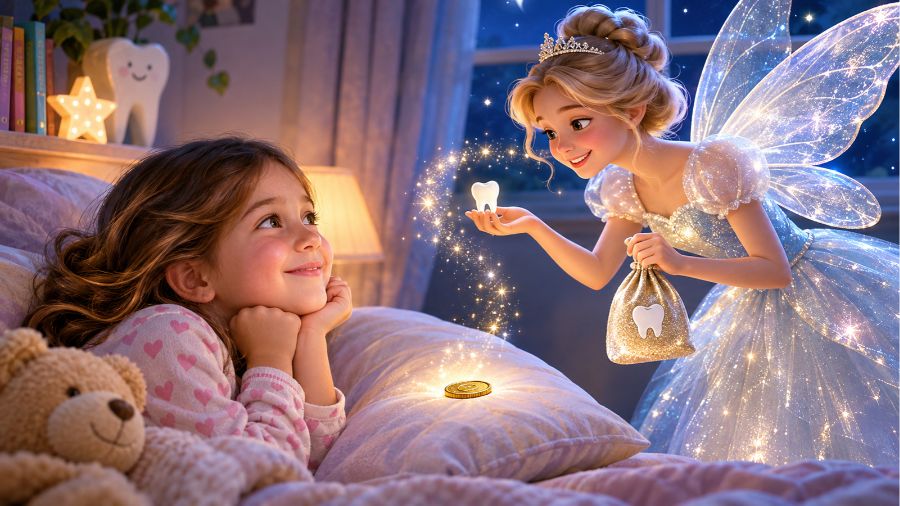
The Tooth Fairy is a fictional character from Western folklore who traditionally visits children after they lose their baby teeth. According to the familiar story, children place a fallen tooth underneath their pillow before going to sleep, allowing the Tooth Fairy to collect it during the night and leave a small reward in its place. The character is commonly portrayed as a tiny, friendly female fairy with delicate wings, magical abilities and a sparkling appearance, although illustrations and descriptions differ between books, films and family traditions. Parents often participate by secretly exchanging the tooth for coins, banknotes, sweets or small presents. Beyond the entertainment, the tradition provides a positive way for families to celebrate an important stage of childhood development and make losing a tooth feel exciting rather than frightening.
History and Origins of the Tooth Fairy
The history of the Tooth Fairy is connected to older European customs, childhood folklore and changing traditions surrounding lost baby teeth. People in different historical periods believed that children’s teeth carried symbolic importance and developed various practices for disposing of them safely. Some communities buried teeth, while others burned them, threw them onto rooftops or offered them to animals. These customs were sometimes connected to beliefs about protecting children from bad luck and encouraging healthy permanent teeth. The modern Tooth Fairy became more recognizable during the early twentieth century, particularly in the United States, where the practice of placing a tooth under a pillow and receiving a reward gradually became popular. An early printed reference to the Tooth Fairy appeared in the Chicago Sunday Tribune on September 27, 1908. A children’s play titled The Tooth Fairy, written by Esther Watkins Arnold, was published in 1927, helping establish the character in popular storytelling. The tradition subsequently developed through children’s literature, family customs and entertainment, although historians cannot identify one definitive inventor or a single event that created the modern character.
Early European Tooth Traditions
Before the modern Tooth Fairy became popular, European communities had different beliefs about what should happen when children lost their first teeth. In some traditions, families buried fallen teeth or placed them in particular locations to protect children against misfortune. Other customs involved throwing teeth into fires or placing them somewhere animals could find them. These practices reflected historical beliefs about health, protection and the symbolic importance of childhood development. Scandinavian folklore also includes the concept of tannfé, commonly translated as tooth fee, which involved giving a child a reward connected with their teeth. Although these older traditions share similarities with the modern Tooth Fairy custom, they should not all be treated as direct origins of the character.
The Tooth Fairy in Early American Culture
The United States played an important role in popularizing the modern Tooth Fairy tradition. During the early twentieth century, parents increasingly used the idea of a magical visitor to make losing baby teeth a positive childhood experience. The 1908 newspaper reference demonstrates that the basic concept of placing a tooth under a pillow in exchange for a gift was already known at that time. Esther Watkins Arnold’s 1927 play further contributed to the character’s development in children’s entertainment. By the middle of the twentieth century, the Tooth Fairy had become a familiar part of American family culture, supported by children’s books, toys, illustrations and popular storytelling.
How Does the Tooth Fairy Tradition Work?
The Tooth Fairy tradition usually begins when a child loses one of their primary teeth, also known as a baby or milk tooth. Instead of treating the experience as an ordinary physical change, parents introduce the idea of a magical visitor who rewards children for their fallen teeth. The child cleans the tooth, places it under a pillow or inside a small container and goes to sleep. After the child falls asleep, a parent secretly removes the tooth and leaves a reward in its place. The following morning, the child discovers the surprise and enjoys the excitement of the experience. Some families maintain the tradition with handwritten notes, special envelopes, decorative pillows or personalized gifts. Although the details vary, the central idea remains the same: turning a natural childhood milestone into a memorable family experience.
Why Do Children Lose Their Baby Teeth?
Children naturally lose their primary teeth as their mouths develop and permanent teeth begin to emerge. Most children start losing their baby teeth at approximately six years of age, although the timing can vary. The process generally continues through childhood as permanent teeth gradually replace the original set. A loose tooth may take several days or weeks to fall out naturally, and children sometimes experience mild discomfort during this stage. The Tooth Fairy tradition gives parents an opportunity to explain that losing baby teeth is a normal part of growing up. It can also help children develop a more positive attitude towards dental changes and regular oral hygiene.
What Does the Tooth Fairy Do With Collected Teeth?
There is no universally accepted answer because the Tooth Fairy is a fictional character whose activities depend on individual stories and family imagination. Some children’s books suggest that collected teeth become magical building materials, sparkling decorations or ingredients for fairy castles. Other stories imagine that the teeth are used to create stars, jewellery or magical objects. Parents may invent their own explanations to make the tradition more entertaining for children. In reality, parents usually keep, discard or otherwise manage the collected teeth according to personal preferences. The imaginative possibilities are part of what makes the tradition appealing to young children.
Tooth Fairy Traditions Around the World
Although the Tooth Fairy is particularly familiar in English-speaking countries, the custom of exchanging fallen baby teeth for gifts or money exists in different forms across the world. Cultural traditions frequently involve magical creatures, mice, animals or symbolic activities intended to encourage strong permanent teeth. In some countries, children place teeth underneath pillows, while others leave them in glasses, throw them onto rooftops or offer them to particular animals. A 2024 systematic review published in Community Dentistry and Oral Epidemiology examined international traditions involving fallen primary teeth and identified numerous different practices across cultures. These findings demonstrate that childhood tooth traditions are not limited to one country or a single fictional character.
Ratoncito Pérez in Spain and Latin America
In Spain and several Latin American countries, children traditionally celebrate losing baby teeth through a fictional mouse known as Ratoncito Pérez or El Ratón Pérez. The character visits children at night, collects their fallen teeth and often leaves money or a small present in return. The famous literary version became associated with Spanish writer Luis Coloma, who created a story about the mouse for the young King Alfonso XIII in 1894 after the royal child lost a tooth. The story helped establish Ratoncito Pérez as an important character in Spanish children’s folklore. Although the character differs from the winged Tooth Fairy, both traditions share the same central idea of rewarding children for losing their baby teeth.
La Petite Souris in France
French children traditionally know a different magical visitor called La Petite Souris, meaning the Little Mouse. According to the story, this small mouse visits children after they lose a baby tooth, collects it from underneath their pillow and leaves money or another small reward. The character is connected to French folklore and is commonly associated with the eighteenth-century fairy tale La Bonne Petite Souris, written by Madame d’Aulnoy. The story features a fairy who transforms into a mouse, although the precise historical relationship between the fairy tale and the modern tooth-collecting tradition remains uncertain. La Petite Souris demonstrates how different cultures can develop similar childhood customs while using completely different fictional characters.
Tooth-Loss Traditions in Other Countries
Not every culture uses a fairy or mouse to celebrate a child’s fallen teeth. Research into international customs has documented traditions involving rooftops, animals, fires, burial and symbolic wishes for healthy permanent teeth. In some communities, children throw their fallen teeth over the roof while making a wish for a strong replacement tooth. Other traditions involve placing teeth in a particular location so that an animal can collect them. Some families also place fallen teeth in water or offer them to animals associated with strong teeth. These practices highlight the cultural diversity of childhood folklore and demonstrate how communities have developed different ways to celebrate the same natural stage of development.
Why Is the Tooth Fairy Important to Childhood?
The Tooth Fairy is more than an imaginary character who exchanges teeth for money. For many families, the tradition provides an enjoyable way to introduce children to physical changes and encourage positive attitudes towards growing up. Losing a baby tooth can sometimes feel unfamiliar or uncomfortable, particularly for younger children experiencing it for the first time. A familiar story about a friendly visitor can make the experience feel less intimidating and more exciting. The tradition also creates opportunities for parents to spend meaningful time with their children, discuss dental health and celebrate childhood milestones. Although the Tooth Fairy is not a medical or educational requirement, its value comes from the enjoyment, reassurance and family memories associated with the custom.
Helping Children Feel Comfortable About Losing Teeth
Some children become nervous when their teeth start becoming loose, particularly if they notice a small amount of blood or experience mild discomfort. Parents can explain that baby teeth naturally fall out as permanent teeth develop and that this is an expected part of growing up. Introducing the Tooth Fairy can provide an additional source of excitement and reassurance. However, parents should avoid forcing children to participate if they are uncomfortable with the idea. A gentle explanation, encouragement to maintain good oral hygiene and a positive family experience can make this developmental stage easier to understand.
Encouraging Healthy Dental Habits
Families can also use the Tooth Fairy tradition as an opportunity to discuss the importance of looking after permanent teeth. Children should learn about brushing twice daily with fluoride toothpaste, cleaning between their teeth and limiting frequent consumption of sugary foods and drinks. Regular dental appointments are important for monitoring oral development and identifying potential problems. The fictional Tooth Fairy should never replace accurate dental information or professional advice. Instead, parents can connect the excitement of receiving a reward with practical lessons about maintaining healthy teeth throughout childhood.
Tooth Fairy in Books, Movies and Popular Culture
The Tooth Fairy has become a recognizable character in children’s entertainment, appearing in illustrated books, animated productions, toys, games and family films. Writers and artists have developed different versions of the character, ranging from traditional winged fairies to modern fantasy figures with humorous personalities. One notable example is the 2010 comedy film Tooth Fairy, starring Dwayne Johnson, which presents a fictional interpretation of a professional hockey player who becomes a tooth fairy. The character has also appeared in educational materials designed to help children understand losing baby teeth and developing healthy dental habits. These appearances have helped maintain the tradition across generations, allowing families to introduce the story through entertainment as well as personal customs.
Advantages and Limitations of the Tooth Fairy Tradition
The Tooth Fairy tradition offers several positive experiences, particularly when families use it to celebrate childhood milestones without creating unnecessary pressure. It can encourage children to approach losing baby teeth with curiosity, provide opportunities for family interaction and introduce conversations about oral health. However, the tradition also has limitations. Children from different financial backgrounds may receive different rewards, and some may compare their gifts with those received by friends. Others may become disappointed when they discover that the Tooth Fairy is fictional. Parents can avoid these problems by keeping rewards modest, focusing on the experience rather than the amount of money and explaining the tradition in an age-appropriate way when children begin asking questions. There is no requirement to follow a particular reward system, and families can adapt the custom according to their cultural beliefs, financial circumstances and children’s preferences.
Conclusion
The Tooth Fairy remains one of the most recognizable characters in childhood folklore, combining imagination, family traditions and the natural experience of losing baby teeth. Although its modern form became popular during the twentieth century, the custom is connected to much older cultural beliefs and tooth-related practices found around the world. Characters such as Ratoncito Pérez and La Petite Souris demonstrate how different societies have developed their own versions of this familiar tradition. Ultimately, the Tooth Fairy is not simply about exchanging a fallen tooth for money or a present; it is about celebrating childhood development, creating meaningful family memories and making an ordinary milestone a little more magical.
Also read: Boca Dental: Complete Guide to Dental Services, Specialists and Modern Treatments
FAQs
1. Is the Tooth Fairy real?
No, the Tooth Fairy is a fictional character from childhood folklore. Parents traditionally create the experience by exchanging children’s fallen baby teeth for money or gifts.
2. When did the Tooth Fairy tradition begin?
An early printed reference appeared in a 1908 Chicago newspaper. The modern tradition developed during the early twentieth century, particularly in the United States.
3. What does the Tooth Fairy leave under a pillow?
The Tooth Fairy traditionally leaves coins, banknotes or small presents in exchange for a fallen baby tooth, although rewards vary between families and cultures.
4. What is the Tooth Fairy called in Spain?
In Spain, the Tooth Fairy equivalent is Ratoncito Pérez, a fictional mouse who collects children’s fallen teeth and traditionally leaves money or small gifts.
5. At what age do children start visiting the Tooth Fairy?
Children typically begin losing baby teeth around six years old, although individual development varies. The tradition starts whenever a child loses their first tooth.
6. Why do parents celebrate the Tooth Fairy tradition?
Parents use the tradition to make losing baby teeth exciting, reassure children about growing up and create positive family memories around childhood development.