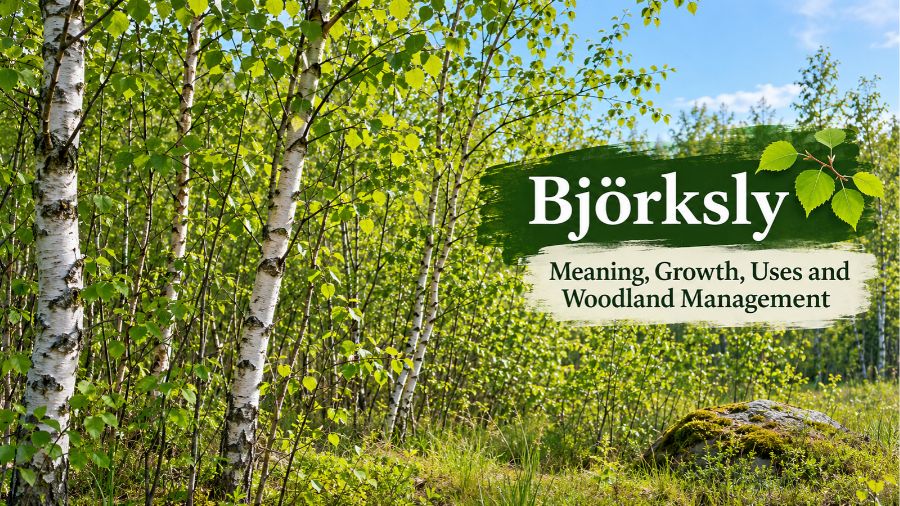
Björksly is a Swedish word used to describe dense growth of young birch trees and small birch shoots, commonly found in woodland areas, open landscapes, and places where vegetation is naturally regenerating. Although the term may be unfamiliar to English speakers, it describes a recognisable feature of Scandinavian nature and woodland environments. Understanding Björksly provides useful insight into Swedish vocabulary, birch tree growth, natural vegetation, forest regeneration, and landscape management. This guide explores the meaning and linguistic origin of Björksly, how birch scrub develops, its ecological importance, common uses, management considerations, and its relationship with the wider Scandinavian environment.
What Does Björksly Mean?
Björksly is a Swedish compound noun referring to an area of young birch growth or dense birch scrub. In English, its closest translations include birch thicket, birch scrub, and young birch woodland growth. The word describes vegetation rather than a particular tree species, botanical classification, or individual plant. It generally refers to small birch trees and developing shoots growing relatively close together, creating a dense appearance across an area of land. The term is useful when describing landscapes where young birch vegetation has developed naturally or grown following the removal of other vegetation. Unlike the general word birch forest, which can describe woodland containing mature trees, Björksly specifically draws attention to younger, smaller, and often densely growing birch vegetation.
The Swedish Language and Origin of Björksly
The meaning of Björksly becomes easier to understand when its two Swedish components are examined separately. Swedish frequently combines existing words to create compound nouns that describe particular objects, plants, environments, and everyday situations. This linguistic structure makes many Swedish nature-related terms relatively understandable once their individual elements are recognised.
Understanding the Word Björk
The first component, Björk, is the Swedish word for birch, a group of deciduous trees belonging to the genus Betula. Birch trees are recognised by their distinctive bark, relatively light appearance, and characteristic leaves. Different birch species grow across northern Europe and other parts of the Northern Hemisphere. In Sweden, birch trees are familiar features of forests, countryside landscapes, gardens, and areas undergoing natural vegetation regeneration. The word Björk therefore identifies the type of tree associated with Björksly rather than describing a separate botanical species.
Understanding the Word Sly
The second component, Sly, refers to scrub or young woody vegetation, particularly small trees and developing growth that can form dense patches. It is commonly associated with vegetation that has grown without regular clearing or management. When combined with Björk, the word describes young birch vegetation growing as scrub or a thicket. This combination communicates more specific information than simply saying birch trees because it suggests a particular growth pattern and stage of vegetation development.
How Does Björksly Develop Naturally?
Björksly develops when birch trees establish themselves and produce new growth in suitable environmental conditions. Birch trees are generally considered pioneer species because several birch species can colonise open ground and disturbed areas relatively quickly when light, moisture, and suitable growing conditions are available. Seeds may reach exposed soil through natural dispersal, allowing new seedlings to establish where competition is limited. Over time, multiple seedlings can develop into closely spaced young trees, producing the characteristic appearance of birch scrub. Vegetation removal, forest disturbance, abandoned agricultural land, and changes in land management can all create opportunities for young birch growth. However, the development of a dense birch thicket depends on local conditions, including soil characteristics, available sunlight, moisture, competing plants, and browsing pressure from animals.
Important Characteristics of Birch Scrub
Björksly has several recognisable characteristics that distinguish it from mature birch woodland and mixed forests. Its appearance can vary depending on the age of the vegetation, the density of individual plants, and the environmental conditions in which it develops. Young birch stems often grow relatively close together, creating a layered arrangement of branches and leaves. During spring and summer, developing foliage gives these areas a fresh green appearance, while autumn brings seasonal colour changes before the leaves fall. The density of the vegetation can influence visibility, movement, and the amount of sunlight reaching the ground. Some patches remain relatively low and shrub-like, while others gradually develop into taller young woodland. The overall structure is therefore influenced by growth conditions and how frequently the vegetation is disturbed or managed.
Ecological Importance of Björksly
Young birch vegetation can contribute to the ecological development of landscapes by providing habitat, supporting biodiversity, and helping establish woodland cover. Although a young birch thicket does not necessarily contain the same ecological features as an established forest, it can provide useful resources for different organisms. Its leaves, branches, and surrounding vegetation create opportunities for insects, birds, and other wildlife to find food or shelter. The ecological value of a particular area depends on its plant diversity, surrounding habitats, age, and management history.
Supporting Wildlife and Biodiversity
Birch scrub can provide shelter and feeding opportunities for wildlife, particularly where it forms part of a wider landscape containing grassland, woodland, wetlands, and other natural habitats. Birds may use dense branches for protection and nesting opportunities, while insects can benefit from vegetation and associated plant communities. Some mammals also use young woodland areas for cover and movement. Birch trees additionally support various organisms through their leaves, bark, and decomposing organic material. However, the presence of Björksly alone does not guarantee high biodiversity. A landscape containing a mixture of vegetation types and different stages of woodland development can provide a wider range of ecological opportunities.
Contributing to Woodland Regeneration
One important characteristic of birch is its ability to establish in suitable open environments. Young birch growth can therefore contribute to natural woodland regeneration following disturbance or changes in land use. As seedlings develop, they gradually establish woody vegetation where mature trees may previously have been absent. Their presence can help create conditions for the development of more complex vegetation communities over time. The eventual composition of a regenerating woodland depends on local climate, soil, competing species, seed availability, and management practices. Consequently, Björksly can represent an early stage in woodland development, although not every birch thicket will eventually become mature forest.
Common Locations Where Björksly Can Be Found
Björksly is particularly relevant when describing landscapes in Sweden and other northern European regions where birch vegetation is common. It can occur along woodland edges, on open land, near paths, around clearings, and in areas where vegetation has regenerated following disturbance. Abandoned or less intensively managed agricultural land may also develop young woody vegetation when suitable growing conditions exist. In some locations, birch scrub develops alongside grasses, shrubs, and other young trees, creating mixed vegetation rather than a pure birch stand. The presence and density of this growth differ between locations because environmental conditions and land-use histories are not identical. Although the word is Swedish, the type of vegetation it describes is not exclusive to Sweden and can occur in suitable environments elsewhere.
Practical Uses and Applications of Birch Scrub
Björksly is primarily a descriptive ecological and landscape term, but the vegetation it identifies can have practical relevance for forestry, land management, conservation, and rural maintenance. Young birch trees may eventually become part of managed woodland, while some areas of birch scrub are retained because they provide habitat and contribute to natural regeneration. In managed landscapes, young birch growth may also be assessed for future timber potential, although the quality and suitability of individual trees depend on their development and growing conditions. Landowners and forestry professionals may consider whether dense growth should be retained, selectively thinned, or cleared according to the intended use of the land. The appropriate approach depends on ecological objectives, safety requirements, access needs, and the characteristics of the vegetation.
Challenges Associated With Dense Birch Growth
Although young birch vegetation offers ecological benefits, dense growth can create practical challenges in certain environments. When birch scrub develops beside roads, railway lines, paths, or agricultural land, it may obstruct visibility, restrict access, and interfere with routine maintenance. Dense vegetation can also compete with other plants for available light, water, and growing space. In landscapes where open habitats are important for conservation, uncontrolled woody growth may gradually change the character of the environment. However, these effects should be assessed in context rather than assuming that all birch scrub is undesirable. Clearing vegetation without considering wildlife habitats, regeneration patterns, and local conservation requirements can create additional environmental problems.
How Is Björksly Managed and Controlled?
Managing Björksly involves deciding whether young birch vegetation should be retained, reduced, or removed. In forestry environments, selective thinning may be considered when the objective is to encourage suitable trees to develop with sufficient growing space. In other locations, periodic vegetation clearance may be necessary to maintain access routes, protect infrastructure, or preserve open landscapes. The timing and method of management should account for local wildlife, seasonal conditions, land ownership, and applicable environmental requirements. Mechanical cutting, selective removal, and other vegetation management techniques may be appropriate depending on the site. Importantly, management does not always mean removing every young birch tree. Retaining suitable patches can support habitat diversity and allow natural woodland regeneration to continue where that is the intended objective.
Björksly and Its Relationship With Scandinavian Nature
Birch trees have a strong presence in the natural landscapes of Scandinavia, making birch-related vegetation an important part of the region’s environmental character. Sweden contains different forest environments, including birch-dominated woodland, mixed forests, and landscapes where birch grows alongside coniferous trees. Young birch scrub represents one of the vegetation forms that can occur within these environments. Its appearance changes throughout the year, reflecting the seasonal growth patterns of deciduous trees. In spring, new leaves develop, summer brings dense green foliage, autumn introduces changing leaf colours, and winter reveals the structure of the branches. Understanding terms such as Björksly helps readers describe these landscapes more accurately and recognise the differences between young scrub, individual birch trees, and established birch woodland.
Conclusion
Björksly is a Swedish nature-related term describing dense growth of young birch trees and woody birch vegetation. Its meaning comes from the combination of Björk, meaning birch, and Sly, referring to scrub or young woody growth. Beyond its linguistic meaning, the vegetation it describes has relevance to woodland regeneration, wildlife habitats, biodiversity, forestry, and landscape management. Although dense birch scrub can sometimes require maintenance, it can also contribute positively to natural environments when appropriately managed. Understanding Björksly provides a useful perspective on Swedish vocabulary and the ecological role of young birch vegetation in Scandinavian landscapes and other suitable environments.
Also read: KPV Peptide: Benefits, Uses, How It Works, Safety and Latest Research
FAQs
1. What is the English meaning of Björksly?
Björksly translates into English as birch scrub or birch thicket, describing dense growth of young birch trees and developing woody vegetation.
2. Is Björksly a Swedish word?
Yes, Björksly is a Swedish compound noun formed from Björk, meaning birch, and Sly, meaning scrub or young woody vegetation.
3. Is Björksly a type of tree?
No, Björksly is not a separate tree species. It describes an area containing young birch trees or densely growing birch vegetation.
4. Where does Björksly commonly grow?
Björksly can grow in woodland clearings, forest edges, abandoned agricultural land, and disturbed environments where suitable conditions allow birch seedlings to establish.
5. Why is Björksly important for wildlife?
Birch scrub can provide shelter, nesting opportunities, and feeding resources for insects, birds, and other wildlife, depending on local habitat conditions.
6. Can Björksly be removed or controlled?
Yes, birch scrub can be selectively thinned or cleared when necessary, provided management considers wildlife habitats, environmental requirements, and the intended land use.