
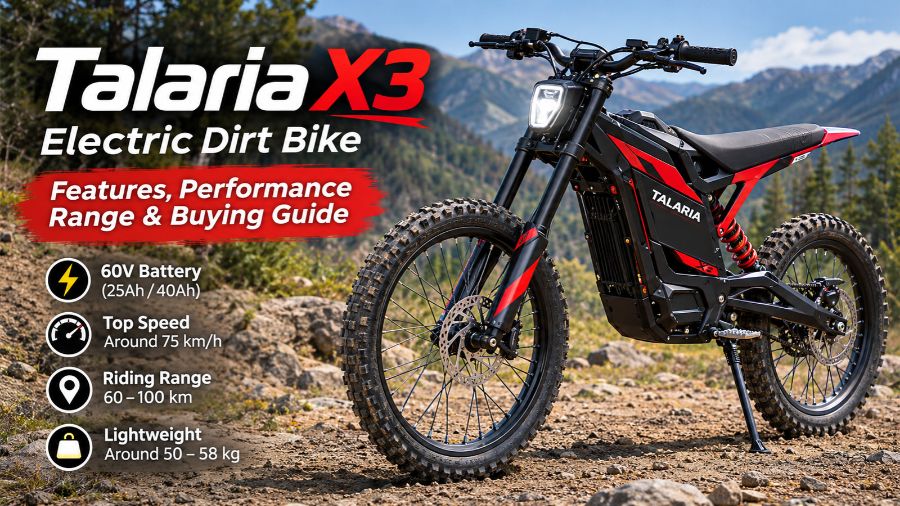
Talaria X3 is a compact electric dirt bike designed for riders who want impressive acceleration, lightweight handling, and an alternative to traditional petrol-powered motorcycles. Also known as the Talaria xXx or Triple X, this electric motorcycle combines a 60V lithium-ion battery, an air-cooled permanent magnet motor, adjustable suspension, and a lightweight chassis to deliver an engaging riding experience on suitable roads and off-road trails. Its availability in different battery capacities, including 25Ah and 40Ah configurations, makes it an interesting option for riders with different performance and range requirements. Whether someone is researching its top speed, battery performance, charging time, design, or overall value, understanding the Talaria X3’s specifications and practical limitations can help determine whether this electric dirt bike is the right choice.
What Is the Talaria X3 Electric Dirt Bike?
The Talaria X3 is an electric-powered dirt bike developed by Talaria, a manufacturer known for producing electric motorcycles designed for recreational riding and off-road applications. The model is commonly marketed as the Talaria xXx, with the X3 name used interchangeably across retailers and product discussions. Unlike conventional petrol motorcycles, it uses an electric motor and rechargeable lithium-ion battery to deliver power directly to the drivetrain. Its compact frame and relatively low weight make it particularly appealing to riders who prefer an agile motorcycle rather than a heavier full-size electric dirt bike. The X3 is available in different configurations, including versions intended for off-road use and certain road-oriented markets. Its combination of modern electric technology, distinctive styling, and manageable dimensions has helped it attract attention among electric motorcycle enthusiasts.
Talaria X3 Design and Build Quality
The Talaria X3 features a distinctive dirt-bike appearance with a compact frame, raised riding position, and motorcycle-inspired proportions. Its design combines practical components with modern styling, making it suitable for riders who want something different from an ordinary electric bicycle. Depending on the version, buyers can find colour options such as red, black, and grey. The motorcycle has an approximately 805 mm seat height and a wheelbase of around 1,255 mm, contributing to its relatively compact dimensions. Its frame and battery placement are designed to maintain a balanced riding position while supporting responsive handling. The overall weight varies with battery configuration, with commonly advertised figures starting around 50 kg for the 25Ah version and increasing with the larger battery. However, the actual weight should always be confirmed against the exact model being purchased.
Talaria X3 Motor and Performance
The motor is one of the most important components of the Talaria X3 because it determines how effectively the motorcycle converts electrical energy into movement. The model uses an air-cooled interior permanent magnet motor, commonly abbreviated as an IPM motor. This technology uses permanent magnets positioned inside the motor rotor to generate electromagnetic torque. The design supports efficient power delivery and strong acceleration characteristics for a motorcycle of this size. Published specifications commonly identify approximately 2.5 kW of rated power, although peak output varies between configurations and product specifications. Some manufacturer-related listings advertise peak output around 5.5 kW, while certain versions and configurations advertise higher figures. Riders should distinguish rated power from peak power because they describe different operating conditions. Peak output is not necessarily available continuously, particularly when battery charge, temperature, or controller limitations affect performance.
Talaria X3 Top Speed and Acceleration
Top speed is one of the most frequently researched features of the Talaria X3, particularly among people comparing electric dirt bikes. Advertised maximum speeds vary depending on the battery, controller settings, market-specific restrictions, and motorcycle configuration. Some versions are factory-limited for road or regulatory requirements, while unrestricted off-road configurations can reach substantially higher speeds. Figures around 75 km/h are commonly advertised for certain versions, but they should not be treated as a guaranteed speed for every X3. Acceleration is another important characteristic because electric motors can deliver torque without requiring conventional gear changes. This creates a direct and responsive feeling when opening the throttle. However, actual acceleration depends on rider weight, available battery power, surface conditions, tyre grip, and riding mode. Responsible riders should follow applicable speed limits and avoid attempting modifications that compromise the motorcycle’s safety or legal status.
Talaria X3 Battery Options and Technology
Battery technology plays a central role in the Talaria X3’s performance, range, and everyday convenience. The motorcycle is commonly offered with 60V lithium-ion battery configurations in 25Ah and 40Ah capacities. Some versions use 21700-format lithium-ion cells, a battery-cell format frequently used in modern rechargeable energy systems. The 25Ah configuration provides approximately 1,500Wh of nominal energy, while the 40Ah configuration provides approximately 2,400Wh. This difference is important because the larger battery stores more electrical energy and can support longer riding sessions under comparable conditions. Battery management technology also helps monitor important operating parameters, including voltage, temperature, and charging conditions. Buyers should check whether their chosen model has a removable battery, what replacement packs are available, and whether the charging equipment is compatible with their local electrical supply.
Talaria X3 Riding Range and Real-World Efficiency
The riding range of the Talaria X3 depends on several factors, meaning manufacturer estimates should be interpreted as indicative rather than guaranteed distances. Some product specifications advertise approximately 60 to 70 kilometres for certain battery configurations under specified conditions, while other listings provide higher estimates for larger batteries and favourable riding situations. Travelling at a steady, moderate speed on relatively flat ground generally consumes less energy than repeatedly accelerating, climbing hills, or riding aggressively on rough terrain. Rider weight, tyre pressure, temperature, battery condition, and selected power settings can also influence efficiency. For someone planning longer trips, the 40Ah battery may provide additional flexibility compared with the 25Ah option. Nevertheless, riders should maintain a sufficient battery reserve and avoid assuming that an advertised maximum range will be achievable during every journey.
Talaria X3 Suspension, Wheels and Braking System
The suspension and braking systems are essential to the motorcycle’s handling, comfort, and safety. The Talaria X3 is commonly advertised with a hydraulic front fork offering approximately 160 mm of travel and a rear shock with around 85 mm of travel, although specifications can vary between versions. This suspension arrangement helps absorb impacts from uneven surfaces and improves control when riding on suitable trails. Off-road configurations commonly feature a 19-inch front wheel and a 17-inch rear wheel, while tyre and wheel arrangements may differ between regional models. Hydraulic disc brakes at the front and rear provide the stopping capability expected from an electric dirt bike. Their effectiveness depends on correct maintenance, brake-pad condition, tyre grip, and riding conditions. Regular inspection is particularly important because electric motorcycles can accelerate quickly, making reliable braking equipment essential.
Talaria X3 Charging Time and Maintenance
Charging convenience is another important consideration when evaluating an electric dirt bike. The Talaria X3 uses a dedicated battery charger, with commonly advertised charging equipment rated around 8A and certain configurations offering optional higher-current charging. Charging time depends on the battery’s remaining capacity, charger output, battery temperature, and charging-system limitations. Some listings advertise charging periods of approximately three to four hours, but the actual time can differ. Maintenance is generally different from that of petrol motorcycles because the X3 does not require engine oil changes, spark-plug replacements, or conventional fuel-system servicing. However, it still needs regular attention. Owners should inspect the chain, belt transmission, brakes, tyres, suspension, electrical connections, and battery condition. Keeping the motorcycle clean, avoiding water exposure beyond its specified protection rating, and following the manufacturer’s charging instructions can help maintain reliability over time.
Talaria X3 vs Sur-Ron Light Bee
The Talaria X3 and Sur-Ron Light Bee are frequently compared because both belong to the lightweight electric dirt-bike segment. They offer electric propulsion, compact motorcycle-inspired designs, and performance intended for recreational and off-road riding. The Talaria X3 attracts attention through its distinctive frame design, 60V battery options, and IPM motor technology. The Sur-Ron Light Bee, meanwhile, has developed a recognisable position in the electric dirt-bike market, with an established community and an extensive aftermarket ecosystem. Choosing between them requires more than comparing advertised peak power or top speed. Buyers should consider battery capacity, suspension design, availability of replacement components, dealer support, warranty coverage, and local regulations. The best option ultimately depends on the specific versions being compared and the type of riding the owner intends to do.
Advantages and Disadvantages of the Talaria X3
The Talaria X3 offers several advantages for people interested in electric motorcycles, particularly its lightweight construction, responsive motor, and lack of conventional petrol-engine maintenance. Its battery options allow buyers to consider different balances between initial cost, weight, and riding range. Electric propulsion also means it produces no exhaust emissions directly while operating, making it different from a petrol-powered dirt bike. However, the motorcycle has limitations that buyers should understand before purchasing. Battery range can decrease significantly during demanding riding, and replacement battery costs can be substantial. Charging requires access to a suitable electrical supply, while repairs involving controllers, batteries, or specialist electrical components may require trained technicians. Its relatively compact design may also feel less suitable for riders who prefer larger motorcycles. Furthermore, off-road versions are not automatically legal for public-road use, and insurance, registration, and licensing requirements depend on local regulations.
Is the Talaria X3 Suitable for Beginners?
The Talaria X3 may appeal to beginners because its compact dimensions and electric drivetrain offer a different riding experience from conventional petrol motorcycles. The absence of a traditional clutch and multi-speed gearbox can make basic operation easier to understand. However, this does not mean that the motorcycle is automatically suitable for inexperienced riders. Electric motors can deliver immediate acceleration, and an unexpected throttle input can create dangerous situations, particularly on loose surfaces. Beginners should learn throttle control, braking technique, balance, and appropriate riding positions before attempting challenging trails. Protective equipment, including a properly fitted helmet, gloves, boots, and suitable body protection, is essential. Riders should also practise in controlled environments and follow age restrictions, manufacturer recommendations, and local laws. The motorcycle’s suitability ultimately depends on the rider’s experience, physical ability, and access to appropriate training and riding areas.
Talaria X3 Price and Buying Considerations
The purchase price of a Talaria X3 varies according to battery capacity, model configuration, country, dealer, and availability. International online listings have advertised prices in the approximate range of $2,200 to $3,000, although these figures are not universal retail prices and may not represent current authorised-dealer offers. Buyers should consider the complete ownership cost rather than focusing only on the advertised purchase price. Shipping, import duties, taxes, battery replacement, servicing, and protective equipment can increase the overall expense. People purchasing the motorcycle in Pakistan should pay particular attention to import documentation, customs charges, spare-parts availability, and whether the seller provides a verifiable warranty. It is also important to check the battery’s condition, manufacturing information, charger compatibility, and availability of replacement components. Buying through a reputable dealer with clear after-sales support can reduce the risks associated with purchasing an expensive electric motorcycle.
Talaria X3 Road Legality and Safety Considerations
Road legality is an important issue because the Talaria X3 may be sold in different configurations for different markets. An off-road MX version should not automatically be considered suitable for public roads simply because it has lights, brakes, and other motorcycle components. Certain road-oriented versions may be manufactured to meet specific regional vehicle requirements, but approval in one country does not establish legal approval elsewhere. In the United Kingdom, for example, road use depends on the vehicle’s applicable classification, approval, registration, insurance, and licensing requirements. Similar considerations apply in Pakistan, where buyers should confirm the applicable vehicle and traffic regulations before attempting to use an imported electric dirt bike on public roads. Safety is equally important. Riders should wear suitable protective equipment, check the motorcycle before each ride, maintain safe speeds, and use appropriate off-road locations when the vehicle is not approved for road use.
The Future of Electric Dirt Bikes Like the Talaria X3
Electric dirt bikes represent an evolving part of the wider motorcycle industry, with manufacturers exploring improved batteries, more efficient motors, advanced controllers, and lighter vehicle designs. The Talaria X3 demonstrates how electric propulsion can be combined with a traditional dirt-bike riding position to create a compact recreational motorcycle. Future developments across the industry may improve battery energy density, charging convenience, thermal management, and electronic control systems. These improvements could make electric motorcycles more practical for riders who currently depend on petrol-powered alternatives. However, the future success of models in this category will also depend on affordable replacement batteries, reliable servicing networks, transparent warranty policies, and appropriate charging infrastructure. For the Talaria X3 and similar motorcycles, long-term value will depend not only on performance but also on how effectively manufacturers and dealers support owners throughout the vehicle’s lifespan.
Conclusion
The Talaria X3 is an interesting electric dirt bike that combines compact construction, responsive electric performance, lithium-ion battery technology, and practical off-road features. Its 25Ah and 40Ah battery configurations provide different ownership possibilities, while its lightweight design and IPM motor distinguish it within the electric motorcycle segment. Nevertheless, advertised performance and range figures should always be considered alongside real-world riding conditions, regional model differences, maintenance requirements, and legal restrictions. Anyone considering this motorcycle should carefully evaluate battery condition, dealer reliability, replacement-part availability, and intended riding environment before purchasing. Overall, the Talaria X3 represents the growing appeal of electric dirt bikes and offers a useful example of how modern electric technology is changing recreational motorcycling.
Also read: Fe Street: Complete Guide to the Orro FE Street Single-Speed Bike
FAQs
1. What is the top speed of the Talaria X3?
The Talaria X3 can reach approximately 75 km/h in certain unrestricted configurations, although factory speed restrictions and regional versions affect maximum speed.
2. How far can the Talaria X3 travel on one charge?
Its advertised range varies by battery configuration and riding conditions, with some versions claiming approximately 60 to 80 kilometres per charge.
3. How long does the Talaria X3 battery take to charge?
Charging generally takes around three to four hours with commonly advertised charging equipment, although battery capacity and charger output influence actual charging time.
4. Is the Talaria X3 suitable for off-road riding?
Yes, the MX configuration is designed for off-road riding, featuring motorcycle-style suspension, disc brakes, and suitable wheel arrangements for recreational trails.
5. What is the difference between the Talaria X3 25Ah and 40Ah batteries?
The 25Ah battery stores approximately 1,500Wh, while the 40Ah version stores approximately 2,400Wh, offering greater energy capacity for longer rides.
6. Is the Talaria X3 street legal?
Street legality depends on the specific model and country. Buyers must verify vehicle approval, registration, insurance, and licensing requirements before public-road use.