
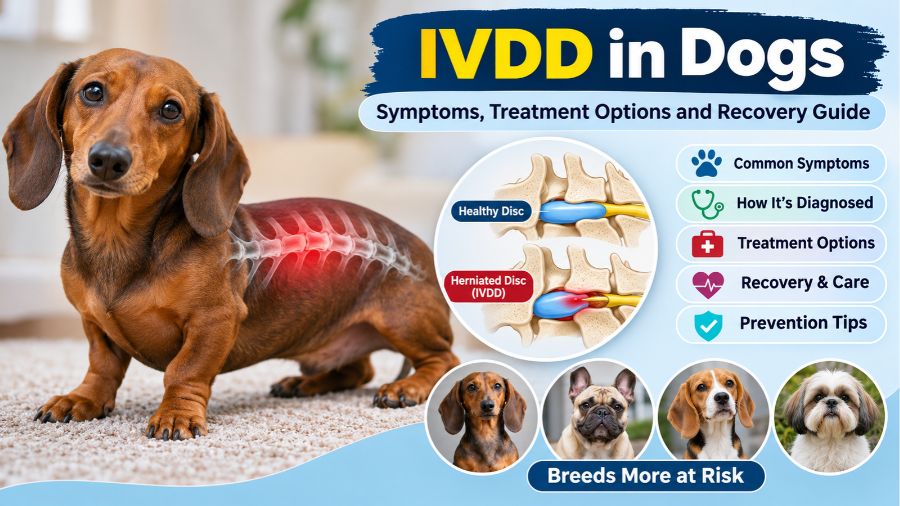
IVDD in Dogs (Intervertebral Disc Disease) is a potentially serious spinal condition that can cause back pain, difficulty walking, weakness, and, in severe cases, paralysis. It occurs when the cushioning discs between the bones of a dog’s spine degenerate, bulge, or rupture, putting pressure on the spinal cord and surrounding nerves. Understanding the early warning signs, common causes, diagnostic procedures, and available treatments can help dog owners make informed decisions about their pets’ health. This guide explains how IVDD develops, which breeds are most vulnerable, how veterinarians diagnose the condition, and what owners can expect during treatment and recovery.
What Is IVDD in Dogs?
Intervertebral Disc Disease is a spinal disorder affecting the soft cushioning structures located between individual vertebrae. These discs help absorb physical impact and allow the spine to bend, twist, and move comfortably. Each disc contains a softer central material called the nucleus pulposus, surrounded by a stronger outer layer known as the annulus fibrosus. When a disc becomes damaged or degenerates, its internal material may push outward or escape through the outer layer, potentially compressing the spinal cord. This pressure can interfere with communication between the brain and different parts of the body, resulting in pain, impaired movement, neurological problems, or paralysis. The condition can affect the neck or back, and its severity varies considerably depending on the location and extent of spinal damage.
What Causes IVDD in Dogs?
IVDD develops primarily because of changes in the structure and health of the intervertebral discs. In some dogs, genetic factors contribute to premature disc degeneration, while others develop problems associated with ageing or gradual wear. Certain breeds experience early mineralisation and hardening of their discs, making them more vulnerable to disc herniation. Physical trauma, sudden movements, falls, and jumping from elevated surfaces may also contribute to an acute episode, although many affected dogs develop symptoms without any identifiable accident. Excess body weight can place additional mechanical stress on the spine and may complicate mobility and recovery. Importantly, IVDD is not simply an injury caused by jumping; underlying disc degeneration is often already present before noticeable symptoms develop.
Type I IVDD
Type I IVDD involves degeneration and hardening of the disc’s central material, followed by rupture through the outer disc layer. The displaced material can enter the spinal canal and compress or injure the spinal cord. This form is particularly common in chondrodystrophic breeds, including Dachshunds, French Bulldogs, and Beagles. Symptoms can appear suddenly, sometimes developing over several hours, and may range from severe spinal pain to complete loss of movement in the affected limbs. Type I disc extrusion is an important cause of acute neurological problems in dogs and often requires prompt veterinary assessment.
Type II IVDD
Type II IVDD generally develops more gradually as the disc’s outer structure weakens and the disc begins to bulge into the spinal canal. Unlike the sudden rupture commonly associated with Type I disease, Type II changes are often associated with chronic degeneration and may produce slowly progressive neurological symptoms. Affected dogs may experience persistent back discomfort, stiffness, reduced mobility, or weakness in their limbs. This form is more frequently associated with older, larger dogs, although it can occur in other breeds. The distinction between Type I and Type II disease helps veterinarians understand the nature of disc damage and determine appropriate diagnostic and treatment strategies.
Dog Breeds Most at Risk of IVDD
Although IVDD can affect dogs of almost any breed, certain genetic characteristics increase susceptibility to disc degeneration. Chondrodystrophic dogs, which typically have relatively short legs and characteristic body proportions, are particularly vulnerable to Type I disc disease. Dachshunds are among the most frequently affected breeds, while French Bulldogs, Beagles, Corgis, Pekingese, Shih Tzus, and Miniature Poodles are also recognised as higher-risk breeds. German Shepherds, Labrador Retrievers, and other larger breeds can develop spinal disc disorders as well. Breed predisposition does not mean that every dog will develop IVDD, and dogs without a known genetic risk can still experience disc problems. Maintaining a healthy weight and monitoring mobility are important regardless of breed.
Common Symptoms of IVDD in Dogs
The symptoms of IVDD depend on which part of the spine is affected and how much damage has occurred to the spinal cord. Some dogs initially show only mild discomfort, while others experience sudden neurological deterioration. Early warning signs may include reluctance to jump, difficulty climbing stairs, crying when picked up, a stiff neck, or an unusual walking posture. As spinal cord compression progresses, dogs may develop an unsteady gait, weakness in their back legs, dragging paws, or difficulty standing. Severe cases can result in paralysis and loss of normal bladder function. Recognising these changes early is important because progressive neurological damage may reduce the likelihood of a favourable recovery.
Early Warning Signs
Early symptoms are sometimes mistaken for ordinary tiredness, ageing, or minor muscle injuries. A dog may become less active, avoid playing, refuse to climb onto furniture, or react negatively when someone touches its back. Some dogs develop a hunched posture or hold their head unusually low because movement causes discomfort. Others may tremble, pant, or become unusually quiet. These behavioural changes should not be ignored, particularly in breeds with a known predisposition to spinal disease. Veterinary assessment can help determine whether the discomfort is caused by IVDD or another musculoskeletal or neurological condition.
Severe Neurological Symptoms
More advanced IVDD can interfere significantly with a dog’s ability to control its limbs. The animal may walk with an uncoordinated gait, cross its back legs, or drag its paws along the ground. In severe cases, the dog may become unable to stand or move its hind legs voluntarily. Bladder emptying can also become difficult, creating a risk of urine retention and associated complications. Complete paralysis and loss of deep pain perception indicate particularly serious spinal cord injury. Sudden inability to walk, progressive weakness, paralysis, or difficulty urinating requires emergency veterinary attention. Owners should avoid manipulating the spine or attempting to test pain sensation themselves.
How Is IVDD Diagnosed in Dogs?
Diagnosing IVDD involves evaluating the dog’s medical history, physical condition, and neurological function. A veterinarian will usually examine the animal’s posture, walking ability, limb reflexes, spinal discomfort, and responses to appropriate neurological tests. These findings help identify the likely location of the spinal problem and determine whether advanced investigation is necessary. X-rays may reveal abnormalities such as narrowed disc spaces or mineralised discs, but they cannot reliably show the full extent of spinal cord compression. MRI is particularly useful for identifying damaged discs and assessing surrounding spinal cord structures. CT scans and, in selected circumstances, other imaging procedures may also help confirm the diagnosis. Accurate imaging is especially important when surgery is being considered or another neurological condition needs to be excluded.
Veterinary Neurological Examination
A neurological examination helps determine how effectively the brain, spinal cord, and peripheral nerves are communicating. Veterinarians assess limb movement, reflexes, coordination, and other neurological responses to establish the severity of the condition. One particularly important assessment is deep pain perception, which helps evaluate the extent of spinal cord injury in severely affected dogs. This is a specialised veterinary examination and should never be attempted by owners at home. The results help guide decisions about medical treatment, surgical referral, and the dog’s likely recovery prospects.
MRI and Other Imaging Tests
Magnetic resonance imaging provides detailed information about spinal discs, the spinal cord, and surrounding soft tissues. It can help identify the precise location of disc extrusion and the extent of spinal cord compression. CT scanning can also be valuable, particularly when mineralised disc material needs to be identified. Standard radiographs are generally more useful for evaluating bones and detecting certain indirect signs of disc disease. The appropriate imaging method depends on the dog’s symptoms, examination findings, available veterinary facilities, and whether surgical treatment is being considered.
Treatment Options for IVDD in Dogs
Treatment depends on the severity of neurological impairment, the location of the affected disc, the progression of symptoms, and the dog’s overall health. Some dogs with mild symptoms can be managed using veterinary-prescribed medication, strict activity restriction, and careful monitoring. More serious cases, particularly those involving an inability to walk or worsening neurological function, may require spinal surgery. Treatment may also involve bladder management, nursing care, and rehabilitation to support recovery. The American College of Veterinary Internal Medicine has published consensus recommendations addressing medical and surgical management of acute thoracolumbar disc extrusion. These recommendations emphasise that treatment decisions should be based on clinical findings rather than assuming that every affected dog requires the same approach.
Conservative Medical Treatment
Conservative treatment may be appropriate for selected dogs with mild neurological signs that can still walk independently. It generally involves strict confinement, prescribed pain relief, and anti-inflammatory medication when medically suitable. Veterinarians may also prescribe additional medication for muscle discomfort or neuropathic pain. Activity restriction is especially important because excessive movement can aggravate an injured disc. A commonly recommended period is at least four weeks of restricted activity, although the veterinarian determines the appropriate duration for each patient. Owners should not independently select painkillers or give human medications to their dogs, as some can cause serious toxicity. Regular veterinary reassessment is necessary to identify deterioration or treatment failure.
Surgical Treatment
Surgery may be recommended when spinal cord compression causes significant neurological impairment, symptoms continue to progress, or appropriate medical management does not provide sufficient improvement. One commonly performed procedure is hemilaminectomy, in which a veterinary surgeon removes a section of vertebral bone to access and remove displaced disc material. This helps relieve pressure on the spinal cord and surrounding nerves. Other surgical techniques may be appropriate depending on the affected spinal region and individual circumstances. Surgery requires specialised veterinary expertise, advanced diagnostic imaging, and postoperative care. Although it can substantially improve recovery prospects in appropriately selected patients, it cannot guarantee complete restoration of neurological function.
IVDD Recovery in Dogs: What Should Owners Expect?
Recovery from IVDD varies depending on the extent of spinal cord injury, the treatment method, and the dog’s neurological condition before treatment begins. Some dogs with mild disease improve over several weeks, while severely affected animals may require months of nursing care and rehabilitation. Dogs recovering from surgery generally need a controlled environment, restricted movement, and regular veterinary assessments. Animals with reduced mobility may also require assistance with toileting, repositioning, and maintaining clean, dry bedding. Physical rehabilitation can support muscle strength, coordination, and functional movement when introduced at the appropriate stage. Owners should follow an individual recovery plan rather than increasing exercise simply because their dog appears more comfortable.
Physical Rehabilitation and Physiotherapy
Rehabilitation plays an important role in supporting many dogs after spinal disc injuries. Depending on their neurological condition, veterinarians may recommend controlled walking, assisted standing, gentle range-of-motion exercises, or supervised underwater treadmill sessions. These activities can help maintain muscle condition and improve coordination during recovery. However, rehabilitation should only begin under appropriate professional guidance because exercises that are unsuitable for the dog’s condition may cause further problems. Progress should be gradual, with adjustments based on the animal’s response and veterinary reassessment.
Bladder Care and Home Nursing
Dogs with significant spinal cord injuries may temporarily lose the ability to empty their bladders normally. Some require manual bladder expression several times daily under veterinary instruction, while others may need alternative management. Owners should also monitor urination, bowel movements, skin condition, and signs of discomfort. Dogs that cannot change position independently are vulnerable to pressure sores, making regular repositioning and suitable bedding important. Good hygiene, careful handling, and prompt attention to urinary problems can help reduce complications throughout recovery.
Can IVDD in Dogs Be Prevented?
Complete prevention is not always possible because genetic predisposition and age-related disc degeneration play important roles in the development of IVDD. However, responsible lifestyle management can reduce avoidable physical stress on the spine and support overall mobility. Keeping a dog at a healthy weight is particularly important because excess body weight increases the mechanical demands placed on its joints and back. Owners of high-risk breeds can use ramps to reduce repeated jumping from furniture, supervise potentially strenuous activities, and provide regular controlled exercise. Harnesses may be preferable to collars for dogs with neck problems. Breeding decisions and available genetic testing may also help breeders understand inherited risk in certain populations. These measures cannot eliminate IVDD, but they can contribute to better long-term spinal health.
Long-Term Outlook and Possible Complications of IVDD
The long-term outlook depends largely on the severity of spinal cord damage and the dog’s response to treatment. Many affected dogs regain useful mobility, although some experience persistent weakness, an unsteady gait, or recurring spinal discomfort. Dogs with severe neurological injuries may require ongoing bladder assistance, mobility support, and specialised nursing. Another important consideration is recurrence, as a dog that experiences one disc episode may develop problems involving another disc later in life. Progressive myelomalacia, a serious and potentially fatal complication involving the breakdown of spinal cord tissue, can occur in some severely affected dogs. Regular veterinary monitoring, appropriate weight management, and adherence to activity restrictions can help owners manage long-term risks and identify new symptoms promptly.
Conclusion
IVDD in Dogs is a significant spinal condition that can range from manageable back discomfort to severe neurological injury and paralysis. Understanding its causes, breed-related risks, warning signs, and available treatment options helps owners recognise when professional veterinary care is necessary. Early assessment, accurate diagnosis, appropriate medical or surgical treatment, and carefully managed rehabilitation all contribute to better recovery opportunities. Although genetic factors mean that IVDD cannot always be prevented, maintaining a healthy weight, limiting unnecessary jumping, and monitoring mobility can support long-term spinal health. With appropriate veterinary care and consistent home support, many dogs affected by this condition can regain mobility and maintain a good quality of life.
Also read: Seeded Sunflowers: A Complete Guide to Varieties, Growing and Harvesting
FAQs
1. Can IVDD in dogs be cured completely?
Some dogs recover normal or near-normal mobility after treatment, but permanent neurological changes and recurring disc problems remain possible depending on injury severity.
2. How long does IVDD recovery take in dogs?
Recovery may take several weeks to months, depending on spinal cord damage, treatment, mobility before treatment, and the dog’s response to rehabilitation.
3. Can dogs with IVDD walk again?
Yes, many dogs regain walking ability, particularly with appropriate treatment, although recovery depends on neurological severity and whether deep pain perception remains intact.
4. Is IVDD painful for dogs?
Yes, IVDD can cause considerable neck or back pain, muscle spasms, discomfort during movement, and sometimes severe neurological complications requiring urgent veterinary treatment.
5. Which dog breeds are most likely to develop IVDD?
Dachshunds, French Bulldogs, Beagles, Corgis, Pekingese, and Shih Tzus have increased susceptibility, although IVDD can affect dogs of any breed.
6. Can a dog with IVDD live a normal life?
Many treated dogs enjoy a good quality of life, although some require ongoing mobility assistance, exercise restrictions, medication, or bladder management.