
What Is Blackout Social?
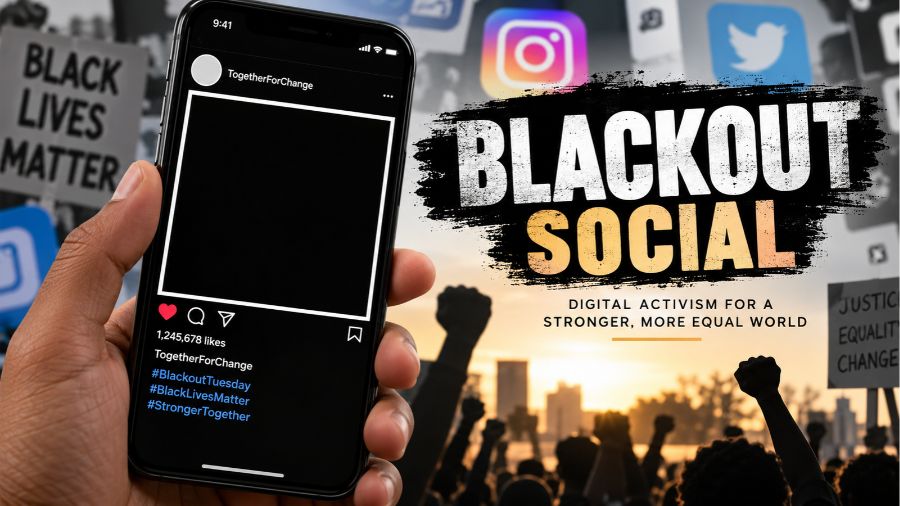
Blackout Social describes a form of digital activism in which people temporarily change their usual social media behavior to express solidarity with a cause, encourage reflection, or draw attention to an issue. This can involve posting a black square, pausing promotional content, reducing entertainment-related posts, or using coordinated hashtags to communicate a shared message. Rather than relying exclusively on demonstrations or public speeches, this approach uses existing digital platforms to make a social issue more visible. The phrase itself can describe a general online protest strategy rather than one formally established organization or a single campaign. Its meaning therefore depends on the context in which it appears, although the best-known historical example is Blackout Tuesday in 2020.
The History Behind Blackout Social
The modern understanding of Blackout Social developed alongside the growing use of social networks for public discussion, protest coordination, and social awareness. Online campaigns can spread rapidly because users can share messages, images, and personal experiences with audiences far beyond their immediate communities. In June 2020, this ability became especially visible when a music industry initiative responding to racial injustice evolved into a widespread social media blackout. The campaign illustrated both the reach of digital communication and its limitations: a simple image could become a recognizable symbol of solidarity, but widespread participation did not automatically guarantee practical action. The events surrounding Blackout Tuesday remain an important example of how online movements develop, change direction, and sometimes produce unintended consequences.
The Origins of Blackout Tuesday
Blackout Tuesday took place on June 2, 2020, during a period of protests and public debate following the deaths of George Floyd, Breonna Taylor, Ahmaud Arbery, and other Black Americans. The initiative originated with music industry professionals Jamila Thomas and Brianna Agyemang, who launched a campaign called The Show Must Be Paused. Their original objective was to interrupt normal music industry activities, encourage reflection, and challenge the industry’s relationship with racial inequality. They called for businesses and industry participants to consider their responsibilities toward Black artists and communities. As the initiative gained attention, participants across different industries began posting black squares on social media, helping transform an industry-focused call for reflection into the broader phenomenon commonly known as Blackout Tuesday.
How the Campaign Spread Across Social Media
The campaign spread as musicians, entertainment companies, celebrities, brands, and ordinary users began sharing black images and messages of support. Instagram became particularly associated with the trend because its visual format made plain black squares easy to recognize across individual profiles and public feeds. Other platforms also carried messages about racial equality and solidarity. The rapid spread demonstrated how social media can turn a focused initiative into a global conversation within a short period. However, the expansion also changed the campaign’s original emphasis. What organizers had intended as a pause for discussion and accountability increasingly became a recognizable visual gesture, raising questions about whether participation was producing meaningful engagement or simply demonstrating public support.
How Blackout Social Works in Practice
Blackout Social works by coordinating individual actions around a shared message, allowing participants to demonstrate awareness through familiar digital behaviors. Depending on the campaign, participants may publish a symbolic image, change their profile pictures, pause scheduled marketing posts, share educational resources, or temporarily stop posting unrelated content. Hashtags can connect separate posts and help users discover discussions about the same issue. The effectiveness of these actions depends on the campaign’s objectives, the accuracy of the information being shared, the audience’s response, and whether participants follow their public statements with further involvement. A successful digital campaign needs more than visibility: it also needs a clear purpose and a reasonable way for interested people to learn, participate, or contribute.
The Role of Black Images and Symbolic Posts
A plain black square became the defining visual associated with Blackout Tuesday because it offered a simple, recognizable way to signal participation. Unlike a detailed infographic or a long statement, a black image required little preparation and could be published by individuals, celebrities, and companies alike. Its simplicity allowed the campaign’s visual identity to spread quickly across different audiences. However, a symbolic image does not explain the issue, identify practical solutions, or demonstrate what its publisher intends to do next. Readers may interpret the same image as mourning, solidarity, protest, or a temporary pause. Adding a clear caption and relevant information can make a symbolic post more informative without removing its intended meaning.
The Importance of Hashtags
Hashtags organize conversations by connecting posts that use the same searchable phrase. During Blackout Tuesday, hashtags helped users discover campaign-related content and recognize the scale of participation. However, many users attached the #BlackLivesMatter hashtag to blank black-square posts, creating a problem for people searching that hashtag for protest updates, educational resources, and information about racial injustice. Activists and other public voices warned that the large volume of symbolic posts could make useful information harder to find. This experience demonstrated that hashtag selection is not merely a promotional decision. Campaign organizers and participants should consider how their posts affect existing information channels and use campaign-specific hashtags when appropriate.
The Role of Influencers, Celebrities, and Brands
Influencers and public figures can introduce a social campaign to audiences that might not otherwise encounter it. Their participation may increase awareness, encourage public discussion, and prompt followers to investigate an issue. Businesses can also use their platforms to explain their policies, communicate commitments, and share information about relevant initiatives. Nevertheless, audience size alone does not determine the quality of a contribution. A celebrity sharing a black square may attract considerable attention, but the post’s broader value depends on its message and any subsequent actions. Companies should also avoid treating social causes as marketing opportunities without demonstrating genuine commitment. Clear communication, responsible information sharing, and transparent follow-through are more useful than visibility without substance.
Why Blackout Social Became Significant
Blackout Social became significant because it demonstrated how ordinary online activity can be repurposed to communicate collective concern. Social platforms are usually associated with entertainment, personal updates, advertising, and professional networking. A coordinated pause or change in posting behavior disrupts those familiar patterns and can encourage audiences to consider an issue they might otherwise overlook. Blackout Tuesday also brought discussions about racial inequality into the feeds of people who may not have actively searched for related information. Its significance, however, should be understood carefully: widespread participation established the campaign’s visibility, but visibility alone does not prove that attitudes changed, institutions improved, or discrimination declined.
Raising Awareness of Social Issues
One of the principal advantages of digital activism is its ability to introduce important subjects to large audiences quickly. A coordinated campaign can encourage people to learn about an event, examine a social problem, or listen to individuals directly affected by it. For some users, a symbolic post may serve as an initial introduction to a topic they have not previously explored in depth. That initial attention can become more useful when accompanied by reliable reporting, historical context, educational material, and perspectives from affected communities. Awareness is an important starting point, but it should not be confused with understanding. Sustained learning requires participants to move beyond the symbol and examine the underlying causes, experiences, and possible responses.
Encouraging Conversations and Reflection
Digital campaigns can create opportunities for discussions among friends, colleagues, organizations, and communities. Blackout Tuesday encouraged conversations about racial inequality and the responsibilities of the music industry, while also prompting debate about how solidarity should be expressed online. These discussions revealed that people can support the same broad objective while disagreeing about the best methods for achieving it. Some participants viewed a pause as an opportunity to listen and reflect, whereas others argued that sharing educational resources and supporting ongoing activism was more valuable. Such disagreements are not necessarily evidence that a campaign has failed. They can reveal practical questions about priorities, communication, and the difference between expressing concern and helping address a problem.
Creating Pressure for Institutional Accountability
Organized digital attention can encourage companies and institutions to explain their positions, review their practices, or respond to public concerns. When employees, customers, artists, and community members raise related questions at the same time, organizations may face increased pressure to examine their decisions. In the context of Blackout Tuesday, the original initiative specifically challenged the music industry’s role in racial inequality and the benefits it receives from Black creativity. However, a public statement or temporary business pause does not establish that an institution has changed its practices. Meaningful accountability requires clear commitments, responsible implementation, appropriate measures of progress, and honest communication about results.
The Benefits and Limitations of Blackout Social
Blackout Social offers a relatively accessible way for people to participate in a public conversation without needing to organize a physical event or possess specialized resources. It can help unite geographically dispersed participants, create recognizable campaign symbols, and introduce an issue to new audiences. At the same time, digital campaigns depend on platform algorithms, user behavior, and the quality of the information being shared. Participation can become superficial when users focus primarily on demonstrating that they have joined a trend. A campaign can also unintentionally interfere with communication channels used by people seeking practical assistance or reporting events. Understanding both its advantages and limitations makes it easier to evaluate digital activism realistically rather than assuming that every widely shared campaign produces the same results.
Accessibility and Rapid Participation
An important benefit of online campaigns is that participation can be simple and inexpensive. People can share a message, publish educational information, or discuss an issue using accounts they already have. This accessibility allows participation across different locations and can reduce some of the logistical barriers associated with organizing public events. Digital communication also enables people to exchange information quickly and connect with organizations working on related issues. However, accessibility is not universal. Internet availability, digital literacy, language, disability access, and platform restrictions can affect who participates and whose voices receive attention. A campaign that appears widespread within one online community may not represent the experiences or opinions of the wider population.
The Risk of Performative Activism
Performative activism occurs when public displays of support emphasize appearance more than meaningful engagement. In the context of Blackout Social, this concern arises when people or businesses publish symbolic posts primarily to protect their reputation, follow a trend, or avoid criticism without taking further steps to understand or address the issue. A black square does not automatically establish a person’s motives, and a brief post should not be treated as proof that someone is insincere. The more useful question is whether the public gesture is accompanied by informed discussion, responsible behavior, or relevant action. Digital expressions of solidarity can have value, but their significance should not be measured solely by likes, shares, or the number of participating accounts.
Information Overload and Reduced Visibility
Social media platforms rely on searchable feeds, hashtags, recommendations, and other discovery features to help users locate relevant information. When a campaign generates large numbers of similar posts, the volume can make it harder to distinguish useful resources from repetitive content. This problem became particularly visible during Blackout Tuesday when black-square images overwhelmed parts of the #BlackLivesMatter hashtag feed. People searching for protest updates and information about racial injustice encountered large numbers of symbolic images instead. The episode demonstrated that good intentions do not always produce helpful communication outcomes. Digital campaign participants should consider what audiences need to find, whether a post contributes useful information, and how their chosen tags affect other people using the same channels.
Measuring Real-World Impact
The number of posts, shares, comments, or participating accounts can show that a campaign has attracted attention, but these metrics do not independently demonstrate social impact. A more meaningful assessment considers whether the campaign helped people access reliable information, supported relevant organizations, encouraged constructive dialogue, or contributed to specific institutional changes. The appropriate measures depend on the campaign’s purpose and may include documented commitments, completed initiatives, sustained participation, or independently verified outcomes. These indicators should be interpreted cautiously because social change often involves many influences and takes time. Without reliable evidence connecting a campaign to a particular result, it is more accurate to describe its reach and activities than to claim it directly caused lasting change.
Blackout Social and the Black Lives Matter Movement
Blackout Tuesday was associated with the wider Black Lives Matter movement, which addresses racism and racial injustice, including violence against Black people. However, the two should not be treated as interchangeable. Black Lives Matter is a broader movement with its own history, organizations, community initiatives, and forms of activism, while Blackout Tuesday was a specific campaign observed on June 2, 2020. Confusing the two can obscure the difference between a temporary online event and sustained efforts to address structural problems. The distinction also matters when researching historical events, because the goals of the original music industry initiative were not identical to every interpretation or use of the subsequent black-square trend.
Why the Hashtag Controversy Matters
The hashtag controversy highlighted an important tension between symbolic expression and practical communication. Participants wanted to show solidarity by publishing black squares, but activists also needed searchable spaces to share information about demonstrations, resources, and ongoing events. When blank images appeared alongside the #BlackLivesMatter hashtag, they made some of that information more difficult to discover. The concern was not simply about the appearance of social media feeds; it was about how online participation could affect the people trying to use those feeds for active organizing and public information. This lesson remains relevant to future campaigns: participants should understand the purpose of existing hashtags and avoid unintentionally obstructing the communication channels that affected communities rely on.
Moving From Online Solidarity to Meaningful Action
Online solidarity becomes more useful when it helps people identify informed and appropriate ways to engage with an issue. Depending on the campaign, this may involve learning from credible sources, listening to affected communities, supporting established organizations, participating in constructive discussions, or examining relevant workplace and institutional policies. Businesses can make their commitments more credible by explaining what they intend to change and how progress will be assessed. Individuals can also recognize that learning and participation do not end when a trending hashtag disappears. These actions will not solve every social problem, and their suitability depends on the issue involved, but they offer a more substantive approach than treating a temporary social media gesture as a complete response.
How to Participate Responsibly in a Blackout Social Campaign
Responsible participation begins with understanding the campaign’s purpose rather than copying a trending image without context. Before sharing content, users should examine the issue, identify reliable sources, and consider whether their post will help audiences understand what is happening. Campaign-specific hashtags can improve discoverability, while links to trustworthy information can give interested readers somewhere useful to continue their research. Individuals should avoid repeating unverified claims, exposing private information, or presenting symbolic participation as proof of personal expertise. Organizations should apply similar care by ensuring their public messaging is consistent with their conduct. These practices help reduce confusion and make digital activism more informative, respectful, and constructive.
Choose Accurate Information and Relevant Hashtags
The quality of information shared during a social campaign matters as much as the campaign’s visibility. Users should verify factual claims before reposting them, distinguish confirmed information from speculation, and correct mistakes when they discover them. They should also consider whether a hashtag is intended for symbolic participation, practical resources, breaking updates, or organized activities. The Blackout Tuesday experience shows why this distinction matters: a widely used tag can become less useful when unrelated or repetitive posts dominate it. Choosing relevant hashtags and providing meaningful context can help audiences locate information while reducing the risk of unintentionally disrupting conversations led by affected communities.
Maintain Engagement Beyond a Single Post
A temporary social media campaign may introduce an issue, but lasting engagement usually requires continued attention. Individuals can follow credible reporting, explore historical context, and consider how the issue relates to their communities or professional responsibilities. Businesses can review whether their stated values are reflected in relevant policies and practices, while campaign organizers can communicate progress and explain what happens after the initial event. Not every participant needs to take identical actions, and the most appropriate response depends on the subject and available evidence. The central principle is to treat a symbolic post as one possible starting point for engagement rather than as a substitute for understanding, accountability, or sustained effort.
The Future of Blackout Social and Digital Activism
Digital activism continues to evolve as social platforms change how people discover information, interact with communities, and respond to public events. Future campaigns may combine symbolic posts with educational videos, livestream discussions, community-led reporting, fundraising, and more structured calls for action. These formats can provide additional context, but they also introduce challenges involving misinformation, privacy, accessibility, and algorithmic visibility. Campaign organizers will need to balance rapid communication with accuracy and respect for the communities they intend to support. The enduring lesson from Blackout Tuesday is that the most visible online gesture is not necessarily the most useful one. Digital campaigns are more credible when they connect public attention to clearly defined objectives and responsible follow-through.
The Role of Social Media Platforms
Social media platforms influence digital activism through their recommendation systems, search functions, moderation policies, and content-sharing tools. These systems affect which posts receive attention and how easily users can find information about a campaign. Platforms may help messages travel quickly across communities, but the same speed can amplify misleading claims or crowd out important resources. Users should therefore avoid assuming that popular content is automatically accurate or representative. Campaign organizers can improve communication by providing clear context, directing audiences toward reliable information, and adapting their approach when a platform’s features create unintended problems. The relationship between digital activism and platform design will remain important as online communication continues to change.
From Viral Moments to Long-Term Accountability
The long-term value of a social media campaign depends partly on what happens after public attention declines. A viral moment can introduce an issue to new audiences, but lasting improvements generally require continued engagement, resources, and appropriate institutional responses. For businesses, this can mean documenting commitments and reporting measurable progress rather than relying exclusively on public statements. For community campaigns, it may mean maintaining access to educational resources and keeping communication open with affected groups. Any claim of success should be supported by evidence relevant to the stated objective. Blackout Social is therefore best understood as one possible mechanism for attracting attention, not a guaranteed method of achieving social change.
Conclusion
Blackout Social illustrates both the potential and the limitations of using social media to express solidarity and draw attention to important issues. Blackout Tuesday, held on June 2, 2020, demonstrated how a music industry initiative could develop into a widespread digital campaign, while the controversy surrounding black-square posts revealed the importance of accurate information and responsible hashtag use. Symbolic gestures can introduce conversations and communicate concern, but they cannot independently establish meaningful progress. The most constructive approach combines visibility with learning, thoughtful participation, accountability, and sustained engagement. Ultimately, the significance of digital activism depends not simply on how many people join a campaign, but on whether its communication supports the people, information, and objectives at the heart of the cause.
Also read: Ceftin Antibiotic: Uses, Dosage, Side Effects, and Safety Explained
FAQs
1. What does Blackout Social mean?
Blackout Social describes coordinated social media activity, such as posting black images or pausing regular content, to express solidarity and raise awareness about social issues.
2. When did Blackout Tuesday take place?
Blackout Tuesday took place on June 2, 2020, as a response to racial injustice and police brutality, becoming widely visible across social media platforms.
3. Who started the Blackout Tuesday campaign?
Music industry professionals Jamila Thomas and Brianna Agyemang launched The Show Must Be Paused, the initiative that inspired the wider Blackout Tuesday trend.
4. Why did people criticize Blackout Tuesday?
Critics argued that black-square posts, particularly those using #BlackLivesMatter, made it harder to find important protest updates, educational materials, and community resources.
5. Is Blackout Social the same as Black Lives Matter?
No. Blackout Social describes a general digital activism approach, while Black Lives Matter is a broader movement addressing racism and racial injustice.
6. Can Blackout Social create meaningful social change?
Blackout Social can increase awareness and encourage discussion, but lasting change generally requires informed participation, practical action, accountability, and evidence of progress.