
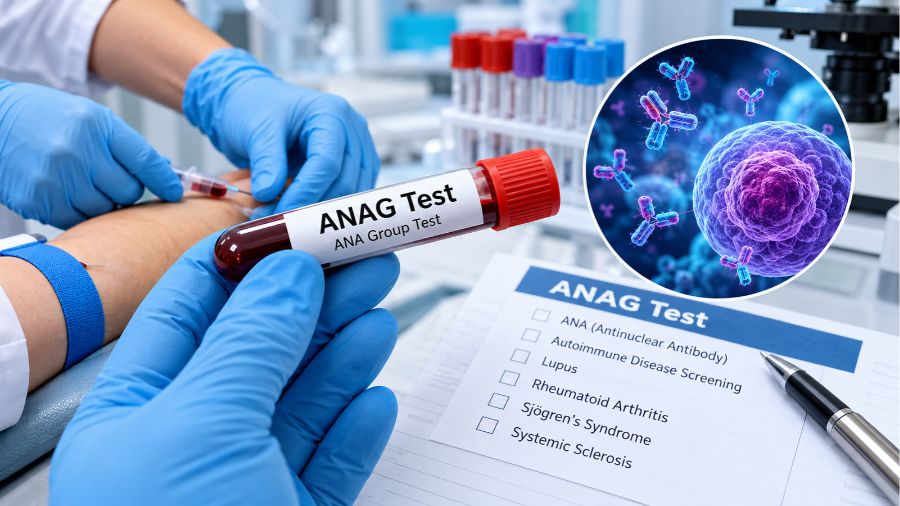
The ANAG test is a laboratory investigation that may be recommended when a doctor suspects an autoimmune condition affecting the body’s healthy tissues. ANAG is used as a laboratory abbreviation for ANA Group Test in some diagnostic settings. These tests help doctors investigate whether the immune system is producing antibodies that react against components of the body’s own cells. Understanding the ANAG test, its purpose, preparation requirements, and possible results can help patients feel more confident when discussing their health with a medical professional. However, it is important to understand that an abnormal result does not automatically confirm a disease. Doctors interpret laboratory findings alongside symptoms, medical history, physical examinations, and other investigations to reach an accurate diagnosis.
What Is an ANAG Test?
The ANAG test refers to an ANA Group Test in certain laboratory systems. ANA stands for antinuclear antibodies, which are antibodies directed against structures within the nuclei of cells. Under normal circumstances, the immune system protects the body against harmful microorganisms and other foreign substances. In autoimmune conditions, however, the immune system may mistakenly recognize certain components of the body’s own tissues as targets. An ANA-related investigation helps identify antibodies associated with this process. The exact meaning of an ANAG test can vary according to the laboratory’s test menu and methodology, so patients should confirm which antibodies are included in their requested panel. A basic ANA screening test and a more comprehensive ANA group panel are not necessarily identical investigations.
Why Do Doctors Recommend an ANAG Test?
Doctors may recommend an ANAG test when a patient’s symptoms suggest a possible autoimmune disorder. These symptoms can include persistent joint pain, unexplained fatigue, recurring skin rashes, muscle discomfort, or other signs that cannot be fully explained by an initial examination. The test can provide additional information when a doctor is investigating a suspected systemic inflammatory condition. It may also be requested after other laboratory findings raise concerns about an immune-related disorder. The purpose is not simply to identify whether antibodies are present but to determine whether the results support a particular clinical suspicion. Because many symptoms overlap between different illnesses, doctors generally avoid making a diagnosis from one laboratory result alone. The decision to order testing depends on the patient’s individual symptoms and medical history.
Which Diseases May Be Associated With ANAG Testing?
ANA-related testing can assist doctors in investigating several autoimmune conditions. These include systemic lupus erythematosus, which may affect the skin, joints, kidneys, blood vessels, and other organs. It may also contribute to investigations for Sjögren’s syndrome, a condition associated with dry eyes and a dry mouth, and systemic sclerosis, which can affect the skin and internal organs. Some patients undergoing evaluation for other connective tissue diseases may also receive ANA-related investigations. Nevertheless, the ANAG test does not independently establish any of these diagnoses. Different conditions require different combinations of symptoms, examination findings, and specific laboratory tests. Some patients with autoimmune diseases may need additional antibody testing to clarify the possible diagnosis, while people without an autoimmune disease can occasionally have positive ANA findings.
Common Symptoms That May Lead to Testing
The symptoms associated with autoimmune disorders vary considerably, which is one reason doctors may recommend further laboratory investigations. Common concerns include prolonged tiredness, joint stiffness, swelling, muscle pain, recurring fever, and unexplained skin changes. Some people develop a rash across the cheeks and nose, while others experience sensitivity to sunlight or persistent dryness of the eyes and mouth. Certain autoimmune conditions can affect internal organs without producing obvious symptoms at first. However, these symptoms are not specific to autoimmune disease and may occur because of infections, nutritional deficiencies, hormonal disorders, or other medical problems. An ANAG test should therefore be considered only as part of an appropriate medical assessment. Patients should explain when their symptoms started, how frequently they occur, and whether anything makes them better or worse.
How Is the ANAG Test Performed?
The ANAG test usually involves collecting a blood sample, although the required specimen and laboratory procedure depend on the specific test ordered. A trained healthcare professional typically cleans the skin, inserts a small needle into a vein in the arm, and collects blood into a suitable collection tube. The sample is then transported to a laboratory for analysis using the method selected by that facility. ANA-related testing may use indirect immunofluorescence or other antibody-detection techniques, depending on the panel. The collection process generally takes only a few minutes. Some people experience mild discomfort, temporary tenderness, or a small bruise at the puncture site. Serious complications are uncommon. Patients should follow the collection instructions provided by their laboratory and inform staff if they have previously experienced problems during blood sampling.
Preparation Before an ANAG Test
Preparation requirements depend on the exact investigation and the laboratory performing it. A standard ANA blood test generally does not require fasting, but patients should confirm the instructions for their particular ANAG panel before attending. It is especially important to tell the doctor about prescription medicines, over-the-counter products, and supplements being taken. Certain medicines can influence antibody results or affect their interpretation. Patients should never stop prescribed treatment independently just to prepare for a laboratory test. If the test is being performed alongside glucose, cholesterol, or other investigations, separate preparation requirements may apply. Carrying the doctor’s request, previous laboratory reports, and a list of current medications can make the appointment easier. Following the laboratory’s instructions helps ensure that the sample is collected and processed appropriately.
Understanding Positive ANAG Test Results
A positive ANA-related result means that the laboratory detected the antibodies targeted by the particular investigation. Depending on the method, the report may also include a titre, staining pattern, or information about specific antibodies. These details can help the doctor determine whether further evaluation is necessary. A positive result may support a suspected autoimmune condition, especially when compatible symptoms and other clinical findings are present. However, it does not automatically mean that the patient has lupus or another serious illness. Some healthy people have detectable antinuclear antibodies, and certain infections, medications, and other health circumstances may also contribute to positive findings. The significance of a positive ANAG result therefore depends on the antibody detected, the laboratory’s interpretation criteria, the patient’s symptoms, and the wider clinical picture.
What Does a Negative ANAG Test Mean?
A negative result generally indicates that the antibodies targeted by the test were not detected at the laboratory’s reporting threshold. This finding may make certain autoimmune conditions less likely, depending on the particular test and the patient’s clinical presentation. Nevertheless, a negative result cannot exclude every autoimmune disease. Some conditions are associated with different antibodies that are not included in the original panel, and test sensitivity varies according to the method used. If a patient continues to experience concerning symptoms, the doctor may consider additional blood tests, urine testing, imaging, or a specialist assessment. Patients should not interpret a negative report as proof that every possible medical cause has been ruled out. Instead, the result should be reviewed alongside the original reason for testing and any changes in the patient’s health.
ANAG Test Results and Follow-Up Investigations
After reviewing the ANAG test, a doctor may recommend additional investigations when the findings suggest a possible autoimmune condition. Depending on the symptoms and initial results, these may include anti-double-stranded DNA antibodies, an extractable nuclear antigen panel, a complete blood count, kidney function tests, urine analysis, or inflammatory markers. Not every patient needs all these investigations. The choice depends on which disease is suspected and whether there is evidence of organ involvement. A doctor may also review previous results to determine whether a finding is new or has changed over time. Patients should bring the complete laboratory report rather than relying on a verbal description of the result. This allows the healthcare professional to review the test name, method, reference information, and any comments provided by the laboratory.
ANAG Test Cost and Reporting Time
The cost of an ANAG test varies between laboratories, cities, and the types of antibodies included in the requested panel. A basic ANA screening test may cost less than a comprehensive group test that identifies multiple specific antibodies. Prices can also differ depending on laboratory equipment, testing methods, sample collection arrangements, and whether the service includes additional investigations. Reporting times vary as well. Some facilities process particular tests routinely, while specialized panels may require additional laboratory work or referral to another facility. Patients in Pakistan can ask their chosen laboratory for the current price, expected reporting date, specimen requirements, and whether an appointment is necessary. It is best to confirm these details directly because advertised prices and turnaround times can change. A lower price should not be the only factor when selecting a diagnostic facility.
How to Discuss Your ANAG Test With a Doctor
Patients can make their appointment more productive by preparing a few questions before discussing their ANAG results. They may ask which antibodies were tested, whether the result is considered positive or negative under the laboratory’s criteria, and how it relates to their symptoms. If the report includes a titre, staining pattern, or specific antibody result, the doctor can explain its significance in the context of the patient’s health. Patients should also ask whether follow-up testing is necessary and when they should return for review. It is important not to begin treatment or make major medication changes based solely on an online interpretation. If symptoms are severe, rapidly worsening, or suggest an urgent problem, medical attention should not be delayed while waiting for routine test results. Clear communication helps patients understand their options and make informed decisions.
Also read: Rarity Society: Meaning, Brand Identity, Fashion, and What Makes It Unique
Conclusion
The ANAG test, commonly listed as an ANA Group Test in some laboratory systems, can be a useful part of investigating suspected autoimmune conditions. It helps doctors assess antibody findings that may be associated with diseases affecting the body’s own tissues. Understanding the purpose of the test, its blood collection procedure, preparation requirements, and possible results can make the diagnostic process less confusing. However, positive and negative findings both have limitations, and neither should be interpreted without considering the patient’s overall health. The exact panel also matters because laboratories may use different testing methods and include different antibodies. Patients should confirm the precise test ordered, obtain the complete report, and discuss the findings with a qualified healthcare professional. An informed, individualized medical assessment is the best way to understand what an ANAG test result means for a person’s health.