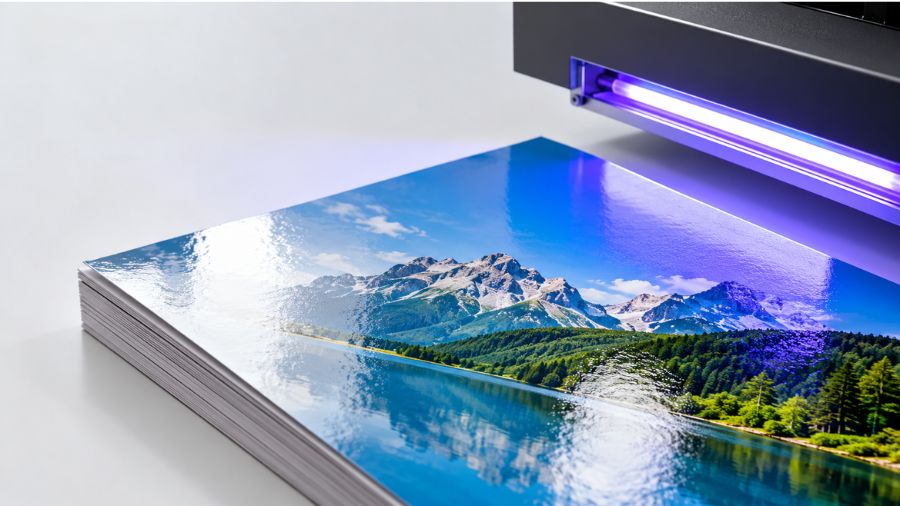
Uvlack is a term that can sound unfamiliar at first, but its meaning becomes much clearer when you understand the technology behind it. In most printing and surface-finishing contexts, Uvlack refers to a UV-curable lacquer or coating that becomes hard when exposed to ultraviolet light. Instead of waiting for a coating to dry naturally, manufacturers can use UV energy to cure it quickly and create a smooth, durable finish.
The technology is particularly useful when appearance and production speed both matter. A properly applied UV coating can give printed materials a glossy, matte, satin, or textured surface while also helping protect the underlying material from everyday wear. It is commonly associated with printing and packaging, although UV-curable finishes can also be used on wood, plastics, furniture components, and various manufactured surfaces.
The word itself is also interesting because different spellings appear online, including Uvlack, UVLACK, UV-Lack, and UV lack. In European technical terminology, especially German-influenced usage, “Lack” relates to lacquer or varnish. This makes UV-Lack a straightforward description of a lacquer cured with ultraviolet light.
What Is Uvlack?
Uvlack is generally understood as a UV-curable lacquer, varnish, or surface coating. It begins as a liquid and is applied as a thin layer over a suitable surface. Once the coated material is exposed to ultraviolet light, a chemical reaction takes place inside the coating, causing it to cure and become a solid protective film.
Unlike conventional varnishes that may depend on evaporation or extended drying time, UV coatings are designed to cure rapidly. This characteristic makes them particularly attractive for commercial printing and manufacturing environments where materials need to move quickly from one production stage to another.
Uvlack is not necessarily one specific product or chemical formula. Different manufacturers can formulate UV coatings for different purposes. Some are designed to produce a high-gloss appearance, while others create a matte, satin, soft-touch, textured, or raised effect.
What Does the Word Uvlack Mean?
The word Uvlack can be understood by separating it into two parts: “UV” and “Lack.” UV refers to ultraviolet light, while “Lack” is associated with lacquer or varnish in several European languages, particularly German.
Put together, UV-Lack essentially describes a lacquer or varnish that is cured using ultraviolet light. The spelling without the hyphen, Uvlack, is easier to use as a single keyword and has become increasingly visible in online content.
In English-speaking printing environments, you are more likely to hear terms such as UV coating, UV varnish, or UV lacquer. These terms generally describe the same broad category of technology.
How Does Uvlack Work?
The basic process behind Uvlack is surprisingly simple. A liquid UV-curable coating is first applied to the surface that needs finishing. The coating can be spread using different application systems depending on the material, production process, and desired result.
After application, the material passes beneath a UV curing system. The ultraviolet energy activates special components within the coating, commonly known as photoinitiators. These components initiate a chemical reaction that changes the liquid coating into a solid film.
The curing process can happen extremely quickly when the correct coating, UV intensity, and production conditions are used. This is one of the main reasons UV technology has become valuable in high-speed commercial production.
Why Is UV Curing So Fast?
The speed of UV curing comes from the chemical reaction triggered by ultraviolet energy. Traditional coatings may need time for solvents or water to evaporate, or they may require heat and extended drying periods before the surface can be handled safely.
UV-curable coatings work differently. Their formulation is designed to react when exposed to the appropriate UV wavelength and intensity. Once the reaction begins, the coating can harden rapidly rather than simply waiting for moisture or solvent evaporation.
For manufacturers, this can make a significant difference. Faster curing can reduce waiting periods, improve production flow, and allow finished materials to be handled shortly after coating.
Uvlack in Printing and Packaging
Printing is one of the most recognizable applications for UV lacquer. Magazines, brochures, business cards, product boxes, labels, folders, book covers, and promotional materials can all benefit from specialized UV finishes.
The coating can make printed colors appear more vibrant by creating a smooth reflective surface. It can also provide additional protection against scuffing and routine handling.
Packaging is another important application because appearance plays a major role in purchasing decisions. A cosmetic box, premium food package, or product carton can use UV coating to highlight important visual elements and create a more premium impression.
What Is Spot Uvlack?
Spot Uvlack is a selective coating technique rather than a full-surface application. Instead of covering an entire printed sheet, the UV coating is placed only on specific areas.
For example, a designer might apply spot UV to a company logo, product name, photograph, pattern, or headline. The contrast between the coated and uncoated areas creates a noticeable visual effect.
Spot UV can also provide a tactile difference. Depending on the formulation and application thickness, the coated section may feel smoother or slightly raised compared with the surrounding paper.
Full-Surface Uvlack vs Spot Uvlack
Full-surface Uvlack covers most or all of the intended surface, giving the entire material a consistent finish. It is useful when the goal is overall protection, shine, or a uniform appearance.
Spot Uvlack is more focused on visual design. It highlights particular areas and is often selected when the designer wants to draw attention to specific elements rather than change the appearance of the whole surface.
The better option depends on the project. A product package may benefit from full coverage, while a business card may look more distinctive with spot UV applied only to the logo and name.
What Finishes Can Uvlack Provide?
Uvlack does not always mean a shiny surface. Modern UV coating systems can produce different visual and tactile effects depending on their formulation.
A high-gloss UV finish creates a reflective surface that can make colors and graphics stand out. Matte UV finishes reduce reflection and create a more understated appearance. Satin finishes sit between glossy and matte effects.
Some specialized formulations can create textured or raised effects. These options allow designers and manufacturers to use the coating as part of the visual identity of a product rather than treating it only as protection.
Benefits of Uvlack
One of the biggest advantages of Uvlack is its rapid curing speed. Once the coating has been properly exposed to UV energy, it can become ready for subsequent production steps very quickly.
Another benefit is appearance. UV finishes can produce a clean, smooth, professional surface that makes printed materials look more polished.
Durability is also important. A suitable UV coating can improve resistance to everyday abrasion, handling, and surface wear.
The technology can also support precise finishing effects. Manufacturers can choose different coating types depending on whether they need gloss, matte, texture, selective highlighting, or another appearance.
Uvlack and Product Durability
A surface coating can play an important role in protecting printed or manufactured materials. Uvlack creates a cured film over the underlying surface, which can help reduce the effect of everyday handling and minor surface damage.
However, it should not be considered an unlimited protective barrier. The actual performance depends on the formulation, thickness, substrate, curing conditions, and environment.
For products that face heavy physical abuse, moisture, chemicals, or repeated folding, manufacturers need to choose a coating specifically designed for those conditions.
Uvlack on Wood and Furniture
UV-curable coatings are not limited to paper. Similar technology can be used in wood finishing and furniture production.
Furniture manufacturers can use UV finishes to create smooth surfaces with consistent appearance while maintaining fast production cycles. Cabinet components, decorative panels, flooring products, and other wood-based materials can be suitable for specialized UV finishing systems.
The exact coating must be matched to the material because wood behaves differently from paper or plastic. Surface preparation, coating thickness, UV exposure, and curing conditions all influence the final result.
Uvlack on Plastic and Manufactured Products
Certain UV-curable coatings can also be formulated for plastic and other manufactured surfaces. These coatings may be used to improve appearance, add surface protection, or create a specific visual effect.
Plastic surfaces can present adhesion challenges, so the coating must be compatible with the particular material. Surface preparation may also be necessary to achieve reliable results.
This is why choosing Uvlack is not simply a matter of selecting any UV coating. The product should be matched to the substrate and the intended use.
Uvlack vs Traditional Varnish
Traditional varnish and UV lacquer have different curing mechanisms. Conventional varnish may dry through evaporation, oxidation, or other processes, while UV lacquer relies on ultraviolet energy to trigger curing.
The major advantage of UV technology is speed. A traditional coating may require significant drying time, whereas a properly formulated UV coating can cure extremely quickly.
However, traditional finishes still have their place. They may be easier or more economical for certain applications, especially when specialized UV equipment is not available.
The right choice depends on production volume, equipment, surface requirements, appearance, budget, and desired performance.
Uvlack vs Lamination
UV coating and lamination are also different finishing methods. Lamination involves bonding a separate film to the surface, while UV coating creates a cured layer directly on the material.
Lamination can provide strong physical protection and may be suitable for products that need a more substantial barrier. UV coating can provide an attractive finish without adding a separate film layer.
For premium print materials, the decision often comes down to the desired combination of appearance, flexibility, protection, production speed, and cost.
Limitations of Uvlack
Although Uvlack offers many advantages, it is not ideal for every application. Some UV-cured coatings can be relatively rigid, which means they may not perform well on materials that require repeated sharp folding or bending.
Surface compatibility is another consideration. A coating that works well on coated paper may not produce the same result on an uncoated, rough, plastic, or wooden surface.
Curing conditions also matter. Insufficient UV exposure can leave a coating improperly cured, while incorrect application thickness or unsuitable equipment can affect the final appearance.
Professional production therefore requires more than simply applying a UV coating. The coating, substrate, application method, and curing system need to work together.
Is Uvlack Environmentally Friendly?
The environmental profile of UV coatings depends heavily on the specific formulation and production system. One potential advantage is that UV-curable systems can be designed with very high solids content, reducing the reliance on some traditional solvent-based drying processes.
The rapid curing process can also contribute to efficient production because materials do not need to sit for long periods waiting to dry.
However, UV technology should not automatically be described as completely environmentally friendly. Manufacturing, raw materials, energy consumption, waste management, and the specific chemical composition of the coating all influence its overall environmental impact.
Why Is Uvlack Becoming More Popular?
The growing interest in Uvlack is closely connected to the demand for faster production and better-looking finished products. Businesses want packaging and promotional materials that attract attention while remaining practical and durable.
At the same time, manufacturers are looking for finishing technologies that fit into automated production environments. UV curing can be particularly useful where production speed is important.
The unusual keyword Uvlack has also attracted online attention because it is short, distinctive, and closely connected with established UV coating terminology.
Is Uvlack a Brand or a General Term?
This depends on the context. Uvlack can be used informally to describe UV lacquer or UV coating, but an exact spelling can also appear as a product or brand name.
That distinction is important when researching a particular item. If you encounter UVLACK on packaging, a product listing, or a company catalog, it may refer to a specific commercial product rather than the general technology.
In technical discussions about printing and finishing, however, the broader meaning is usually related to UV-curable lacquer.
Common Spelling Variations of Uvlack
You may encounter several variations when researching this technology. These include Uvlack, UVLACK, UV-Lack, UV lack, UV lacquer, UV varnish, and UV coating.
Although these terms can have slightly different meanings depending on the manufacturer or industry, they are often connected to the same basic concept of a coating that cures through ultraviolet exposure.
Understanding these variations can make research much easier because a search using only one spelling may miss useful technical information.
How to Choose the Right Uvlack Coating
Choosing the right UV coating starts with the material being coated. Paper, cardboard, wood, plastic, and other substrates can require different formulations.
The desired appearance should also be considered. If the goal is maximum shine, a high-gloss product may be appropriate. For a sophisticated low-reflection appearance, matte or satin may be preferable.
Production requirements are equally important. Manufacturers should consider curing equipment, coating thickness, application method, production speed, and the conditions the finished product will experience.
For commercial work, testing a coating on the actual substrate before large-scale production is a sensible approach.
Also read: Affordable Digital Marketing with Garage2Global: A Smarter Growth Plan
Conclusion
Uvlack is best understood as a term associated with UV-curable lacquer, varnish, and surface-finishing technology. The basic principle is straightforward: a liquid coating is applied to a suitable surface and then exposed to ultraviolet light, causing it to cure into a solid film.
Its popularity comes from a useful combination of speed, appearance, and surface protection. In printing and packaging, it can make products look sharper and more premium. In other industries, specialized UV coatings can provide attractive and durable finishes on materials such as wood and plastic.
At the same time, Uvlack is not a single universal formula. Different applications require different coatings, and factors such as substrate, finish, curing equipment, flexibility, durability, and production conditions all matter.
The term can also be confusing because several spellings and product-specific uses appear online. In most technical finishing contexts, however, its connection with UV lacquer provides the clearest explanation.
Ultimately, the value of Uvlack comes from what it does rather than how unusual the word sounds. It combines a liquid finishing material with rapid UV curing to create a controlled surface finish that can improve both appearance and practical performance.