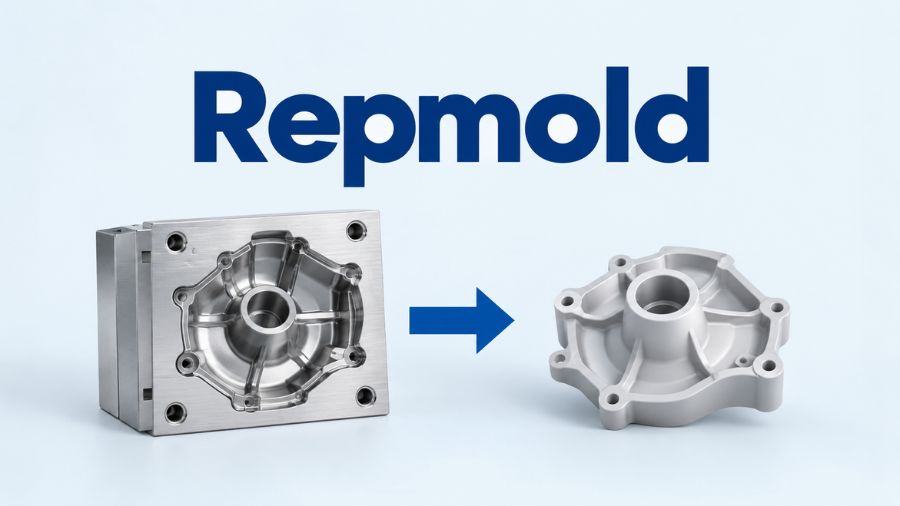
Repmold is becoming an interesting concept in modern manufacturing, particularly for businesses looking for faster, more flexible, and more consistent ways to reproduce molds, components, and detailed physical parts. As manufacturing moves toward digital workflows, companies are increasingly combining traditional molding techniques with 3D scanning, computer-aided design, rapid prototyping, and advanced fabrication methods. The goal is simple: reduce unnecessary production time while maintaining the accuracy and quality that professional manufacturing requires.
For many manufacturers, the biggest challenge is not creating a product once but reproducing it accurately again and again. A small dimensional difference can affect how a component fits, performs, or interacts with other parts. Repmold-style workflows address this challenge by focusing on accurate replication, digital preparation, and efficient mold production. This makes the concept relevant to industries ranging from automotive and engineering to product development, restoration, and custom manufacturing.
What Is Repmold?
Repmold can generally be understood as an approach to reproducing an existing mold, component, or physical form with a strong emphasis on accuracy and repeatability. Instead of relying entirely on manual measurements and traditional fabrication, a modern Repmold workflow can incorporate digital scanning, CAD modeling, CNC machining, 3D printing, and other manufacturing technologies.
The exact process depends on the type of object being replicated and the required production quality. A simple part may require only careful measurement and digital modeling, while a highly detailed industrial component may need 3D scanning, surface reconstruction, engineering validation, and precision machining. The central idea remains the same: capture the geometry of an existing object and use that information to create a reliable reproduction.
Why Repmold Matters in Modern Manufacturing
Manufacturing has changed significantly as digital technologies have become more accessible. In the past, reproducing an existing component often required extensive manual measurements, physical templates, drawings, and trial-and-error adjustments. That process could be slow, particularly when the original design documentation was unavailable.
Repmold-style methods offer a more practical alternative. Digital information can be captured, adjusted, stored, and reused whenever another production run is required. This can be especially valuable for older components, replacement parts, custom products, and prototypes where original CAD files may not exist.
Another advantage is repeatability. Once the geometry has been accurately captured and converted into a usable digital model, manufacturers can use the same information to produce additional molds or parts without starting the entire measurement process again.
How the Repmold Process Works
A typical Repmold process starts with examining the original object or mold. Before any scanning or machining begins, the manufacturer needs to understand the material, dimensions, surface condition, tolerances, and intended function of the component. This initial inspection is important because a damaged or worn original may contain imperfections that should not be reproduced.
The next stage can involve 3D scanning or precision measurement. The resulting data provides a digital representation of the object’s shape. Specialized software can then process this information, remove unnecessary scanning noise, repair missing areas, and generate a suitable three-dimensional model.
Once the digital model has been prepared, engineers can modify it if necessary. For example, they may compensate for shrinkage, adjust wall thickness, add draft angles, or correct dimensional problems. The final model can then be used to manufacture a new mold through CNC machining, 3D printing, or another suitable production technique.
The Role of 3D Scanning in Repmold
3D scanning can be one of the most useful technologies in a Repmold workflow because it allows manufacturers to capture complex shapes without manually measuring every feature. Modern scanners can collect thousands or even millions of individual measurement points, creating a detailed digital representation of the original object.
This is particularly useful when a component contains curved surfaces, irregular geometry, intricate patterns, or difficult-to-measure areas. Instead of trying to recreate these features from basic measurements, engineers can work from a detailed digital scan.
However, scanning alone does not guarantee a perfect reproduction. The quality of the final result depends on scanner accuracy, surface preparation, scanning technique, data processing, and engineering judgment. Experienced professionals understand that raw scan data often needs significant refinement before it can be used for manufacturing.
CAD Modeling and Digital Reconstruction
After scanning, CAD modeling plays an important role in transforming captured geometry into something that can actually be manufactured. Raw scan data may contain imperfections, gaps, duplicate surfaces, or unnecessary details. A skilled designer can convert this information into a clean and functional digital model.
CAD software also provides an opportunity to improve the original design. Engineers can analyze dimensions, identify potential weaknesses, modify certain features, and prepare the model according to the requirements of the manufacturing process.
This digital model becomes a valuable asset because it can be archived for future production. If the physical mold is eventually damaged or lost, the manufacturer may be able to create another one using the stored digital information rather than repeating the entire reverse-engineering process.
Repmold and 3D Printing
3D printing has made mold development much more accessible, particularly for prototypes, low-volume production, and custom applications. Depending on the material and manufacturing requirements, a printed mold or mold pattern can sometimes be produced considerably faster than a traditionally machined alternative.
For example, a company developing a new product may need several prototype versions before finalizing the design. Creating expensive production tooling for every iteration can be inefficient. A digitally prepared Repmold workflow can allow manufacturers to produce temporary molds, patterns, or prototype components quickly and test them before committing to more expensive tooling.
The limitations of 3D printing still need to be considered. Temperature resistance, surface finish, mechanical strength, dimensional stability, and expected production volume all influence whether a printed mold is appropriate.
CNC Machining and Precision Tooling
For applications requiring high accuracy and durability, CNC machining remains an important part of mold production. Once a suitable digital model has been created, CNC equipment can remove material from a block of metal, plastic, or another suitable material according to programmed toolpaths.
This approach is particularly valuable when the final mold needs tight tolerances or must withstand repeated production cycles. CNC machining can also produce surface details that may be difficult to achieve with some additive manufacturing techniques.
The combination of digital reconstruction and CNC machining creates a useful workflow. The physical object provides the reference geometry, scanning or measurement creates the digital representation, CAD software prepares the design, and CNC equipment turns that design into a functional mold or component.
Applications of Repmold Technology
Repmold concepts can be useful across many industries. Automotive manufacturers may use digital replication techniques to reproduce discontinued components or develop replacement tooling. Engineering companies can use them for reverse engineering, prototype development, and component replacement.
Product designers can also benefit when developing customized products. Instead of creating every component from scratch, an existing physical form can serve as a starting point for a new digital design.
Restoration work is another interesting application. Older machinery, vehicles, and industrial equipment may contain components for which original manufacturing drawings are unavailable. Digital replication can help recreate these parts while preserving their important dimensions and geometry.
Small manufacturers can also benefit because digital workflows reduce the dependence on physical templates and manual records. Once a component has been successfully digitized, the information can be retained for future use.
Benefits of Using a Repmold Approach
One of the biggest benefits is efficiency. Digital capture and modeling can reduce the amount of manual measurement required during the replication process. This does not eliminate skilled engineering work, but it can make that work more structured and repeatable.
Accuracy is another major advantage. When appropriate equipment and quality-control procedures are used, digital scanning and precision manufacturing can reproduce complex geometry with a high level of consistency.
Cost savings can also become possible, particularly when the same digital model is used for multiple production runs. Manufacturers do not necessarily need to recreate physical templates every time a replacement mold or component is required.
There is also a strong archival benefit. A physical object can deteriorate, become obsolete, or disappear. A properly prepared digital model can be stored and reused for years, creating a digital record of an important component.
Challenges and Limitations
Despite its advantages, Repmold is not a magic solution for every manufacturing problem. The quality of the output depends heavily on the quality of the original object and the tools used to capture it. If the original component is worn, distorted, or damaged, simply copying its geometry may reproduce those problems.
Material behavior is another consideration. Molds and molded products can behave differently depending on temperature, pressure, moisture, shrinkage, and mechanical stress. A geometrically accurate replica may still require engineering modifications to function correctly in a production environment.
Surface finish can also present challenges. A scan may accurately capture the overall shape but still require additional processing to produce a surface suitable for manufacturing. Similarly, a 3D-printed mold may require finishing before it can deliver the desired product quality.
For these reasons, professional inspection and engineering validation remain essential.
Quality Control in Repmold Manufacturing
Quality control should be integrated throughout the entire replication process rather than performed only after manufacturing is complete. Measurements should be checked during scanning, digital reconstruction, tooling preparation, and final inspection.
Dimensional inspection can compare the finished mold or component against the approved digital model. Depending on the application, manufacturers may use coordinate measuring machines, optical inspection systems, gauges, or other precision measurement equipment.
Functional testing is equally important. A mold may look dimensionally correct but still produce inconsistent results during actual production. Testing the finished tooling under realistic conditions can reveal issues related to fit, shrinkage, surface quality, alignment, or material behavior.
The Future of Repmold
The future of Repmold-style manufacturing is closely connected to the broader growth of digital manufacturing. As scanning equipment becomes more accurate and accessible, capturing physical objects will become easier for more businesses.
Artificial intelligence and automated design software may also improve the process. Future systems could help identify damaged areas, automatically clean scan data, recognize geometric features, and recommend manufacturing adjustments.
Cloud-based digital manufacturing may further improve collaboration. A company could maintain a secure digital library of molds and components and send approved designs directly to manufacturing partners when replacement tooling is needed.
The most important development, however, may be the growing connection between physical products and their digital records. Once a physical component has been accurately digitized, it becomes much easier to preserve, modify, reproduce, and analyze.
Is Repmold Suitable for Every Project?
Not necessarily. The best approach depends on the project’s production volume, required accuracy, material, budget, geometry, and expected lifespan. A simple prototype may benefit from rapid 3D printing, while a high-volume industrial mold may require precision CNC machining and specialized tooling materials.
The decision should therefore be based on engineering requirements rather than simply choosing the newest technology. A professional manufacturer will normally evaluate the original component, determine the required tolerances, select an appropriate scanning or measurement method, and then choose the most suitable manufacturing process.
Also read: Incestflox Meaning, Origins, Online Context, and What to Know Today
Conclusion
Repmold represents a practical way of thinking about modern mold and component replication, combining physical reference objects with digital measurement and advanced manufacturing technologies. By bringing together 3D scanning, CAD reconstruction, CNC machining, 3D printing, and quality control, manufacturers can reproduce complex components more efficiently while maintaining greater control over the final result.
Its real value is not simply in copying an object. The stronger advantage comes from turning physical geometry into reusable digital information. That information can support future manufacturing, restoration, prototyping, replacement parts, and product development.
As digital manufacturing continues to evolve, approaches like Repmold are likely to become increasingly useful. Businesses that learn how to combine accurate measurement with sound engineering judgment will be better positioned to reduce development time, preserve important designs, and produce reliable components without unnecessarily repeating work from the beginning.