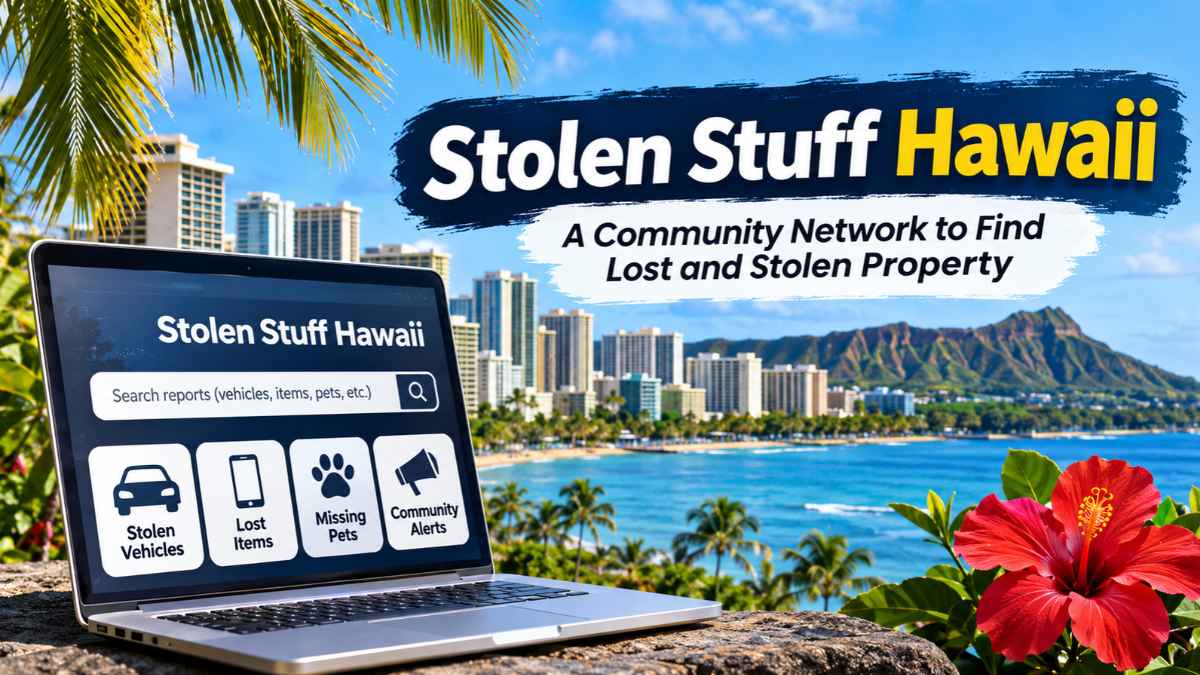
Stolen Stuff Hawaii is a community-based crime awareness and property recovery network that helps residents share information about stolen belongings, missing pets, lost items, and local incidents. Through its searchable reports and social media community, it connects people across Hawaii who want to recover property, raise awareness, and support safer neighbourhoods. This guide explains how Stolen Stuff Hawaii works, how people can search its reports or submit information, and what users should understand about privacy, accuracy, and official police reporting.
What Is Stolen Stuff Hawaii?
Stolen Stuff Hawaii, commonly known as SSH, is a community crime-awareness initiative established in Hawaii in 2014. It was created by Michael J. Kitchens after a vehicle theft affected his family, inspiring him to build a platform where residents could help one another locate missing belongings and share information about suspicious activity. Over time, the initiative developed into a wider online community serving people across the Hawaiian Islands.
The platform focuses on practical community assistance rather than replacing traditional law enforcement. Residents can share information about stolen vehicles, missing property, lost pets, found belongings, thefts, burglaries, and other incidents that may affect their neighbourhoods. Its central purpose is to make useful information more visible and encourage residents to look out for one another.
How Stolen Stuff Hawaii Works
Stolen Stuff Hawaii brings together community submissions, searchable reports, and social media updates. People who have experienced a theft or lost an item can provide information that may help others recognise the property or understand what happened. Reports can include descriptions, locations, photographs, videos, and other relevant details.
The platform reviews submitted information before publishing approved reports, although community reporting should not be treated as the same thing as a verified police investigation. Its value comes from connecting people who may have useful information, increasing awareness of incidents, and giving residents another way to communicate about property-related concerns.
Community Reports and Social Media
Social media remains an important part of the Stolen Stuff Hawaii network. Its presence across platforms allows reports to reach different audiences, including residents who may not regularly visit a dedicated website. Sharing a report can help someone recognise a vehicle, identify a lost item, or contact its owner.
The network also covers more than property theft. Community updates may include missing-person notices, lost and found pets, suspicious activity, public safety information, and other local matters. This broader approach makes the service relevant to everyday community awareness as well as property recovery.
The Searchable SSH Database
One of the useful developments associated with Stolen Stuff Hawaii is its searchable report database. Users can search using relevant details such as an item description, vehicle information, a location, or a keyword. This makes it easier to look for information without having to scroll through a large number of social media posts.
The database can be particularly useful when someone is trying to find an older report or check whether a similar incident has already been shared. However, search results depend on the information submitted and published. An item that does not appear in the database may still have been reported elsewhere or recorded by the police.
What Can You Find on Stolen Stuff Hawaii?
The platform covers several types of community reports. Its most recognisable purpose is helping people find stolen property, but its searchable information can also support residents dealing with lost belongings and other local concerns.
Stolen Vehicles and Vehicle Parts
Vehicle theft is an important subject for community reporting in Hawaii. Reports may include stolen cars, motorcycles, bicycles, vehicle break-ins, and missing vehicle parts. A description of the vehicle, its colour, identifying features, and the location where it was last seen can help readers recognise it.
Vehicle owners should avoid publishing sensitive personal information unnecessarily. When sharing identifying details, they should consider what is useful for recovery while keeping private information such as home addresses and personal documents protected.
Lost and Found Personal Belongings
Stolen Stuff Hawaii also provides a space for lost and found information. Residents may share reports about wallets, phones, jewellery, bags, keys, and other personal belongings. Sometimes an item is misplaced rather than stolen, and a community post can help connect the person who found it with its rightful owner.
A clear description is important when reporting an item. Distinctive marks, approximate size, colour, and the place where it was lost can make a report more useful. If the item contains identification or financial information, users should avoid exposing those details publicly.
Missing Pets and Community Notices
Lost pets can be distressing for owners, particularly when an animal disappears from a familiar neighbourhood. Community reporting can help circulate photographs and descriptions, allowing residents to keep an eye out for a missing dog or cat.
Other notices may involve missing-person information, safety alerts, or public-interest updates. These reports require particular care because incorrect information can affect real people. Readers should rely on official authorities for urgent cases and avoid spreading unverified allegations.
Benefits of Using Stolen Stuff Hawaii
The main benefit of Stolen Stuff Hawaii is its ability to make local information easier to share. A person who has lost property may not know everyone in the surrounding area, but a community platform can help extend the reach of a report beyond their immediate contacts.
Another advantage is convenience. A searchable database can save time when looking for a particular incident, while social media posts can bring attention to information that might otherwise remain unnoticed. The platform also encourages residents to participate in community awareness by sharing relevant information responsibly.
For people who have experienced theft, the emotional value of community support can also matter. Losing a vehicle or personal belongings can create stress, inconvenience, and financial hardship. Knowing that others are helping to look for an item may provide reassurance, even when recovery is not guaranteed.
Limitations and Important Safety Considerations
Community crime-reporting platforms can be helpful, but they have limitations. A report may be based on information supplied by a member of the public, and details can sometimes be incomplete, mistaken, or unconfirmed. A published post should therefore not automatically be interpreted as proof that a crime occurred or that a particular person is responsible.
Users should also be cautious when responding to strangers who claim to have found stolen property. Scammers may exploit distress by requesting advance payments, personal information, or unusual arrangements. Anyone attempting to recover valuable property should use sensible precautions and consider meeting in a safe public location.
Privacy is another important concern. Publicly sharing photographs, vehicle details, or incident descriptions can help identify property, but it may also reveal personal information. Before submitting a report, users should check that the content does not unnecessarily expose addresses, phone numbers, financial details, or information about vulnerable individuals.
Stolen Stuff Hawaii and Official Police Reporting
Stolen Stuff Hawaii is a community information service, not a police department. It can help circulate information and encourage public awareness, but it does not replace filing an official police report. A person whose property has been stolen should contact the appropriate law enforcement agency and follow its reporting procedures.
Official police documentation may be required for insurance claims, vehicle recovery, replacement of stolen documents, or other administrative matters. Community posts can complement this process by making information visible to a wider audience, but they should not be considered a substitute for formal records.
For emergencies or crimes in progress, residents should contact emergency services. For non-emergency incidents, they should use the relevant local police department’s official contact and reporting channels. Keeping copies of receipts, serial numbers, photographs, and other ownership records can also help when reporting stolen property.
Why Stolen Stuff Hawaii Matters to Local Communities
Stolen Stuff Hawaii demonstrates how online communities can support practical local needs. Rather than relying only on traditional notices or personal networks, residents can use digital platforms to share information quickly and reach people across different islands.
Its significance lies in community participation. Reports become more useful when people provide clear descriptions, avoid speculation, and share updates when property is recovered. Responsible participation can reduce confusion and help keep information relevant.
The platform also illustrates the importance of combining community awareness with reliable official information. Online reporting can increase visibility, while police records and other authoritative sources provide the formal processes needed to investigate incidents. Used thoughtfully, both approaches can serve different but complementary purposes.
Conclusion
Stolen Stuff Hawaii has grown from a community initiative into a digital network focused on property recovery, local awareness, and mutual assistance across Hawaii. Its searchable reports and social media presence give residents practical ways to look for missing belongings and share useful information. The platform is most effective when users provide accurate details, respect privacy, avoid spreading unverified accusations, and continue to rely on official authorities for police reports and emergencies.
Also read: NY Lottery Post: A Helpful Guide to Results, Predictions and Lottery Discussions
FAQs
What is Stolen Stuff Hawaii?
Stolen Stuff Hawaii is a community crime-awareness network that shares reports about stolen property, lost belongings, missing pets, and local safety information.
Is Stolen Stuff Hawaii free to use?
Its community search and reporting services are generally available without charge, helping residents share information and search for missing property.
Can I search for stolen vehicles on Stolen Stuff Hawaii?
Yes, users can search community reports using vehicle-related details, descriptions, or other relevant keywords to look for possible matches.
How can someone report stolen property?
Residents can submit information through the platform’s reporting channels, including relevant descriptions and photographs, while also filing an official police report.
Does Stolen Stuff Hawaii verify every crime report?
Reports are reviewed before publication, but community submissions may remain unconfirmed and should not be treated as official police findings.
Does Stolen Stuff Hawaii replace the police?
No, it supports community awareness and property recovery but cannot replace official police reporting, investigations, or emergency services.