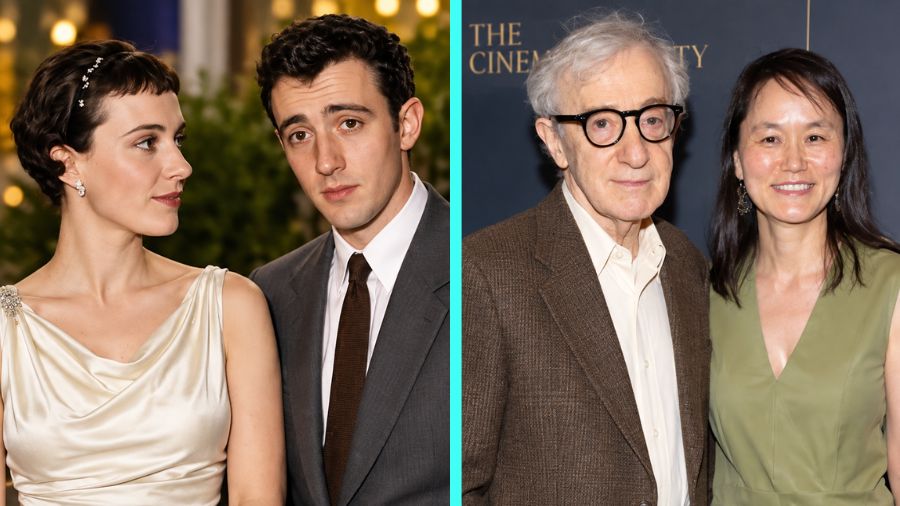
Harlene Rosen is best known as Woody Allen’s first wife, a woman who entered the future filmmaker’s life before he became an internationally recognized comedian, writer, actor, and director. Their teenage romance led to a 1956 marriage, but the relationship later deteriorated and became a source of controversy after Allen turned aspects of their marriage into stand-up comedy. Rosen subsequently challenged his public comments through legal action and largely withdrew from public attention. More than five decades later, however, she offered a notably reflective perspective on their shared past when biographer David Evanier interviewed her for his 2015 book, Woody: The Biography. Her story is therefore not simply that of Woody Allen’s ex-wife; it is also an unusual account of someone who briefly became connected to a major entertainment figure before choosing a largely private life of her own.
Quick Bio
| Fact | Verified information |
|---|---|
| Full Name | Harlene Susan Rosen |
| Known As | Harlene Rosen |
| Profession | No independently established public career is reliably documented |
| Nationality | American |
| Birth Year | Often reported as 1940, but not reliably confirmed by authoritative public records |
| Birthplace | Not reliably established in authoritative public sources |
| Education | Studied philosophy at Hunter College, according to biographical reporting |
| Spouse | Woody Allen, married in 1956 |
| Children | No publicly documented children from her marriage to Allen |
| Known For | Being Woody Allen’s first wife and later becoming associated with his early comedy material |
| Relationship to Woody Allen | First wife; they later separated and divorced |
| Marriage | March 15, 1956, according to biographical sources |
| Separation | Commonly reported as 1959 |
| Divorce | Commonly documented as 1962 |
| Public Recognition | Primarily through biographies and accounts of Allen’s early life |
| Current Status | Her present circumstances and residence have not been reliably disclosed publicly |
Who Is Harlene Rosen?
Harlene Rosen is a largely private American woman whose place in public history comes primarily from her early relationship with Woody Allen. Unlike Allen, who developed a decades-long career as a comedian, screenwriter, actor, director, author, and musician, Rosen did not build a comparable public entertainment career. Her significance in biographical records comes from the fact that she was Allen’s first wife and was part of his life during the formative period before he became one of the best-known figures in American comedy and cinema. Contemporary and retrospective accounts describe Rosen as a philosophy student at Hunter College and as someone with an interest in music; one account of Allen’s early life states that the two met around a jazz rehearsal, with Rosen playing piano while Allen played soprano saxophone. The Guardian has also described Rosen as the daughter of a shoe-shop owner whom Allen met through Flatbush Jewish social circles and identified her as a philosophy student at Hunter College.
Rosen’s historical importance is also shaped by what happened after her marriage ended. Her relationship with Allen eventually became part of his stand-up persona, and he publicly referred to her as “the Dread Mrs. Allen.” This use of their private history as comedy material transformed an otherwise obscure early marriage into part of Allen’s public biography. Rosen objected strongly to the way she was portrayed, particularly after comments connected to a sexual assault she had experienced became part of Allen’s comedy. Her subsequent legal action made the relationship more complicated than the conventional description of a celebrity’s first marriage.
At the same time, there is a major difference between what is known about Rosen and what is known about Allen. Allen has spent most of his adult life in the public eye, while Rosen appears to have deliberately maintained a low profile. As a result, many modern websites repeat details about her age, family, finances, career, and later life without providing sufficiently strong evidence. A responsible biography should therefore separate documented history from information that has merely circulated online.
Background in Music and Education
The publicly available record suggests that Harlene Rosen was interested in music and education during the period when she knew Allen. One detailed account of Allen’s early musical life describes Rosen playing piano during a jazz trio rehearsal at which Allen played soprano saxophone and his friend Elliot Mills played drums. This account places their relationship within the cultural environment of New York in the 1950s, when Allen was developing his interests in jazz and comedy while Rosen was pursuing her own education.
Her educational background is one of the few aspects of her personal life that has received meaningful attention from established biographical sources. The Guardian identifies Rosen as a philosophy student at Hunter College and connects her presence in Allen’s life with his own intellectual development. According to that account, after marrying Rosen, Allen arranged for a Columbia tutor to guide him through a course of major works by writers and philosophers including Plato, Aristotle, Dante, and James Joyce. That detail does not mean Rosen was responsible for Allen’s intellectual development, but it provides useful context for the intellectual atmosphere surrounding their early marriage.
It is important not to turn these limited details into an elaborate career biography that the evidence does not support. There is no reliable public record establishing Rosen as a professional musician, academic, actress, writer, or entertainment personality. Her connection with music and philosophy appears to have been part of her life as a young woman, but the available evidence does not establish a long-term professional career in either field.
This distinction matters because many online biography pages present occupations as facts simply because they sound plausible or appear on other biography websites. In Rosen’s case, the strongest evidence supports describing her as a young woman who studied philosophy and had a musical connection with Allen rather than assigning her a profession that has not been independently established.
Marriage or Relationship with Woody Allen
Harlene Rosen married Woody Allen on March 15, 1956, according to biographical accounts, when Allen was 20 and Rosen was 17. The marriage began before Allen had become the famous filmmaker associated with Annie Hall, Manhattan, Hannah and Her Sisters, and many other films. At that stage, Allen was building a career as a comedy writer and performer, while Rosen was still very young and studying. IMDb’s biographical record also lists the marriage as beginning on March 15, 1956, and ending in November 1962, while other accounts distinguish between the couple’s separation in 1959 and the later finalization of the divorce.
The distinction between separation and divorce is useful because different sources sometimes describe the length of the marriage differently. Some biographies say the marriage lasted until 1959, referring to the point at which the couple separated, while other records list 1962 because that is associated with the formal end of the marriage. Presenting both dates avoids creating a false contradiction: the couple married in 1956, their relationship broke down within several years, and the legal marriage ended later.
The relationship eventually became a difficult chapter for both people. Allen’s rising career gave him a public platform through which he could discuss his private experiences, and he increasingly used his failed marriage as material for comedy. Rosen, by contrast, did not become a public entertainer and therefore had much less control over how the relationship was remembered by audiences. The imbalance between a comedian with a growing audience and a former spouse living outside entertainment became particularly important when Allen’s jokes moved from general observations about marriage into comments about Rosen herself.
Their marriage should also be understood within the context of their ages. Both were very young, and the relationship occurred before Allen’s adult identity as a major filmmaker had fully developed. Describing the marriage simply as “Woody Allen’s first marriage” misses the fact that it belonged to a very different stage of both their lives.
Parenthood and Family Life
There is no reliable public evidence that Harlene Rosen and Woody Allen had children together. Allen’s publicly documented children came from later relationships, and major biographical records do not identify Rosen as the mother of any of his children. This is one area where a careful article should avoid adding unsupported family information merely because readers often expect celebrity biographies to contain detailed family trees.
Beyond the marriage itself, Rosen’s later family life is substantially less documented. Public sources do not provide sufficiently reliable information about whether she later married, had children, or developed other family relationships. Some online biography sites make definite claims about these matters, but those claims are not consistently supported by strong primary or reputable secondary sources. Consequently, it is more accurate to say that her later family circumstances have largely remained private.
This limited documentation is not necessarily evidence that something unusual happened in Rosen’s life. It is more likely a reflection of the fact that she did not maintain a prominent public career and did not spend decades giving interviews about herself. Unlike Allen, whose professional work generated thousands of interviews, reviews, biographies, and archival records, Rosen had little reason to remain in the public record.
For readers searching for “Harlene Rosen children” or “Harlene Rosen family,” the responsible answer is therefore narrower than many celebrity websites suggest. There are no publicly confirmed children from her marriage to Allen, while reliable information about her broader family life has not been comprehensively disclosed.
Supporting Through the Challenges of Public Scrutiny
The most difficult chapter associated with Harlene Rosen concerns the way Allen discussed their failed marriage publicly. After their relationship ended, Allen incorporated his experiences with Rosen into his comedy and referred to her as “the Dread Mrs. Allen.” His jokes became increasingly personal, and one episode became especially controversial after Rosen had been sexually assaulted outside her apartment. According to accounts of Allen’s early comedy and his own later discussion of the incident, he made a joke about the newspaper description of the assault. Rosen subsequently pursued legal action over his comments.
The dispute illustrates the tension between personal experience and comedy during Allen’s early career. Allen built much of his reputation around observational humor, self-deprecation, relationships, and uncomfortable subjects. Yet Rosen’s response demonstrates that material regarded as comedy by an entertainer could have very different consequences for the person being discussed. Her decision to challenge the public portrayal became an important part of the historical record surrounding their marriage.
Accounts commonly state that Rosen sued Allen and NBC for approximately $1 million in a defamation action. Allen himself later discussed the lawsuit in interviews and comedy material, which helped preserve the story in biographies of his career. However, the precise procedural history, settlement terms, and legal documentation are not as thoroughly accessible in modern online sources as the frequently repeated summary suggests. For that reason, claims about specific court orders or settlement payments should be presented cautiously unless supported by primary legal records.
What is firmly established is that Rosen objected to Allen’s public treatment of her and that the dispute became part of the history of his early stand-up career. Her lawsuit also distinguishes her story from that of many celebrity ex-spouses who simply disappear from public discussion. Rosen actively challenged the public narrative before eventually retreating from the spotlight.
Life After the Divorce
After her marriage to Allen ended, Harlene Rosen largely disappeared from public view. That privacy makes it difficult to construct a detailed chronology of her later decades without relying on speculation. Reliable sources do not provide a complete account of her career, relationships, residence, finances, or everyday life after the divorce. The absence of information is itself an important part of understanding her story because Rosen did not pursue the kind of public career that would have generated extensive records.
For many years, references to Rosen appeared mainly in biographies and interviews about Woody Allen. Her name remained connected to the comedian because the early marriage and subsequent legal dispute were part of his career history. Rosen herself, however, appears to have avoided the entertainment press. That difference explains why searches for her often produce more information about Allen than about Rosen.
A significant change occurred when author David Evanier researched Woody: The Biography. Evanier told The Woody Allen Pages that he spent more than a year trying to locate Allen’s first wife and eventually found Rosen. He said she provided a birthday message for Allen that was included in his biography, giving readers a rare opportunity to hear Rosen’s perspective decades after their divorce.
Kirkus Reviews also specifically identified Rosen as one of Evanier’s interviewees and described her as Allen’s “forgiving first wife.” The biography was published in 2015, making Rosen’s participation particularly significant because it represented a rare return to a subject she had largely avoided for decades.
Career Highlights and Public Recognition
Harlene Rosen did not become famous through an independent entertainment career, and there is no reliable evidence that she sought celebrity status. Her public recognition instead developed indirectly through her marriage to Woody Allen and the subsequent history of that relationship. This makes her different from many people featured in celebrity biographies: her significance comes from her place in another person’s early life rather than from a documented body of professional work.
The strongest biographical accounts place Rosen in Allen’s early musical and intellectual environment. She played piano, studied philosophy, and was married to Allen during the period when he was establishing himself as a comedy writer. All About Jazz describes their early connection through a jazz rehearsal and notes that they returned to New York after marrying, where Rosen studied philosophy and Allen continued developing his writing career.
Her later public recognition came through the controversy surrounding Allen’s comedy material. The legal dispute following his public comments about her became part of accounts of his early stand-up career. In that sense, Rosen became a historical figure in discussions of Allen’s transition from young comedy writer to established performer.
Yet perhaps her most meaningful later appearance in the public record was not connected to controversy. Her participation in Evanier’s 2015 biography offered a different perspective, showing that decades after a painful period she was willing to reflect on her youth and relationship with Allen. Evanier described her message as a beautiful birthday message for Allen’s 80th birthday, while the book’s publication brought her perspective back into public discussion.
Why People Search for Harlene Rosen
People searching for Harlene Rosen are usually trying to understand the woman behind the description “Woody Allen’s ex-wife.” Interest in her comes from several overlapping questions: who she was before Allen became famous, how their teenage marriage developed, why the relationship ended, what happened after their divorce, and why she eventually challenged Allen’s comedy material. These questions are particularly relevant because Rosen occupied an unusual position in Allen’s biography: she knew him before his international fame, when he was still establishing himself as a young comedy writer and performer.
Search interest also increased because of the later appearance of Rosen’s perspective in David Evanier’s Woody: The Biography. After decades of relative silence, her willingness to communicate with Evanier provided new material for people interested in Allen’s early life. Evanier himself emphasized that Rosen speaking out after so many years was one of the distinctive features of his biography.
Another reason readers search for Rosen is the contrast between her private life and Allen’s public career. Allen remained a highly visible cultural figure for decades, while Rosen appears to have chosen a much quieter existence. That contrast naturally raises questions about what happened to her after the divorce. Unfortunately, the public record does not provide enough reliable information to answer every question.
For that reason, the most useful biography of Harlene Rosen is not one that attempts to fill every gap. Instead, it should explain the documented parts of her story clearly while acknowledging where evidence ends. This approach gives readers a more trustworthy understanding of why she remains relevant to discussions of Woody Allen’s early life.
Privacy, Accuracy and Public Information
The available information about Harlene Rosen demonstrates why privacy and source quality matter when writing about people who are not public figures themselves. Many websites now state that Rosen was born in 1940 and calculate her present age from that year, but a reliable authoritative source confirming her exact birth date has not been identified. The reported year can therefore be mentioned only as an unconfirmed claim rather than a definitive biographical fact. Similarly, her exact birthplace, current residence, present occupation, net worth, later relationships, and detailed family circumstances have not been reliably disclosed in strong public sources.
The same caution applies to claims about Rosen’s current status. Recent websites sometimes make contradictory assertions about whether she is still alive, where she lives, or what she has done since the 1960s. Those claims are not supported consistently enough to present as established facts. A responsible biography should not declare that Rosen has died or provide a current location unless credible evidence confirms it.
The strongest public record instead consists of a relatively small group of well-supported facts: Rosen married Allen in 1956; she was very young at the time; she studied philosophy; she had a musical connection with Allen; the marriage broke down and was ultimately dissolved; Allen later used elements of the relationship in his comedy; Rosen challenged his public comments through legal action; and she eventually participated in David Evanier’s 2015 biography.
This distinction between verified information and repeated internet claims is especially important for E-E-A-T-focused biography writing. Readers searching for Harlene Rosen deserve accurate context rather than invented details about her private life. Where documentation is limited, saying “not publicly disclosed” is more useful and more honest than presenting an uncertain claim as fact.
Conclusion
Harlene Rosen remains an important but deeply private figure in the early biography of Woody Allen. Her teenage marriage to Allen began before his transformation into a major comedy and film figure, placing her in a formative period of his life that is now remembered through biographies, interviews, and accounts of his early career. Their marriage eventually ended, and Rosen objected strongly when Allen turned aspects of their relationship into public comedy, leading to a notable legal dispute. Yet the later record offers a more complicated picture than the controversy alone suggests. After decades away from public attention, Rosen participated in David Evanier’s 2015 biography and provided a reflective message about the relationship they had shared as young people. Her story ultimately illustrates the limits of celebrity biography: although her name remains connected to Woody Allen, much of her own life has remained private, and the absence of reliable information should be respected rather than replaced with speculation. For readers researching Woody Allen’s ex-wife, the clearest picture is therefore of Harlene Rosen as a young philosophy student and musician, Allen’s first wife, a woman who challenged an unwanted public portrayal, and later a private individual who chose to let much of her life remain outside the spotlight.
Also read: Diane Addonizio: A Remarkable Life Beyond Being Howie Long’s Wife
FAQs
Who was Harlene Rosen?
Harlene Rosen was an American philosophy student and musician best known as Woody Allen’s first wife, whom he married in 1956 before becoming internationally famous.
When did Harlene Rosen marry Woody Allen?
Harlene Rosen married Woody Allen on March 15, 1956, when Allen was 20 and Rosen was reportedly 17, according to biographical sources.
Did Harlene Rosen and Woody Allen have children?
No children are publicly documented from Harlene Rosen’s marriage to Woody Allen, while reliable information about her later family life remains unavailable.
Why did Harlene Rosen sue Woody Allen?
Rosen challenged Allen over public comments and jokes about her, including remarks connected with a sexual assault she had experienced, leading to legal action.
Did Harlene Rosen speak about Woody Allen again?
Yes. In 2015, Rosen provided material to biographer David Evanier, including a birthday message reflecting on their relationship and Allen’s career.
Is Harlene Rosen’s current life publicly known?
Very little reliable information about Rosen’s current life is available, including her residence, career, finances, relationships, and exact present status.