
Prasanja za Bugarski Pasos: Essential Bulgarian Citizenship Interview Questions and Answers

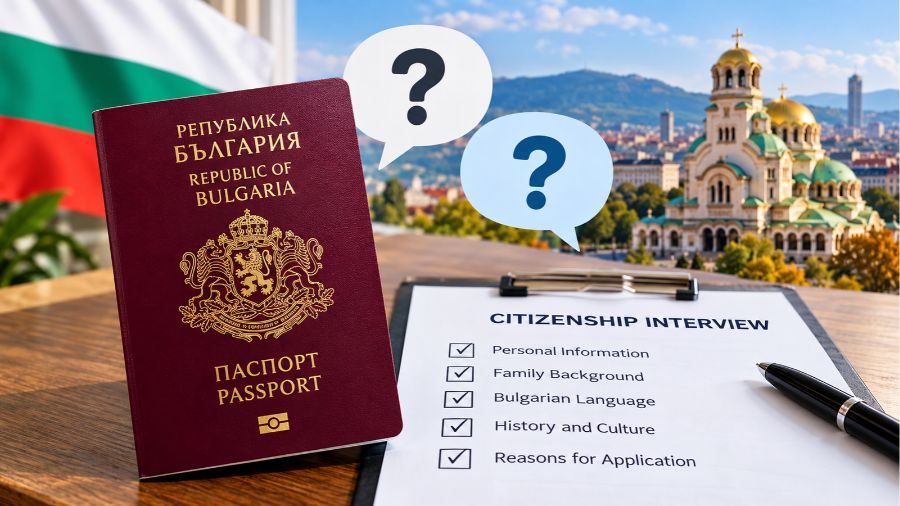
What Does Prasanja za Bugarski Pasos Mean?
The phrase Prasanja za Bugarski Pasos translates approximately to “questions for a Bulgarian passport” in English. It is associated with people searching for information about Bulgarian citizenship interviews, particularly applicants from countries in the Balkans who want to understand what government officials may ask during their applications. The wording is written in Latin characters rather than the Bulgarian Cyrillic alphabet and is commonly used as a search phrase by people looking for interview preparation materials. Although the expression mentions a passport, the questions generally relate to obtaining Bulgarian citizenship rather than completing a passport application. Understanding this distinction is important because citizenship establishes a person’s legal status as a Bulgarian national, while a passport is an identity and travel document issued to an eligible Bulgarian citizen.
Understanding the Bulgarian Citizenship Interview
The Bulgarian citizenship interview is an official stage of the citizenship application process. Bulgaria’s Ministry of Justice uses an approved questionnaire when conducting interviews for relevant citizenship procedures, including acquisition through naturalisation, restoration, and release from citizenship. The Ministry has also announced updated questionnaires, adding new questions while retaining and expanding existing ones. Applicants should understand that an interview is not simply an informal conversation about Bulgaria. It forms part of an administrative process in which officials can ask about personal circumstances, application information, supporting documents, and the legal basis for the requested citizenship. The precise questions depend on the applicant’s circumstances and the applicable procedure, so unofficial online question collections should be treated as preparation resources rather than guaranteed copies of the official interview questionnaire.
Is the Interview Conducted in Bulgarian?
The interview is conducted in Bulgarian under the applicable citizenship procedure. This requirement makes basic language preparation important, particularly for applicants who do not regularly speak Bulgarian. Applicants should practise introducing themselves, explaining their family background, describing their occupation, and answering questions about their citizenship application. They should also become familiar with common Bulgarian words used in official conversations. Memorising individual answers without understanding their meanings can create difficulties if an official changes the wording or asks a follow-up question. A better approach is to understand the subject of each answer and practise responding naturally in Bulgarian.
Who Conducts the Citizenship Interview?
The interview is conducted by designated officials under the Bulgarian citizenship administration. Depending on the application route, documents may be submitted through the Ministry of Justice or an appropriate Bulgarian diplomatic or consular representation abroad. The Ministry of Justice is responsible for the relevant citizenship procedure, while diplomatic and consular offices can facilitate document submission and related services. Applicants should follow the instructions of the office handling their application and should not assume that an interview conducted at one location will necessarily follow an identical format to every other interview.
Common Prasanja za Bugarski Pasos: Personal Interview Questions
Personal questions are an important preparation area because applicants need to provide information that accurately matches their official documents and application forms. Officials may ask about a person’s identity, date and place of birth, nationality, family circumstances, education, employment, and residential history. Applicants should be prepared to explain any differences in names, spelling, dates, or personal details appearing across their documents. For ancestry-based applications, family relationships and information about Bulgarian ancestors may also be relevant. The following examples are illustrative practice questions, not a verified reproduction of the official government questionnaire.
Basic Personal Information Questions
Common Bulgarian practice questions include “Как се казвате?” meaning “What is your name?”, “Къде сте родени?” meaning “Where were you born?”, and “Къде живеете?” meaning “Where do you live?” Other possible questions include “На колко години сте?” meaning “How old are you?” and “Каква е вашата професия?” meaning “What is your profession?” Applicants should practise giving complete and consistent answers using the information in their passports, birth certificates, and application documents. They should also understand how to explain their marital status, education, and current employment without providing information that conflicts with their submitted paperwork.
Family and Bulgarian Ancestry Questions
Applicants relying on Bulgarian origin should pay particular attention to family history. Practice questions may include “Имате ли роднини в България?” meaning “Do you have relatives in Bulgaria?”, and “Кой от вашите предци е от български произход?” meaning “Which of your ancestors is of Bulgarian origin?” An applicant should know the relevant ancestor’s full name, relationship, and available historical or civil records. Family information must be supported by appropriate documentation where the legal route requires it. Applicants should never invent ancestry details or provide uncertain information as established fact, because inconsistencies can affect the assessment of their applications.
Bulgarian History and General Knowledge Questions
Knowledge of Bulgarian history is a useful preparation topic for applicants who want to understand the country and its national identity. Practice materials commonly cover major historical personalities, significant events, cultural traditions, national symbols, and important dates. Applicants may encounter questions about historical figures such as Vasil Levski and Hristo Botev, as well as the development of Bulgarian education and national independence. However, applicants should not assume that every interview includes a formal history examination. The actual questions are determined by the approved questionnaire and the relevant citizenship procedure. Studying reliable historical information is more useful than memorising unverified question lists circulated online.
Questions About Bulgarian National Heroes
Vasil Levski is one of Bulgaria’s most important historical figures and is remembered for his role in organising revolutionary activities for national liberation. Hristo Botev was a Bulgarian poet, journalist, and revolutionary whose work remains influential in Bulgarian national culture. Applicants should understand the historical significance of these individuals rather than simply memorising their names. They can also study important figures connected with Bulgarian literature, education, religious traditions, and the country’s national revival. This background provides useful context for understanding Bulgaria’s historical development and cultural identity.
Questions About Bulgarian National Symbols
Applicants can prepare for questions about the Bulgarian national flag, national anthem, capital city, and official language. Bulgaria’s national flag consists of three horizontal bands: white at the top, green in the middle, and red at the bottom. The capital is Sofia, and Bulgarian is the country’s official language. The national anthem is “Mila Rodino.” Understanding these basic facts provides a practical starting point for general knowledge preparation. Applicants should also learn how to describe the national symbols in simple Bulgarian sentences.
Important Bulgarian Geography and Culture Questions
Geography and culture are additional subjects worth studying when preparing for a Bulgarian citizenship interview. Applicants should become familiar with Bulgaria’s location in southeastern Europe, its capital Sofia, the Black Sea coastline, and neighbouring countries. Bulgaria shares land borders with Romania, Serbia, North Macedonia, Greece, and Türkiye. Its geographical position has influenced its history, trade, cultural relationships, and regional development. Cultural preparation can also include Bulgarian traditions, traditional food, folk music, festivals, literature, and national celebrations. Understanding these subjects helps applicants develop a broader picture of the country rather than approaching the interview as a collection of unrelated memorised answers.
Bulgarian National Holidays
Bulgarian national holidays reflect important historical, religious, and cultural events. One particularly significant date is 3 March, celebrated as Bulgaria’s Liberation Day and national holiday. Other important observances include 24 May, associated with Bulgarian education and Slavic literature and culture, and 6 September, marking Unification Day. Applicants can also study Independence Day, celebrated on 22 September. Learning the names, dates, and historical meanings of these occasions can help with general knowledge preparation. It is important to distinguish official public holidays from cultural celebrations and other commemorative events.
Bulgarian Language and Cultural Traditions
The Bulgarian language uses the Cyrillic alphabet, which is an important feature of the country’s linguistic identity. Applicants who are unfamiliar with Cyrillic should begin by learning the alphabet, common greetings, numbers, days, months, and basic sentence structures. Bulgarian cultural preparation can also include traditional dishes such as banitsa and shopska salad, traditional folk music, and important cultural celebrations. Understanding these subjects can make language practice more meaningful and help applicants become familiar with everyday Bulgarian expressions.
How to Prepare for the Bulgarian Citizenship Interview
Effective preparation begins with understanding the legal basis of the application. Someone applying through Bulgarian ancestry needs to organise their family history and supporting records differently from someone applying through naturalisation or restoration of citizenship. Applicants should review the information already submitted, including names, dates, addresses, family relationships, and employment details. They should then practise answering questions in Bulgarian, study relevant national history and geography, and become familiar with official citizenship instructions. It is also useful to practise speaking rather than relying entirely on written notes. A realistic preparation routine should focus on understanding questions, communicating accurate information, and explaining the applicant’s circumstances clearly.
Practise Speaking Bulgarian Every Day
Regular speaking practice can improve confidence and reduce misunderstandings during an official interview. Applicants can begin with simple introductions and gradually move towards longer explanations about their family background, professional life, and reasons for applying. Listening to native Bulgarian speakers can help with pronunciation and comprehension. Reading short Bulgarian texts and practising common question-and-answer patterns can also improve familiarity with the language. Applicants should concentrate on understanding what they are saying instead of memorising complicated sentences that they may struggle to explain if asked additional questions.
Review All Application Documents
Document preparation is just as important as language preparation. Applicants should carefully check their birth certificates, identity documents, family records, criminal record certificates where required, and other supporting evidence relevant to their legal application route. Names and dates should be consistent, and foreign documents may require legalisation or an apostille and an authorised Bulgarian translation, depending on the applicable requirements. The Bulgarian Ministry of Justice and the relevant consular representation provide procedural instructions. Applicants should always check the current requirements before submitting original documents, as document requirements can differ depending on nationality, legal grounds, and individual circumstances.
Bulgarian Citizenship by Origin and Naturalisation
Bulgarian citizenship can be acquired through different legal routes, and the requirements are not identical for every applicant. Citizenship based on Bulgarian origin is particularly relevant to individuals who can establish a qualifying ancestral connection under Bulgarian law. Naturalisation is a separate route with its own statutory conditions, which may include residence, language, financial, and other legal requirements depending on the applicant’s circumstances. Restoration of citizenship is another distinct procedure for eligible individuals who previously held Bulgarian citizenship. Applicants should identify the correct legal route before preparing their documents because a questionnaire or document checklist intended for one category may not apply to another.
Citizenship Based on Bulgarian Origin
The Bulgarian Citizenship Act provides a specific legal framework for certain applicants of Bulgarian origin. Under the relevant provisions, applicants may need official documents establishing a relationship with an ancestor of Bulgarian origin within the legally specified degree of ancestry. The evidence must establish both the ancestor’s relevant origin and the family relationship connecting that person to the applicant. Birth certificates and other civil-status documents can play an important role in building this documentary connection. A family story or an informal statement about Bulgarian heritage should not be treated as a substitute for the official evidence required by the law.
Citizenship Through Naturalisation
Naturalisation is intended for foreign nationals who meet the applicable legal conditions for acquiring Bulgarian citizenship. The requirements can involve lawful residence, a specified period of eligibility, language knowledge, financial circumstances, and other statutory considerations. Certain applicants may qualify for exceptions or different conditions under specific provisions of Bulgarian law. Because naturalisation and citizenship based on Bulgarian origin have different legal foundations, applicants should not rely on advice intended for another application category. Reviewing the current Citizenship Act and Ministry of Justice guidance is essential before beginning the procedure.
Bulgarian Citizenship Interview Mistakes to Avoid
One common mistake is relying on outdated or unofficial interview questions without checking the current government procedure. Another is memorising answers without understanding their meaning, which can make it difficult to respond to follow-up questions. Applicants should avoid giving contradictory information about their family history, occupation, residence, or identity. They should also avoid submitting incomplete documents or assuming that an application will automatically be approved because an interview has been completed. The interview is one part of a broader legal assessment, and officials may examine the supporting evidence and eligibility conditions before a final decision. Honest answers, consistent documentation, and preparation based on official instructions are more valuable than trying to predict every question.
What Happens After the Bulgarian Citizenship Interview?
After the interview, the application proceeds through the relevant administrative assessment under Bulgarian citizenship law. The completion of an interview does not mean that citizenship has automatically been granted. The responsible authorities assess the application, supporting documents, legal eligibility, and other relevant information before the appropriate decision is made. Applicants should retain their application reference details and follow official communication from the responsible authorities. Processing times can vary depending on the application route, the completeness of the documentation, and administrative circumstances. It is therefore important not to rely on unofficial promises of guaranteed approval or fixed processing periods.
When Can You Apply for a Bulgarian Passport?
A Bulgarian passport is available to individuals who have Bulgarian citizenship and meet the applicable identity-document requirements. Applicants who have only submitted a citizenship application cannot assume they are already entitled to a Bulgarian passport. Once citizenship has been officially granted and the necessary civil registration and identity-document procedures have been completed, the individual can follow the relevant process for obtaining Bulgarian identity documents. This distinction matters because citizenship approval and passport issuance are separate administrative stages. Applicants should obtain instructions from the competent Bulgarian authorities about registration, identity cards, photographs, and passport applications.
Conclusion
Prasanja za Bugarski Pasos is an important search topic for individuals preparing for Bulgarian citizenship interviews and hoping to obtain a Bulgarian passport. Successful preparation involves understanding the citizenship procedure, practising Bulgarian language skills, learning about national history and culture, and organising accurate supporting documents. Applicants should also understand the differences between citizenship by Bulgarian origin, naturalisation, and restoration because each route has specific legal requirements. Most importantly, the interview should be approached with honest answers and a clear understanding of personal circumstances. Official Ministry of Justice guidance remains the most reliable source for current procedures and interview requirements, while practice questions can help applicants develop confidence before their appointment.
Also read: Sy Ring Company Brand Structure: A Complete Guide to Syringe Branding
FAQs
1. What does Prasanja za Bugarski Pasos mean?
Prasanja za Bugarski Pasos means questions for a Bulgarian passport, commonly referring to questions asked during Bulgarian citizenship application interviews.
2. Is a Bulgarian citizenship interview conducted in Bulgarian?
Yes, the citizenship interview is conducted in Bulgarian under the applicable procedure, making basic language comprehension and speaking preparation important.
3. What questions are asked during a Bulgarian passport interview?
Questions may concern personal details, family background, Bulgarian ancestry, citizenship eligibility, national history, cultural knowledge, and information provided in application documents.
4. Do applicants need to learn Bulgarian history?
Learning Bulgarian history is useful preparation because applicants may need to understand important historical figures, national events, cultural traditions, and national symbols.
5. Can someone obtain a Bulgarian passport through Bulgarian ancestry?
Eligible individuals may apply for Bulgarian citizenship based on qualifying Bulgarian ancestry, provided they satisfy legal requirements and submit appropriate supporting documents.
6. Can I get a Bulgarian passport immediately after the interview?
No, completing the interview does not grant citizenship automatically. Applicants must receive an official citizenship decision before proceeding with passport documentation.