
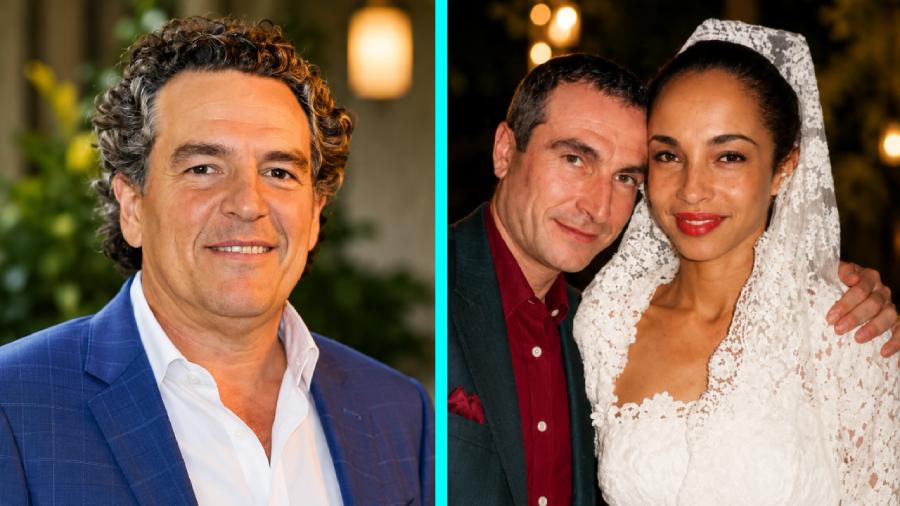
Carlos Scola Pliego is a Spanish filmmaker whose name surfaces almost entirely through one connection: he is Sade Adu’s ex-husband, the only man the famously private singer is confirmed to have legally married. Most people arrive at his name after listening to Sade’s back catalogue and wondering who she was writing about, or after reading that she once left London for Madrid and largely disappeared from public life. What they find online is usually contradictory. Dozens of near identical biography pages give him different birthplaces, different net worth figures and different wedding dates, none of which trace back to a credible source.
Quick Bio
| Detail | Information |
|---|---|
| Full Name | Carlos Scola Pliego |
| Known As | Carlos Pliego, Carlos Scola |
| Profession | Filmmaker, documentary director, assistant director, script supervisor |
| Nationality | Spanish |
| Birthplace | Spain. Exact city not publicly disclosed |
| Birth Year | Not publicly disclosed |
| Education | Not publicly disclosed |
| Former Spouse | Sade Adu, married 1989, divorced 1995 |
| Children | None from the marriage to Sade Adu |
| Known For | Assistant director work on 1980s international productions filmed in Spain, and documentary directing |
| Relationship to Sade Adu | Former husband and, by most accounts, her only legal marriage |
| Years Active | Late 1970s to 2007, based on available credits |
| Current Residence | Not publicly disclosed. Believed to be Spain |
| Current Status | Retired from public life. No confirmed recent film activity |
| Public Presence | No verified social media accounts or public interviews |
Who Is Carlos Scola Pliego?
Carlos Scola Pliego is a Spanish film professional who spent roughly three decades working behind the camera, mostly in supporting production roles rather than as a headline director, and who became internationally recognisable only because he married one of the most guarded stars in British music. Both the English and Spanish editions of Wikipedia confirm the essential facts: he is a Spanish film director, described in Spanish sources specifically as a documentary director, who married Sade in 1989 and divorced her in 1995. Beyond that, the encyclopedic record is close to empty. He has no Wikipedia article of his own in any language, and the Spanish page on Sade links his name as a dead link, meaning no editor has ever assembled enough sourced material to justify one. That absence is meaningful. It tells you he did not achieve the level of independent notability that would normally generate press coverage, awards records or archived interviews. What exists instead is a professional trail through film credits, and a personal trail that runs through someone else’s biography. He appears to have made no attempt to trade on the marriage in the thirty years since it ended, which is unusual and worth stating clearly rather than treating as mystery.
Background in Filmmaking
Carlos Scola Pliego’s career began in the technical ranks of Spanish cinema in the late 1970s, and his early credits reflect the unglamorous apprenticeship that most working filmmakers pass through before they direct anything of their own. Reporting on his filmography indicates he started as script supervisor on the 1979 Spanish comedy La boda del señor cura and on Ópera Prima, released in 1980. Script supervision is exacting continuity work, tracking every prop, position and line so that footage shot weeks apart cuts together cleanly, and it is a common route into assistant directing. That is the path he followed. Between 1981 and 1985 he is reported to have worked as assistant or second assistant director across roughly nine film and television projects. Spain in this period was an attractive location base for foreign productions, offering varied landscapes, favourable costs and experienced local crews, and the international shoots that came through the country needed Spanish assistant directors who could bridge the visiting production and the local unit. That is the niche Carlos Scola Pliego occupied. It is worth being precise about what these roles involve, because several online profiles inflate them into directing credits. An assistant director on a location unit manages scheduling, call sheets and the movement of cast and crew. It is senior, demanding work, but it is not authorship of the film.
Marriage and Relationship with Sade Adu
The relationship between Carlos Scola Pliego and Sade Adu began, according to press accounts, on a film set rather than in a music industry setting, when she was shooting three music videos in Spain with director Brian Ward for her 1985 album Promise. That timing places their meeting during the most intense stretch of her early fame, in the window between Diamond Life and the global success of Promise, and it explains how a Spanish assistant director and a British singer crossed paths at all. The marriage itself is one of the few dates in this story that is genuinely confirmed. English Wikipedia records that Sade married Spanish film director Carlos Pliego in 1989 and that the marriage ended in 1995, and the Spanish edition gives the same years. The frequently repeated specifics, that they married on 11 October 1989 in a Spanish castle, come from celebrity news aggregators rather than primary reporting, and one widely copied page names a particular castle near Madrid without citing anything at all. Treat the year as fact and the date and venue as unverified. Some accounts also claim Sade referred to him as her husband as early as 1987 while recording in France, which, if accurate, would suggest the legal ceremony formalised a relationship that already felt settled to her.
Parenthood and Family Life
Carlos Scola Pliego and Sade Adu had no children together, and this is one of the clearer points in an otherwise cloudy record because Sade’s own family timeline is well documented and sits entirely after the marriage. Her son, Izaak Theo Adu, was born on 21 July 1996, during her relationship with the Jamaican music producer Bob Morgan, more than a year after the divorce was finalised. Sade later went on to a long partnership with Ian Watts, a former Royal Marine, from 2007, and has a stepson through that relationship. Izaak came out as a transgender man in 2016 and Sade publicly dedicated the 2024 song Young Lion to him. None of that involves Carlos Scola Pliego, and it matters to say so, because search results frequently blur the two chapters and imply a parental connection that does not exist. As for his own family, nothing has been publicly disclosed. His parents, siblings, any subsequent partners and any children he may have had after 1995 are entirely absent from the public record. He has never given an interview about his private life, and there is no responsible way to fill those gaps.
The Move to Madrid and the Years That Followed
The most consequential thing about this marriage, in terms of its effect on a public career, is that Sade moved her life to Spain for it, and the period that followed reshaped her working rhythm permanently. After the 1989 wedding the couple relocated from London to Madrid, and coverage of that era describes the relationship as turbulent rather than idyllic. According to reporting cited by South China Morning Post, the pair broke up shortly before Sade began work on her 1992 album Love Deluxe, meaning the separation came within roughly a year or two of the wedding even though the divorce was not completed until 1995. That gap matters and is routinely misreported. A marriage described as lasting six years was in practice a short cohabitation followed by several years of unresolved legal paperwork. Sade has spoken only rarely about it, but has indicated that leaving was abrupt and that the emotional aftermath took around five years to fade. Spanish media has since treated the Madrid years as a significant and turbulent chapter in her story, most notably in a 2024 El País feature examining why she has released so few records across four decades. For Carlos Scola Pliego, by contrast, the period appears to have produced no lasting public profile at all.
Life After the Divorce
Carlos Scola Pliego’s professional and public trail thins dramatically after the early 1990s, and the surviving evidence suggests a deliberate retreat rather than a dramatic fall. His documentary work, including a feature length documentary concerning Africa titled Donde termina el corazón, belongs to the period around the end of the 1980s, and the last credit anyone has been able to locate for him is on the 2007 sports drama Goal II: Living the Dream, where reporting places him as additional crew rather than in the assistant director role that several biography sites assert. After that, nothing. There are no verified interviews, no confirmed social media accounts, no festival appearances and no public statements about his former wife across three decades in which any comment would have been commercially valuable. Whether he continued working in film in uncredited or non public roles, changed careers entirely, or simply retired is not known. Sites that claim to know where he lives today, what he does now or what he is worth financially are guessing, and the wide variance between their figures, which range across tens of millions of dollars with no methodology attached, is the clearest possible sign that none of them have a source.
Career Highlights and Public Recognition
The strongest claim Carlos Scola Pliego has to independent professional interest lies in a handful of internationally recognisable productions that shot in Spain during the early 1980s, though his contributions to them were largely uncredited. Reporting indicates he served as second assistant director on the Spanish location shoot for the 1983 James Bond film Never Say Never Again, the unofficial Bond entry that brought Sean Connery back to the role opposite Kim Basinger, and worked in the same capacity that year on Curse of the Pink Panther. Neither credit appears on screen. He is also associated with assistant director work on Eleni, an early feature in John Malkovich’s career, and on the 1985 miniseries Christopher Columbus starring Gabriel Byrne. His own directing work sits mainly in documentary, including a 1988 project on mountain gorillas. Two cautions belong here. First, much of this filmography is sourced to IMDb, which is user editable and is not independent verification. Second, one credit that circulates widely, a third assistant director role on the 1983 film Scarab, could not be confirmed against any source. Public recognition in the conventional sense, meaning awards, retrospectives or critical attention, does not appear to exist for him.
Why People Search for Carlos Scola Pliego
Search interest in Carlos Scola Pliego is almost entirely downstream of Sade’s own mystique, and it spikes for predictable reasons that say more about her audience than about him. Sade gives interviews perhaps once a decade, has released six studio albums across forty years, and has spent long stretches living quietly in rural Gloucestershire and Jamaica, so listeners fill the silence by reading her songs biographically. Love Deluxe, recorded in the aftermath of the separation, attracts particular attention from fans looking for traces of the marriage in tracks about loss and endurance, though there is no confirmation from Sade that any specific song is about him. Renewed attention also follows her career milestones, including her 2026 induction into the Rock and Roll Hall of Fame and the 2024 release of Young Lion. A second and less flattering driver is the content farm economy. Because the query has volume and almost no authoritative page competing for it, dozens of low quality sites have generated near identical articles about him, which in turn appear in search results and generate more curiosity. Much of the demand, in other words, is now self sustaining noise.
Privacy, Accuracy and Public Information
Anyone researching Carlos Scola Pliego should understand that the online record for his name is unusually corrupted, and knowing why protects you from repeating errors that have already spread across hundreds of pages. Nearly every result is a recently published article recycling the same paragraphs with invented specifics attached. His net worth is stated as fifteen million dollars on one site and seventy million on another. His birthplace is given as Spain on some and the United States on others. At least one page estimates his birth year as the late 1960s or early 1970s, which would have made him a working script supervisor at around ten years old. These are not competing reports from rival journalists. They are fabrications generated to fill a template. The reliable material is narrow: two Wikipedia entries, a 2024 El País feature on Sade’s Madrid years, contemporaneous music press coverage, and film databases that should be treated as leads rather than proof. On the personal side, Carlos Scola Pliego has never sought publicity and has not commented on his marriage in thirty years. His birth date, education, family, finances and current whereabouts remain undisclosed, and that should be reported as an absence of information rather than backfilled with plausible sounding detail.
Conclusion
Carlos Scola Pliego occupies an odd position in popular culture. He is searched for constantly and known almost not at all, a working Spanish filmmaker whose actual career, assisting on Bond and Pink Panther location units, supervising scripts on Spanish comedies, directing documentaries about Africa, is more interesting than the vague celebrity spouse label attached to him. What can be responsibly said is that he married Sade Adu in 1989, that she moved to Madrid for the relationship, that it broke down within a couple of years and was formally dissolved in 1995, and that he has lived privately ever since. What cannot be said, because nobody has established it, is when he was born, where he studied, what he earns, whether he remarried or what he does today. The honest version of this biography is shorter than the fabricated ones circulating online, and considerably more useful for it.
Also read: Laura Deibel: Tim Allen’s First Wife, Family, Career and Private Life
FAQs
Who is Carlos Scola Pliego?
Carlos Scola Pliego is a Spanish filmmaker who worked as a script supervisor, assistant director and documentary director from the late 1970s onward. He married singer Sade Adu in 1989.
When did Carlos Scola Pliego marry Sade Adu?
They married in 1989 and divorced in 1995, according to Wikipedia. The frequently repeated wedding date of 11 October 1989 comes from aggregator sites and remains unverified by primary sources.
Did Carlos Scola Pliego and Sade Adu have children?
No. They had no children together. Sade’s son Izaak Theo Adu was born in July 1996, after the divorce, during her relationship with music producer Bob Morgan.
What films did Carlos Scola Pliego work on?
Reported credits include uncredited second assistant director work on Never Say Never Again and Curse of the Pink Panther, plus Eleni, Christopher Columbus and documentary projects he directed himself.
How old is Carlos Scola Pliego?
His age is unknown. No reliable source has published his date of birth or birth year, and the estimates appearing on biography websites are unsourced and mutually contradictory.
Where is Carlos Scola Pliego now?
His current location and activities have not been publicly disclosed. He is believed to live in Spain, has given no interviews and maintains no verified public or social media presence.