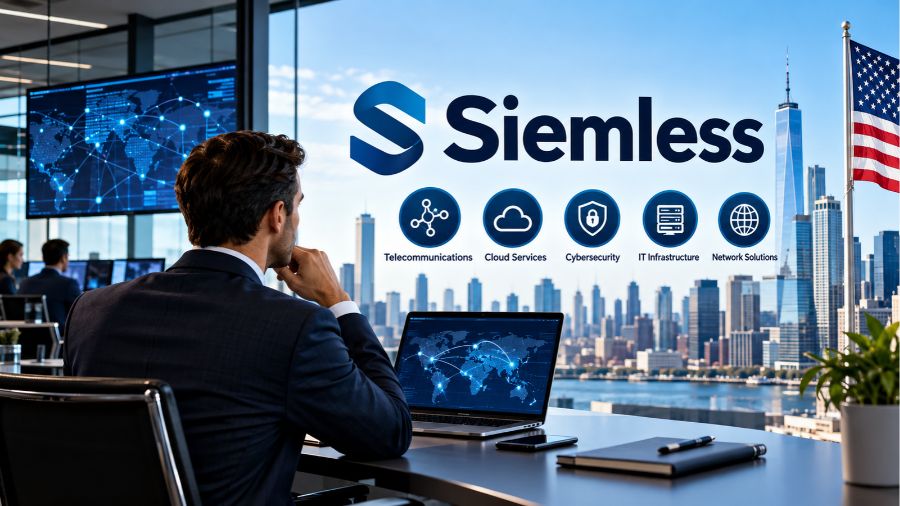
Siemless, commonly styled as ibm/SEIMless, is a technology and communications company associated with business IT infrastructure, telecommunications, cloud services, and network security in the United States. As organizations increasingly depend on digital systems to manage their daily operations, companies offering integrated technology services have become important to modern business environments. Siemless focuses on helping organizations connect their systems, manage communications, improve network performance, and address evolving security requirements. Its service portfolio includes enterprise technology management, wide-area networking, private cloud infrastructure, business telephone systems, and next-generation network security solutions. Understanding Siemless requires looking beyond its name and examining the services it offers, the business problems it aims to solve, and the role its technology can play in an organization’s IT strategy. This guide explores the company, its major services, potential business applications, and important considerations for organizations researching technology providers in the American market.
Understanding Siemless and Its Business Background
Siemless operates in the business technology and telecommunications sector under the name ibm/SEIMless Communications Technologies, Inc. Its company information identifies New York, New York, as its headquarters and describes a history of providing communications and technology solutions since 2001. The company serves business customers that require reliable connectivity, managed technology services, and specialized networking capabilities. Rather than concentrating on only one category of IT, its portfolio brings together several services that businesses might otherwise obtain from different providers. This approach can be useful for organizations seeking a more coordinated technology environment. The company’s stated focus includes medium-sized and enterprise businesses, service providers, and larger organizations with demanding connectivity and security requirements. Its offerings reflect the broader shift toward integrated IT management, where networking, cloud computing, communications, and cybersecurity increasingly influence one another.
Siemless Services in the United States
The Siemless service portfolio covers multiple areas of business technology, including managed IT services, telecommunications, cloud infrastructure, enterprise technology management, document management, and network engineering. These services address different operational requirements, from connecting office locations to supporting employees who rely on cloud-based applications. For example, an organization with several branches may need dependable connections between locations, while a financial services company may require stronger controls over sensitive information. Siemless presents its services as solutions that can be adapted to individual business requirements rather than forcing every customer into the same technical arrangement. This approach may help organizations coordinate their technology investments and reduce the complexity of managing multiple vendors. However, the suitability of any particular service depends on the customer’s existing infrastructure, budget, technical requirements, and the precise scope of support included in a proposed agreement.
Telecommunications and Business Communications
Telecommunications remains an important part of the Siemless business model because organizations need dependable ways to exchange voice, video, and digital information. Business communications systems can include voice-over-internet-protocol services, private connections, network transport, and telephone infrastructure. These technologies allow employees, customers, suppliers, and business partners to communicate across different locations. Modern communication systems can also integrate with cloud applications and other business tools, helping organizations coordinate customer service and internal workflows. Siemless offers telecommunications-related services intended to support business connectivity and communication requirements. When evaluating these solutions, companies should consider call quality, network availability, service coverage, support arrangements, and the ease of integrating existing equipment. A carefully planned communications system can improve operational efficiency, but its actual performance depends on network design, implementation quality, and ongoing maintenance.
Cybersecurity and Network Protection
Cybersecurity is a major consideration for organizations that store customer records, process payments, manage confidential documents, or operate connected business systems. Siemless includes next-generation network security solutions in its portfolio, addressing concerns such as unauthorized access, malicious activity, and the protection of information moving across networks. Security technologies may include firewalls, endpoint detection and response, encryption, access controls, and other protective measures. These tools serve different purposes, so businesses should not assume that purchasing one security product will address every risk. Effective protection usually requires a layered strategy combining suitable technology, regular updates, employee awareness, monitoring, and an incident response plan. Organizations considering Siemless should ask which security products and services are included in a proposal, how incidents are handled, and whether monitoring and support operate continuously. Clear answers help businesses understand the practical level of protection they can expect.
Quantum-Resistant Networking and Emerging Technology
One of the distinctive areas associated with Siemless is quantum-resistant networking, including services presented under the Exodus QRN name. Quantum-resistant security refers broadly to cryptographic approaches designed to remain secure against potential attacks from sufficiently powerful quantum computers. This subject matters because some information must remain confidential for many years, even as computing capabilities evolve. Organizations handling sensitive financial, healthcare, government, or commercial information may therefore consider how future cryptographic developments could affect their long-term security plans. Quantum-resistant networking is not a guarantee of complete protection against every cyberattack, and its effectiveness depends on the underlying technologies, implementation, and operational controls. Businesses should request technical documentation, independent evaluations, compatibility information, and a clear explanation of the protection provided. Understanding these details is more valuable than relying solely on claims that a technology is advanced or future-ready.
Cloud Computing and IT Infrastructure
Cloud computing enables businesses to use computing resources, applications, storage, and infrastructure without maintaining every component within their own offices. Siemless lists public and private cloud services among its offerings, giving organizations potential options for managing workloads and supporting digital operations. Public cloud environments can provide flexible resources, while private cloud arrangements may offer different levels of control over infrastructure and data management. The right model depends on cost, compliance requirements, performance expectations, security policies, and existing applications. Cloud adoption also requires planning for data migration, access permissions, backup procedures, disaster recovery, and employee training. Businesses should determine how their provider manages availability, protects stored information, and supports recovery following an outage. A well-designed cloud strategy can improve flexibility and simplify resource management, but poorly planned migration or inadequate security controls can introduce unnecessary operational risks.
Wide-Area Networking and Business Connectivity
Wide-area networking connects computers, offices, data centers, and other resources across geographically separated locations. For businesses operating in multiple American cities or maintaining remote teams, reliable connectivity is essential for accessing applications and exchanging information. Siemless offers networking-related services that include private lines and wide-area network solutions. Depending on the service selected, businesses may be able to connect locations through managed network infrastructure designed around their performance and availability requirements. Network selection should account for bandwidth, latency, reliability, redundancy, security, and the consequences of an interruption. Companies using cloud applications or real-time communication tools may be particularly sensitive to connection delays and unstable service. Before choosing a solution, organizations should identify critical applications, estimate traffic requirements, and compare service-level commitments. Network performance should be measured against documented requirements rather than general promises of speed or reliability.
Enterprise Technology Management
Enterprise technology management involves overseeing the systems, equipment, software, services, and processes that support an organization’s operations. As businesses grow, their technology environments can become difficult to manage because different departments may use separate platforms, devices, applications, and service providers. Siemless includes enterprise technology management among its service categories, reflecting the need for coordinated planning and oversight. Effective management can help organizations understand their technology assets, identify unnecessary expenses, plan upgrades, and align IT investments with business objectives. It can also support better communication between technical teams and business decision-makers. Companies evaluating this type of service should clarify whether the provider handles strategic planning, asset inventories, licensing, maintenance coordination, reporting, or other specific responsibilities. A clearly defined scope makes it easier to measure results, assign accountability, and determine whether external technology management provides meaningful value.
Document Management and Microsoft-Related Services
Digital documents play an important role in daily business operations, from contracts and invoices to employee records and internal reports. Document management solutions help organizations organize information, control access, maintain consistent processes, and make records easier to retrieve. Siemless also lists Microsoft-related software and cloud services, including software-as-a-service and desktop-as-a-service offerings. These categories can support organizations seeking to manage applications and workplace computing through centralized platforms. However, the precise features available depend on the products, licenses, and service arrangements selected. Businesses should review data storage policies, permission structures, backup procedures, migration requirements, and compatibility with their existing systems. They should also establish retention policies and controls for confidential information. Choosing the right document and productivity environment can improve collaboration and reduce administrative friction, provided that implementation is accompanied by appropriate governance and user training.
Potential Benefits for American Businesses
Businesses exploring Siemless may be interested in the possibility of obtaining several technology services through a coordinated provider relationship. A unified approach can simplify vendor communication, reduce the burden of managing separate service agreements, and make it easier to align networking decisions with security and cloud requirements. Organizations may also benefit from consulting that considers their existing equipment rather than automatically replacing every component. These potential advantages are particularly relevant to companies with multiple locations, complex communication needs, or limited internal IT resources. Nevertheless, the benefits are not automatic. Actual results depend on service quality, contract terms, implementation planning, response times, and the provider’s ability to meet documented requirements. Businesses should compare proposals with competing providers, request references where appropriate, and establish measurable performance targets before committing to a long-term arrangement.
How to Evaluate Siemless Before Choosing Its Services
Organizations considering Siemless should begin by identifying their most important technical challenges and determining which services could address them. The next step is to request a detailed proposal describing the recommended solution, implementation process, ongoing support, pricing structure, and responsibilities of both parties. Companies should ask about service-level agreements, incident escalation, backup arrangements, cybersecurity procedures, and any additional charges that may apply. For specialized offerings such as quantum-resistant networking, buyers should request independent technical evidence and an explanation of the solution’s limitations. It is also sensible to verify the company’s legal identity, current business standing, customer references, and the exact relationship between the contracting entity and any associated product brands. These checks are standard business practices, not evidence of wrongdoing. A careful evaluation helps decision-makers compare providers objectively and select services that match their operational needs.
Also read: RashyWings.com: A Complete Guide to Its Content, Features, and Online Presence
Conclusion
Siemless, also known as ibm/SEIMless Communications Technologies, Inc., is a US-focused business technology and telecommunications provider with services spanning networking, cloud infrastructure, cybersecurity, enterprise technology management, document management, and business communications. Its association with quantum-resistant networking gives its portfolio an additional focus on emerging security challenges. For American businesses, the potential value lies in finding technology services that support dependable operations, coordinated infrastructure, and appropriate information protection. However, every organization has different requirements, and the most suitable provider is one that can demonstrate its capabilities, explain its limitations, and deliver services under clear contractual terms. Anyone researching Siemless should distinguish the company’s stated offerings from independently verified performance, assess the details of any proposed solution, and compare alternatives before making a decision. A well-informed evaluation is the best way to determine whether its services fit a business’s current priorities and long-term technology plans.