
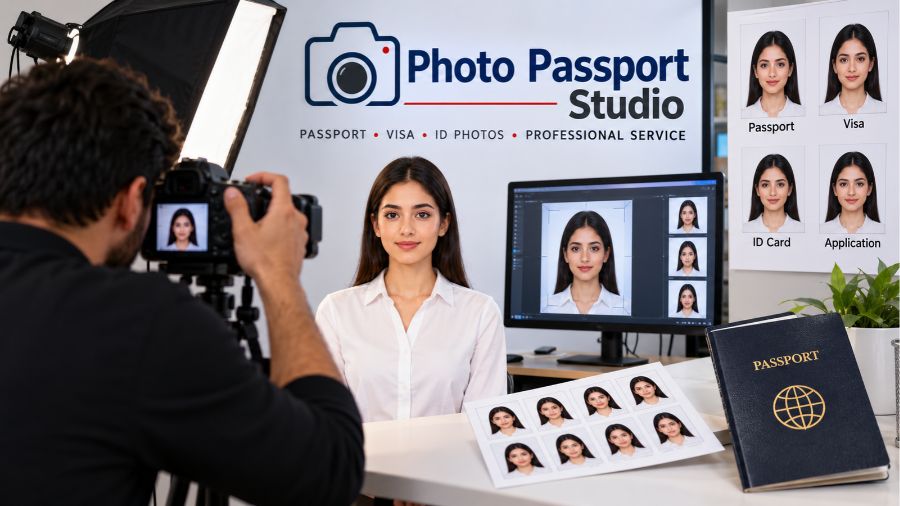
Photo Passport Studio refers to a photography studio or photo service that specializes in producing passport-size photographs for official identification, visa applications, immigration documents, and other administrative requirements. These studios help customers obtain correctly framed, clearly printed photographs that meet the specifications of the relevant issuing authority. Whether someone is applying for a new passport, renewing an existing document, or preparing an international visa application, choosing a reliable photo studio can make the process more convenient. Understanding how passport photography works, which services are available, what makes a photograph acceptable, and how to compare providers helps applicants avoid unnecessary delays and repeat visits.
What Is a Photo Passport Studio?
A Photo Passport Studio is a photography service designed to capture, prepare, and print identification photographs according to specific document requirements. Unlike ordinary portrait photography, passport photography focuses on accurate facial representation, consistent lighting, appropriate backgrounds, correct dimensions, and clear image quality. Depending on the business, services may include printed passport-size photographs, digital image files, visa photographs, identity card pictures, and photographs for professional or educational applications. The exact services vary by location, and customers should confirm that a studio understands the requirements of the country or organization receiving their documents.
Why Are Professional Passport Photo Studios Important?
Professional passport photo studios can make document preparation easier by providing suitable lighting, a controlled background, appropriate camera positioning, and photo-printing equipment. These factors help produce an image that clearly shows the applicant’s facial features without distracting shadows, excessive glare, or poor framing. Official passport authorities apply their own acceptance criteria, so professional photography does not guarantee approval. However, an experienced photographer who checks the relevant specifications can reduce avoidable mistakes. This is particularly useful for people applying for foreign visas, renewing passports, preparing immigration paperwork, or submitting photographs to institutions with strict identification requirements.
Services Offered by a Photo Passport Studio
Passport-Size Photography
Passport-size photography is the central service offered by many identification photo studios. The photographer captures a straightforward image of the applicant’s face and shoulders, then prepares the photograph in the dimensions required by the relevant authority. Customers may receive printed copies, a digital file, or both, depending on the package. The correct dimensions are not universal: a photograph suitable for one country’s passport application may not meet another country’s standards. Applicants should therefore identify the destination document before the photo session rather than assuming that every passport-size photograph follows the same format.
Visa and Immigration Photographs
Visa photography serves applicants preparing documents for travel, work, education, family visits, or immigration. Embassies and immigration authorities can specify different image dimensions, background colours, facial measurements, and digital file requirements. A photo studio may offer formats for several countries, but customers should name the destination country and visa type when placing an order. This helps the photographer select the appropriate specifications and avoid preparing a photograph in the wrong format. For applications involving several countries, separate photographs or digital versions may be necessary if the respective authorities have different requirements.
Digital Passport Photos
Digital passport photography is increasingly useful for applications completed through online portals. Depending on the authority, applicants may need a digital image with specific pixel dimensions, a maximum file size, an accepted file format, or a photograph submission code. Some studios provide digital files through email or a secure download, while others offer printed photographs only. Customers should ask for the original digital file and confirm that it meets the intended application’s technical requirements. They should also avoid unnecessary filters, face reshaping, or artificial background alterations because official identity photographs generally need to represent the applicant accurately.
Identity Card and Document Photography
Many photo studios also produce photographs for identity cards, employment documents, student records, membership cards, and professional registration applications. These images may resemble passport photographs but can follow different instructions concerning size, background, clothing, or facial expression. A studio that handles multiple document formats can be convenient for customers who need photographs for several purposes. Nevertheless, applicants should check the receiving organization’s instructions before ordering. A photograph that works for a school card or company identification badge should not automatically be assumed suitable for a passport or visa application.
Photo Printing and Additional Services
Some passport studios operate as broader photography and printing businesses. Alongside document photographs, they may provide photo printing, digital copies, photocopying, portrait photography, image scanning, or other basic document-related services. Availability depends on the individual business rather than the name Photo Passport Studio itself. Customers who require several printed copies can ask about paper quality, the number of photographs included, and whether cutting or sizing is part of the service. Confirming the final deliverables before paying helps prevent misunderstandings, especially when a digital file is required in addition to physical prints.
How to Choose the Right Photo Passport Studio
Choosing the right photo studio involves more than finding the nearest shop or the lowest advertised price. Customers should consider the photographer’s experience with official document photographs, the availability of suitable equipment, the quality of printed images, and the studio’s ability to follow country-specific requirements. It is also helpful to ask whether the service includes digital files, multiple prints, or corrections if the image does not match the requested specifications. Reading recent customer reviews can provide additional context about service quality, waiting times, and communication, although reviews alone cannot guarantee that a photograph will be accepted by a passport authority.
Check Experience and Equipment
An experienced document photographer should understand camera positioning, exposure, focus, background control, and accurate photo sizing. Suitable lighting helps reveal facial features clearly, while a stable camera position reduces distortion. The studio should also have a reliable way to prepare and print photographs at the requested dimensions. Customers can ask whether the photographer regularly handles passport and visa applications for their destination country. A professional appearance or expensive camera alone does not establish competence; attention to official requirements and careful preparation are more meaningful indicators of a suitable service.
Compare Prices and Packages
The price of passport photography can vary according to location, the number of printed copies, digital delivery, and additional services. Some studios may charge separately for printing or provide different packages for visa photographs and digital images. Rather than choosing exclusively by price, customers should compare what each package actually includes. Asking about turnaround time, file delivery, and any additional charges before the session helps avoid unexpected costs. Because no single worldwide price applies to passport photography, customers should contact local providers for current quotations rather than relying on a price advertised by a studio in another market.
Read Reviews and Confirm the Details
Customer reviews can help identify studios that communicate clearly, deliver orders promptly, and handle corrections professionally. However, a positive review does not prove that a studio follows every current passport requirement. Before booking, confirm the business address, opening hours, available services, payment options, and expected delivery time. Customers who require photographs for a particular embassy or online application should describe that purpose explicitly. This gives the photographer a chance to confirm whether the studio can meet the requested specifications before money and time are spent.
Essential Requirements for a Good Passport Photograph
A good passport photograph must provide a clear, accurate representation of the applicant while following the receiving authority’s technical and visual rules. Requirements can cover photograph dimensions, face position, background, lighting, expression, image recency, file format, and print quality. Many authorities require the applicant to face the camera directly, keep facial features visible, and use a plain, evenly lit background. The permitted size and precise rules differ between countries and document types, so a studio should work from the current instructions for the actual application instead of using one format for every customer.
Correct Photo Size and Framing
Photo dimensions and facial measurements are important because identification systems need a consistent view of the applicant’s features. For example, the United Kingdom generally requires passport photographs measuring 45 by 35 millimetres, while United States passport applications require a 2-by-2-inch photograph. These differences demonstrate why applicants should specify their destination country before the photograph is taken. Correct framing should include the required portions of the head and shoulders without accidentally cutting off the top of the head or placing the face too close to the edge.
Background, Lighting, and Image Quality
A plain, light-coloured background is common in passport photography, but the exact permitted colour depends on the issuing authority. Lighting should illuminate the face evenly without creating strong shadows, glare, or unnatural skin tones. The photograph should be sharp, properly exposed, and free from distracting objects or other people. Blurred images, visible shadows, and poor printing can make facial details difficult to assess. A professional studio can control many of these issues through appropriate lighting and camera placement, although the final photograph must still be checked against the relevant authority’s rules.
Facial Expression, Clothing, and Accessories
Many passport authorities require a forward-facing photograph with both eyes visible and the mouth closed, often with a neutral expression. Glasses, hats, head coverings, and other accessories are subject to country-specific rules. Some authorities permit religious or medical head coverings when facial identification requirements are met, while others have more detailed instructions about eyewear. Customers should explain any relevant circumstances before the session and follow the official guidance rather than relying on general advice from social media. Ordinary clothing is usually sufficient unless the specific document category has additional requirements.
Digital Editing and Authenticity
Passport photographs are identification records, not ordinary portraits, so appearance-altering edits can cause problems. Depending on the issuing authority, prohibited changes may include smoothing skin, removing marks, reshaping facial features, replacing the background, or using artificial intelligence to modify the image. Basic image preparation and technical processing may be treated differently across application systems, so customers should follow the precise rules that apply to their document. A responsible studio should prioritize faithful representation rather than promising to make an applicant look different. When in doubt, applicants should request an unaltered photograph that accurately reflects their current appearance.
Photo Passport Studio Services for Different Countries
Passport photography becomes more complicated when customers apply for documents issued by different countries. Each authority determines its own acceptable photograph format, and a rule that applies to one passport cannot automatically be transferred to another. The United Kingdom, United States, Australia, and Pakistan use their own application procedures and photo guidance. A studio that serves international travellers should ask which passport or visa is involved and whether the application requires a printed photograph, a digital upload, or another delivery format. This approach is more reliable than assuming that a universally standard passport photograph exists.
UK Passport Photo Services
Applicants for a British passport may need a digital photograph for an online application or printed photographs for an application route that requires them. A photo shop or booth may provide a digital photo code that connects the image to the application, depending on the service offered. UK guidance emphasizes a clear, unaltered image with the correct framing and facial visibility. Applicants should check the current official instructions before ordering, particularly if they need a digital code rather than a standard image file. A studio should confirm that it supports the required submission method.
US Passport Photo Services
United States passport applications generally require a colour photograph measuring 2 by 2 inches, with additional requirements for background, image quality, facial position, and recency. Applicants must follow the rules for their specific application type, including any separate instructions for online renewal. A studio familiar with US passport photographs can help prepare the requested dimensions and print quality, but customers should verify the result before submission. Photographs that are blurry, heavily altered, incorrectly sized, or otherwise noncompliant can delay processing, so checking the current official guidance is an important final step.
Australian Passport Photo Services
Australian passport applications use detailed rules concerning photograph size, head measurements, lighting, print quality, and facial visibility. Professional photo providers are one option for obtaining suitable photographs, but the images must still meet the Australian Passport Office’s standards. Applicants should explain that the photographs are for an Australian passport rather than assuming a generic visa-photo package will be appropriate. They should also confirm the number of copies required and the acceptable production method. These checks are especially useful when preparing documents for family members or submitting photographs from outside Australia.
Pakistani Passport Photo Services
Applicants in Pakistan should distinguish between passport photographs taken during an in-person passport office process and photographs required for an online application. Pakistan’s Directorate General of Immigration and Passports describes an in-person process in which an official captures the applicant’s photograph as part of the application procedure. Its online services have separate document and image submission instructions. Anyone using a commercial studio should confirm the current requirements for the particular online application or foreign visa. This is particularly important when a digital file must meet a prescribed format or size limit.
Benefits of Using a Professional Photo Passport Studio
A professional photo studio can save time by combining image capture, preparation, and printing in one place. Customers who are unfamiliar with photo dimensions or facial positioning may benefit from the photographer’s experience and the studio’s controlled environment. A commercial provider may also offer several copies or a digital file for future administrative needs, depending on its policies. These advantages are most useful when the customer explains the document requirements before the session. Professional service is not a substitute for official instructions, but it can make the practical process more straightforward and reduce common photography errors.
Convenience and Time Savings
Using a studio allows customers to have a photograph taken and prepared without purchasing camera equipment or learning specialist printing techniques. Many providers can complete routine orders during a short visit, although waiting times depend on demand and the services requested. This convenience can be particularly valuable for people preparing multiple applications or helping children and older relatives with documentation. Customers with urgent deadlines should confirm turnaround time before travelling to the studio. They should also allow sufficient time to review the photograph and correct any issues before the application is submitted.
Consistent Quality and Printing
Professional photo studios can use controlled lighting, appropriate camera settings, and photo-quality printing equipment to achieve consistent results. Properly prepared photographs are generally easier to inspect than images that are poorly exposed or printed with visible defects. However, equipment alone does not guarantee compliance: the photographer must also use the right dimensions and follow the relevant document rules. Customers should inspect their prints for blur, marks, uneven lighting, and damaged edges before leaving. If a digital version is included, they should check that the file opens correctly and can be delivered in the required format.
Support for Families and Special Requirements
Families may need passport photographs for adults, young children, babies, or several applicants at once. Photographing young children can require extra patience because they may move, look away, or struggle to maintain the requested position. A studio experienced in child photography may make the process easier, although the applicable authority may allow certain exceptions for infants and young children. Customers with accessibility needs can ask whether the studio provides suitable seating, step-free access, or additional assistance. Any special accommodation should be discussed in advance so the provider can explain what is possible.
Photo Passport Studio Prices and What Affects the Cost
Passport photo prices depend on the country, city, business location, number of prints, digital delivery options, and level of service. A basic package may cover taking and printing the photograph, while another may include several copies or a digital file for online applications. Prices can also differ when photographs must follow specialized requirements for a foreign embassy or immigration application. Customers should compare complete packages instead of comparing headline prices alone. Because fees change and no verified universal rate exists for Photo Passport Studio, the most reliable approach is to request a current quotation from the chosen provider.
What Should a Passport Photo Package Include?
A suitable package should clearly state whether it includes the photography session, correctly sized prints, a digital copy, and any requested additional copies. Customers should ask whether the provider checks the photograph against the destination authority’s requirements or simply prints an image supplied by the customer. Digital delivery should also be clarified, including the file format and delivery method. If the photograph is intended for an online application, a standard digital image may not meet every technical requirement. Confirming these details before payment helps customers select a package that matches their actual needs.
How to Find Affordable Passport Photography
Customers can compare local photography shops, established printing businesses, and dedicated passport photo services to find a suitable price. It is worth checking whether the quoted amount includes all required copies and whether additional charges apply for digital files or special formats. A lower price can be attractive, but a photograph that needs to be taken again may cost more in the long run. Reviews, clear pricing, and familiarity with the relevant application are useful comparison factors. The best-value option is one that provides the required service accurately, transparently, and within the customer’s timeframe.
Common Passport Photography Mistakes to Avoid
Common problems include using the wrong photograph dimensions, choosing an unsuitable background, standing too close to the camera, allowing shadows to fall across the face, and submitting a blurred image. Other mistakes include wearing prohibited accessories, using an outdated photograph, and altering facial features with editing software. Even a photograph that looks attractive on a phone screen may fail an official inspection because of its framing or technical properties. Customers can reduce these risks by identifying the correct application requirements before the session and checking the finished photograph before submitting it.
Assuming One Photo Size Works Everywhere
One of the most frequent errors is asking for a generic passport-size photograph without naming the destination country. Different authorities can require different measurements, facial proportions, backgrounds, and submission formats. A photograph intended for a British passport, for example, does not automatically meet the dimensional requirements for a United States passport. Customers should tell the studio whether the image is for a passport, visa, identity document, or another application. If several documents are involved, the photographer should confirm whether separate versions are necessary.
Using Filters or Excessive Retouching
Social media filters and portrait-editing tools are designed to change or enhance appearance, which makes them unsuitable for many official identification photographs. Alterations that change facial characteristics, remove natural features, or replace the background may violate the receiving authority’s rules. Customers should not ask a studio to make the photograph artificially flattering at the expense of authenticity. Instead, they should focus on good lighting, correct positioning, and clear image quality. The photograph should accurately represent the applicant, with any permitted technical processing kept within the authority’s published requirements.
Leaving Without Checking the Photograph
Customers should review the finished image before leaving the studio. They can check that the entire required portion of the head is visible, the face is centred, the photograph is sharp, and the background looks uniform. They should also confirm the number of copies and whether the digital file has been provided when included in the package. This review cannot replace an official acceptance decision, but it may reveal obvious problems while they are still easy to correct. Applicants should keep the studio’s receipt and contact information until they have confirmed that the order is complete.
Photo Passport Studio vs. Taking Your Own Photograph
Taking a passport photograph at home can reduce direct service costs, but it requires careful attention to the relevant authority’s rules and technical specifications. A professional studio offers equipment and experience that may make correct framing, lighting, and printing easier to achieve. Neither approach guarantees acceptance, and some application routes impose particular requirements on the image or its production. Applicants should first check whether self-taken photographs are permitted. If they choose to take their own picture, they should follow the official instructions precisely and avoid submitting an image that has been altered in a prohibited way.
When a Professional Studio Is the Better Choice
A professional studio is a practical option for people who need printed photographs, are unfamiliar with document specifications, or want help positioning the camera and controlling the lighting. It may also be useful when preparing photographs for several family members or different visa applications. Customers should select a provider that understands their destination’s rules rather than relying solely on general photography skills. For applications with strict digital specifications, they should confirm that the studio can provide the correct file format and dimensions. This can make professional assistance especially worthwhile when the application is time-sensitive.
When Taking a Photo at Home May Work
A home photograph may be appropriate when the issuing authority permits self-photography and the applicant can meet all its requirements. The photographer needs a suitable background, sufficient lighting, a stable camera, and enough distance to avoid facial distortion. The final image must satisfy the authority’s rules for composition, dimensions, quality, and editing. Some application systems may also require a particular submission method or image code, making a simple photograph file insufficient. Applicants should therefore review the official instructions before deciding that a home photograph is the easiest option.
Privacy and Security When Using a Photo Passport Studio
Passport photographs contain personal information because they depict a person’s face and may be associated with identity documents or travel applications. Customers should consider how a studio stores, transfers, and retains digital files, particularly when photographs are sent by email or messaging applications. Before sharing additional identity documents, applicants should establish whether the studio actually needs them. It is sensible to choose a reputable provider, use a secure delivery method where available, and ask about file retention and deletion policies. A legitimate photo service should explain what it needs to complete the order without requesting unrelated sensitive information.
Protecting Digital Passport Photographs
Customers receiving digital photographs should store them in a private location and share them only through the channels needed for their application. They should avoid posting passport photographs publicly or sending them to unknown individuals offering unofficial processing services. If a studio uses a third-party delivery platform, customers can ask how their files are handled and whether links expire. Businesses should likewise limit access to customer images and follow applicable privacy requirements. Good handling practices help reduce unnecessary exposure of personal information, although they cannot eliminate every possible security risk.
Choosing a Trustworthy Provider
A trustworthy provider should communicate its prices, services, contact details, and delivery arrangements clearly. Customers should be cautious if a business guarantees passport approval, demands unrelated identity information, or offers to manipulate a photograph in ways that contradict official instructions. A studio can assist with photography, but it cannot control the decision made by a passport office or embassy. Applicants should keep the final responsibility for checking the relevant requirements and submitting accurate information. Clear communication and realistic promises are better indicators of a dependable service than exaggerated marketing claims.
The Future of Passport Photography Services
Passport photography continues to adapt as application processes increasingly combine physical documents with digital submission systems. Some authorities accept digital images uploaded online, while others require printed photographs or capture the applicant’s photograph directly at an official office. This means photography businesses may need to support different image formats, delivery methods, and customer expectations. Secure file handling, accurate digital preparation, and clear guidance are likely to remain important features of a useful service. The precise direction of the industry will vary by country, technology adoption, and changes in official identification procedures rather than following one universal model.
Digital Applications and Changing Customer Needs
Online applications can reduce the need for printed photographs in some circumstances, but they also introduce technical requirements that customers must understand. Image dimensions, file size, format, and submission procedures may all affect whether a digital photograph can be uploaded successfully. Studios that provide accurate digital files and explain what is included in their service can help customers navigate these requirements. However, digital convenience does not remove the need for an authentic, compliant image. Applicants should continue to use the latest instructions from the issuing authority as online application systems evolve.
The Continuing Role of Professional Studios
Professional studios can remain useful by offering reliable photography, document-specific preparation, printing, and practical assistance for customers who prefer in-person service. Their value depends on adapting to the needs of each application rather than treating all passport and visa photographs as identical. Businesses that combine technical competence with transparent pricing and responsible privacy practices can provide a helpful service. At the same time, customers benefit from understanding the rules themselves, because the final acceptance decision belongs to the relevant authority. Professional photography and informed preparation work best together.
Conclusion
Photo Passport Studio services help applicants prepare photographs for passports, visas, identity documents, and other official applications. Choosing a provider with suitable equipment, knowledge of destination-specific requirements, transparent prices, and responsible file-handling practices can make the process more convenient. Customers should verify the required dimensions, background, facial positioning, print quality, and digital format before ordering, because requirements differ between authorities. Professional photography can reduce common mistakes, but it cannot guarantee acceptance. The most reliable approach is to combine a carefully prepared photograph with the current official instructions for the document being requested.
Also Read: SEO Agency in USA Glorvix: Services, Reputation, and Key Insights
FAQs
1. What does a Photo Passport Studio do?
A Photo Passport Studio takes and prints photographs for passports, visas, identity cards, and other official documents, following the specifications requested by customers.
2. How much does a passport photo studio charge?
Prices vary by location, print quantity, digital delivery, and service type. Contact local studios for current prices and confirm exactly what each package includes.
3. Can a photo studio provide digital passport photos?
Yes, many studios offer digital photographs alongside printed copies. Confirm the required file format, dimensions, size limits, and submission method before ordering.
4. What should I wear for a passport photo?
Wear ordinary clothing that contrasts with the background and follow the destination authority’s instructions. Ensure your face remains visible and accessories comply with its rules.
5. Can passport photos be edited by a studio?
Passport photographs generally must accurately represent the applicant. Some authorities prohibit retouching or background replacement, so follow the applicable rules before requesting any editing.
6. How do I choose the best Photo Passport Studio?
Compare experience, pricing, reviews, print quality, digital delivery, and knowledge of your destination’s requirements. Confirm turnaround time and services before making an appointment.