
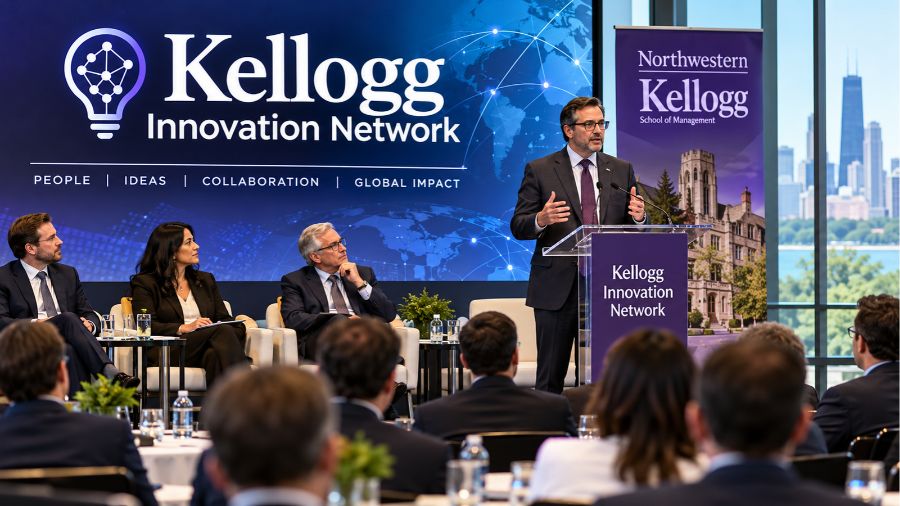
The Kellogg Innovation Network is an initiative that brought together business executives, entrepreneurs, academics, government representatives, and other influential individuals to explore new approaches to innovation and economic development. Established in 2003 at the Kellogg School of Management at Northwestern University, the network created opportunities for leaders from different industries and countries to exchange ideas and develop meaningful professional relationships. Its central philosophy emphasized collaboration, creative thinking, and the importance of innovation in addressing complex global challenges. Over the years, the Kellogg Innovation Network became associated with international summits, leadership discussions, and initiatives designed to encourage businesses and institutions to think beyond traditional boundaries.
The Origins of Kellogg Innovation Network
The Kellogg Innovation Network emerged during a period when organizations were increasingly recognizing that innovation required more than technological improvements or new products. Businesses needed to understand changing customer expectations, global competition, emerging markets, and the growing importance of collaboration. Founded in 2003, the network was developed to create a space where leaders could discuss these challenges and explore practical opportunities for progress. Its association with Northwestern University’s Kellogg School of Management provided an academic foundation for conversations about business strategy, entrepreneurship, and organizational development. Rather than concentrating exclusively on individual companies, the initiative encouraged participants to examine how cooperation between different sectors could generate broader economic and social benefits.
The Founders and Their Vision
Robert C. Wolcott and Mohanbir Sawhney were among the principal figures involved in establishing the Kellogg Innovation Network. Their professional backgrounds in innovation, business strategy, technology, and management helped shape the network’s intellectual direction. They recognized that important ideas frequently emerge when people with different experiences and expertise work together. Their vision was to encourage meaningful conversations between individuals who might not otherwise have opportunities to collaborate. By connecting business leaders with researchers, entrepreneurs, and representatives of other institutions, the network sought to create an environment where innovative thinking could develop into practical strategies. This emphasis on cross-industry collaboration became an important characteristic of its identity.
The Main Mission and Objectives
The primary mission of the Kellogg Innovation Network was to encourage innovation as a driver of business performance, economic development, and global prosperity. It aimed to help participants understand emerging opportunities, challenge conventional assumptions, and identify approaches that could create lasting value. The network also promoted the exchange of knowledge between people working in different professional environments. These conversations could cover subjects such as entrepreneurship, leadership, technological change, sustainability, and organizational transformation. By bringing together diverse perspectives, the initiative encouraged participants to consider problems from multiple angles. Its broader objective was to demonstrate that effective innovation depends not only on individual creativity but also on cooperation, strategic thinking, and the willingness to explore unfamiliar ideas.
Global Summits and Leadership Discussions
The Kellogg Innovation Network became particularly associated with its Global Summit, an event that brought together influential participants for discussions about innovation and worldwide challenges. These gatherings offered opportunities to exchange perspectives, examine emerging trends, and consider how organizations could respond to changing economic and social conditions. Participants included representatives from business, academia, government, and other sectors, creating conversations that extended beyond the concerns of any single industry. The summits encouraged leaders to think about the long-term consequences of their decisions and the potential benefits of cooperation. They also helped build professional connections that could support future discussions, partnerships, and collaborative initiatives.
The Importance of Cross-Industry Collaboration
One of the defining principles of the Kellogg Innovation Network was the belief that valuable ideas can develop when different industries share knowledge. A technology company, for example, may approach a problem differently from a university researcher, a manufacturer, or a nonprofit organization. Bringing these perspectives together can reveal opportunities that remain hidden when people work within isolated professional environments. The network encouraged participants to learn from one another, compare experiences, and explore solutions that could be adapted across industries. This approach was particularly relevant as organizations faced increasingly interconnected challenges. Collaboration offered a way to combine specialized knowledge, improve decision-making, and discover new possibilities for products, services, and organizational practices.
Innovation, Entrepreneurship, and Business Growth
Entrepreneurship and business innovation were important themes within the Kellogg Innovation Network’s broader activities. Organizations must continually evaluate whether their products, services, and business models remain relevant as customer expectations and competitive conditions change. The network encouraged leaders to consider new opportunities rather than relying exclusively on established methods. Discussions about entrepreneurship could help participants examine market needs, identify potential growth areas, and understand the importance of testing ideas before committing substantial resources. Innovation also involves recognizing that unsuccessful experiments can provide useful information. By encouraging thoughtful experimentation and strategic evaluation, the network supported conversations about how businesses could adapt, develop new capabilities, and pursue sustainable growth in changing markets.
Technology and the Changing Business Environment
Technological development has transformed how organizations communicate, produce goods, deliver services, and compete internationally. The Kellogg Innovation Network provided a setting for discussing the business implications of technological change and the importance of adapting to emerging opportunities. Innovation in this context extends beyond adopting new software or purchasing advanced equipment. It also requires organizations to reconsider their operating models, develop employee capabilities, and understand how technology affects customers and markets. Leaders must balance experimentation with responsible implementation, particularly when new technologies introduce uncertainty. Conversations about technology and business strategy helped highlight the relationship between creative thinking, organizational readiness, and the ability to respond effectively to a rapidly changing commercial environment.
Leadership and Organizational Transformation
Effective innovation depends heavily on leadership because new ideas often require changes in established processes, workplace culture, and decision-making practices. The Kellogg Innovation Network encouraged discussions about how leaders could create environments that welcome different perspectives and support constructive experimentation. Managers must communicate clear objectives while allowing employees sufficient freedom to investigate potential improvements. They also need to recognize resistance to change and explain why new approaches may be necessary. Organizational transformation can involve revising internal procedures, investing in employee development, or reconsidering long-standing assumptions about customers and markets. Leadership discussions within innovation-focused communities can help decision-makers recognize these challenges and develop more thoughtful approaches to managing change.
Global Challenges and Sustainable Prosperity
The Kellogg Innovation Network’s international perspective encouraged participants to consider challenges that cross national and organizational boundaries. Economic development, resource management, social progress, and environmental sustainability can require cooperation between businesses, public institutions, researchers, and community organizations. Individual organizations may possess valuable expertise, but complex problems often demand a combination of knowledge and resources. Conversations about sustainable prosperity encouraged leaders to consider how economic opportunities could be connected with broader social benefits. This perspective also highlighted the importance of long-term planning instead of focusing exclusively on immediate financial results. By bringing different stakeholders into the same discussions, the network helped promote a broader understanding of innovation and its potential contribution to society.
The Role of Northwestern University’s Kellogg School of Management
Northwestern University’s Kellogg School of Management provided an important academic setting for the development of the Kellogg Innovation Network. The school is known for its emphasis on management education, leadership, marketing, strategy, and collaboration. This environment offered a natural foundation for conversations about how organizations generate ideas and translate them into business value. The connection between academic research and professional experience was especially important because innovation can benefit from both theoretical understanding and practical knowledge. Business leaders can contribute real-world challenges, while researchers can offer analytical frameworks and fresh perspectives. This combination helped distinguish the network’s approach from ordinary business gatherings focused solely on networking or short-term commercial interests.
From Kellogg Innovation Network to The World Innovation Network
The story of the Kellogg Innovation Network also includes its relationship with The World Innovation Network, commonly known as TWIN. TWIN developed as an independent organization continuing the broader ambition of connecting leaders across business, government, academia, and other fields. This evolution reflects the idea that innovation communities can expand beyond their original institutional settings while maintaining their central principles. The relationship between KIN’s history and TWIN’s activities illustrates how professional networks can develop over time as their participants, partnerships, and objectives change. Anyone researching the Kellogg Innovation Network should distinguish its historical identity from its successor’s current organizational structure rather than automatically treating the two names as interchangeable.
The Lasting Influence of Kellogg Innovation Network
The lasting significance of the Kellogg Innovation Network lies in its emphasis on collaboration, leadership, and the exchange of ideas across professional boundaries. Its history demonstrates how structured conversations can bring people together to examine problems that are difficult to address through isolated efforts. The network also illustrates the importance of creating opportunities for executives, researchers, entrepreneurs, and public-sector representatives to learn from one another. Although participation in a network does not automatically produce successful innovations, access to different perspectives can help individuals recognize opportunities and reconsider assumptions. Its broader legacy is connected to the continuing need for communities that encourage thoughtful discussion, cross-industry learning, and responsible approaches to economic and organizational progress.
Also read: Corporate Training Programs: Types, Benefits, and Best Practices for Businesses
Conclusion
The Kellogg Innovation Network represents an important example of how academic institutions and business leaders can work together to encourage innovation and global collaboration. Founded in 2003, it created opportunities for people from different industries and professional backgrounds to discuss emerging challenges, exchange knowledge, and explore new approaches to business and social development. Its founders helped establish a vision centered on creativity, strategic thinking, and cooperation beyond traditional organizational boundaries. Through its summits and related activities, the network encouraged conversations about entrepreneurship, technology, leadership, and sustainable prosperity. Its relationship with The World Innovation Network provides an additional chapter in this history, demonstrating how the broader mission of connecting innovative leaders can continue to evolve as the global business environment changes.