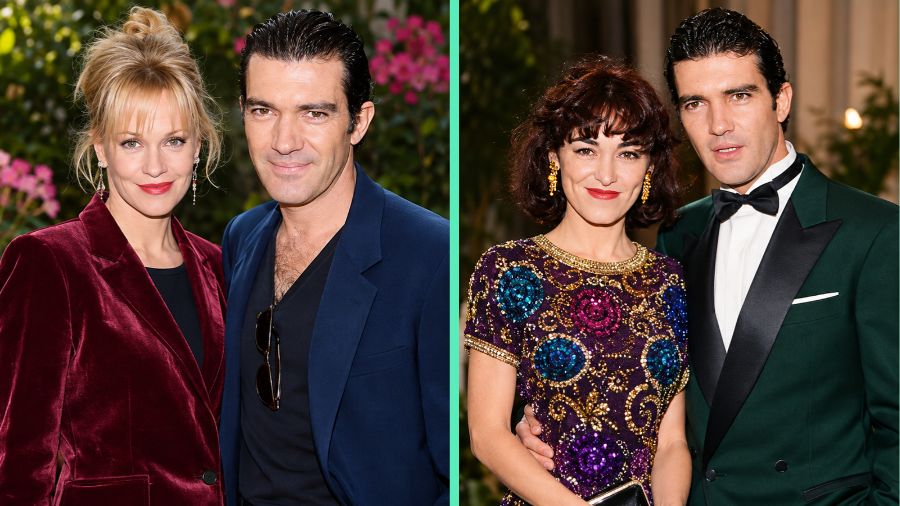
Ana Leza is a former Spanish actress best known as Antonio Banderas’ ex-wife and for her connection to the Spanish film industry during the 1980s and 1990s. Born in Madrid, Spain, she appeared in several notable productions, including Pedro Almodóvar’s Women on the Verge of a Nervous Breakdown. Her marriage to Banderas in 1987 brought her into the public spotlight, particularly during his early transition from Spanish cinema to Hollywood. Beyond their relationship, Ana played a supportive role in his career by helping him navigate English-language scripts. Following their divorce, she stepped away from acting, later married Dharma Villareal and focused on her family life. Her story offers an interesting look at her acting career, family background, marriage and life away from celebrity attention.
Quick Bio
| Category | Details |
|---|---|
| Full Name | Ana Arana Leza |
| Known As | Ana Leza |
| Profession | Former Spanish actress |
| Nationality | Spanish |
| Birthplace | Madrid, Spain |
| Birth Year | 1962, commonly reported but not independently confirmed |
| Education | Not publicly documented |
| Mother | Concha Leza |
| First Husband | Antonio Banderas |
| Second Husband | Christopher Lee Villareal, also known as Dharma Villareal |
| First Marriage | 27 July 1987 |
| Second Marriage | 26 November 2000 |
| Children | Two daughters with her second husband, according to Spanish media |
| Known For | Women on the Verge of a Nervous Breakdown and Of Love and Shadows |
| Public Status | Former actress who maintains a private lifestyle |
Who Is Ana Leza?
Ana Leza, whose full name is Ana Arana Leza, is a former Spanish actress recognised for her appearances in Spanish cinema and her previous marriage to internationally successful actor Antonio Banderas. Born in Madrid, Spain, she developed connections with the entertainment industry through her family background and acting work during the 1980s and early 1990s. Although her screen career included appearances in productions associated with respected filmmakers, her name became more widely recognised internationally through her relationship with Banderas, whom she married in 1987. Their marriage coincided with an important period in his professional development, particularly his transition from Spanish cinema to Hollywood. Leza was more than simply the actor’s first wife during those years, as she reportedly helped him overcome language difficulties and navigate opportunities in the American film industry. Their relationship eventually ended in divorce, and both followed different personal and professional paths. While Banderas continued building an international acting career, Leza gradually withdrew from public entertainment and established a new life with her second husband, Christopher Lee Villareal, also known as Dharma Villareal. Her story remains interesting because it connects Spanish filmmaking, an internationally recognised Hollywood career, and a personal decision to leave the spotlight. Despite continuing public curiosity, Ana Leza has consistently maintained a comparatively private profile, meaning that many details about her everyday life remain undisclosed.
Background in the Spanish Acting Profession
Ana Leza entered the entertainment industry during a period when Spanish cinema was experiencing considerable creative development following the country’s transition into a more open cultural environment. Madrid provided an important centre for theatre, television and filmmaking, and Leza’s family background offered a natural connection to this artistic world. Her mother, Concha Leza, was an established Spanish actress whose work included appearances in film and television productions. Growing up in a family connected to acting may have helped Leza become familiar with the professional environment, although detailed accounts of her childhood ambitions, formal training and early preparation for acting have not been publicly established. Her professional credits indicate that she worked across different types of screen productions rather than concentrating exclusively on one genre. During the 1980s, she appeared in Spanish television and film projects, gradually becoming associated with the country’s developing film industry. Her early credits include Fragmentos de interior and Teresa de Jesús, both television productions from 1984, followed by an appearance in Lorca, muerte de un poeta in 1987. These roles provide evidence of her professional activity before her best-known cinematic appearance. Unlike some performers who become household names through leading roles, Leza’s career consisted largely of supporting and smaller appearances. Nevertheless, working in established productions gave her an opportunity to participate in the creative environment surrounding some important Spanish filmmakers. Her professional identity should therefore be understood through her actual acting credits rather than solely through her later relationship with Antonio Banderas.
Marriage or Relationship with Antonio Banderas
Ana Leza’s relationship with Antonio Banderas became one of the most discussed aspects of her biography because their marriage took place before the actor achieved widespread international recognition. The couple married on 27 July 1987 at the Church of San Nicolás in Madrid, during a period when Banderas was developing his career in Spanish cinema. Their wedding reportedly attracted several familiar figures from the Spanish entertainment community, including actress Carmen Maura and filmmaker Pedro Almodóvar. At that stage, Banderas was becoming increasingly recognised through his collaborations with Almodóvar, while Leza was also pursuing acting opportunities. Their relationship developed alongside their professional lives, connecting two people who understood the demands and uncertainties of working in the entertainment business. As Banderas began considering international opportunities, their marriage entered a new chapter that involved travelling and adapting to unfamiliar professional environments. Leza accompanied him during important stages of this transition, and her language skills reportedly became particularly valuable when he started working in English-language productions. Their marriage lasted approximately eight years, although public accounts differ slightly over whether the divorce should be dated to 1995 or 1996. These differences appear in entertainment biographies and reporting, so the precise legal timeline should be treated carefully. What remains clear is that the relationship ended during the middle of the 1990s, after which Banderas continued his Hollywood career and eventually married actress Melanie Griffith. Leza, meanwhile, chose a considerably quieter direction for her life, making their separation an important turning point in her personal history.
Parenthood and Family Life
Family has become an important part of the publicly reported story of Ana Leza, particularly following her second marriage, although she has generally avoided discussing private family matters in detail. Her first marriage to Antonio Banderas did not produce children, according to published entertainment profiles. After their separation, Leza eventually established a relationship with Christopher Lee Villareal, a California-born professional associated with documentary filmmaking and audiovisual production. The couple married on 26 November 2000 in California in a private civil ceremony. Actress Carmen Maura reportedly served as the ceremony’s godmother, reflecting the continuing friendship between the two women. Spanish entertainment publications have reported that Leza and Villareal have two daughters, commonly identified as Clara María and Sofía Macarena. Their family life has received limited media attention because Leza and her husband have generally preferred to keep their children away from unnecessary publicity. Some reports have also mentioned that the family became interested in meditation and spiritual practices, including participation in Siddha Yoga. These accounts provide some context about their lifestyle, but they should not be interpreted as a complete description of their private beliefs or daily routines. Similarly, information about the daughters’ education, careers and present activities has not been consistently disclosed through reliable public interviews. Leza’s approach to family life illustrates the distinction between being connected to famous personalities and choosing to maintain personal boundaries. Rather than using her former marriage as a route to continued celebrity exposure, she appears to have concentrated on her family and a quieter existence outside mainstream entertainment.
Supporting Antonio Banderas Through His Early Hollywood Transition
One of the most interesting parts of Ana Leza’s biography concerns her involvement in Antonio Banderas’s early transition from Spanish cinema to Hollywood. When the actor began receiving opportunities in American productions, he faced a significant challenge because he had limited English-language ability. Although he possessed considerable acting experience, working in a different language required additional preparation, particularly when learning dialogue and understanding scripts. Leza was fluent in English and reportedly helped him translate scripts, understand dialogue and prepare for professional commitments in the United States. She also accompanied him during parts of his early international career, providing practical assistance as he adjusted to an unfamiliar industry. Her contribution became particularly relevant around The Mambo Kings, the 1992 musical drama that represented an important opportunity for Banderas in the American film market. In later accounts, Banderas acknowledged that his first wife helped him with the English-language script and gave him confidence during this period. Leza also explained in an earlier interview that accompanying him was important because he did not initially speak English while she was fluent in the language. Their partnership therefore involved more than the ordinary responsibilities of marriage, as she contributed directly to the practical preparation surrounding his international work. This aspect of their relationship deserves attention because discussions about celebrity marriages frequently concentrate on public appearances, romantic developments and eventual separations. In Leza’s case, her language skills and understanding of the entertainment environment provided meaningful support during an important professional transition. Banderas eventually developed the language skills necessary to work independently in Hollywood, but the early assistance attributed to Leza remains an important part of his career history and her own biography.
Life After Her Divorce from Antonio Banderas
Following the end of her marriage to Antonio Banderas, Ana Leza gradually moved away from the entertainment industry and began building a different personal life. The separation attracted public attention because Banderas was becoming increasingly successful in Hollywood, while their relationship had been closely connected to his early international career. Reports about the divorce have also discussed financial arrangements, including the Madrid property and financial provisions associated with their separation. However, accounts of the legal settlement differ in their presentation, and it is important not to treat every reported financial detail as independently established. What is more clearly documented is that Leza subsequently developed a relationship with Christopher Lee Villareal, a professional working in the audiovisual and documentary field. Their relationship eventually led to marriage in California in November 2000. This new chapter marked a significant change in her lifestyle, as she moved away from the public attention associated with Banderas and concentrated more on personal and family priorities. Spanish publications have reported that the couple spent periods living in different locations, including Madrid and the United States. Their changing circumstances also included an attempt to establish a restaurant business in Madrid during the early 2000s. The venture, known as Dossa Grill Café, was associated with the couple’s interest in developing a business outside traditional film work, although it did not become a lasting commercial success. These developments demonstrate that Leza’s life after divorce was not simply a story of disappearing from public view. She explored family responsibilities, business activities and a different professional environment before settling into a more private lifestyle. Her later decisions also help explain why contemporary information about her is considerably more limited than information about her former husband.
Career Highlights and Public Recognition
Although Ana Leza’s acting career was relatively brief, several of her screen appearances remain identifiable through film databases and Spanish cinema records. One of her best-known credits is Women on the Verge of a Nervous Breakdown, the 1988 comedy-drama directed by Pedro Almodóvar. The film became internationally recognised for its distinctive storytelling, performances and contribution to modern Spanish cinema. Leza appeared as Ana, a supporting character in the production, which also featured Carmen Maura, Julieta Serrano and Antonio Banderas. Her involvement in this project connected her with a filmmaker whose work became influential well beyond Spain. Another production associated with her career is El placer de matar, released in 1988, which represents part of her activity during the same period. She also appeared in Hay que zurrar a los pobres in 1991 and La reina anónima in 1992. Her later screen work included Sublet (1992) and Of Love and Shadows (1994), an international production featuring Jennifer Connelly and Antonio Banderas. In the latter film, she was credited as Evangelina under the alternative name Anita Lesa. She also had a small, uncredited appearance in Philadelphia (1993), the acclaimed legal drama starring Tom Hanks and Denzel Washington. Beyond conventional acting roles, Leza appeared in the 1991 documentary Madonna: Truth or Dare, which offered a behind-the-scenes look at Madonna’s career and personal world during her Blonde Ambition Tour. These credits show that her professional work extended beyond a single Spanish production or her association with Banderas. Nevertheless, there is no strong evidence that she pursued a long-term acting career after the mid-1990s. Her decision to leave the profession meant that her filmography remained relatively limited, but her appearances continue to attract interest among people researching Spanish cinema, Almodóvar’s collaborators and Antonio Banderas’s early career.
The Influence of Concha Leza on Her Background
An important part of understanding Ana Leza’s background is recognising her connection to her mother, Concha Leza, whose career also involved Spanish acting and screen production. Concha Leza, whose birth name is María de la Concepción Leza Núñez, worked in film and television and became associated with several productions across different periods. Her credits include Historias para no dormir (1966), El puente (1977) and Outrage (1993). This artistic family connection provides useful context for Ana’s early involvement in acting, although there is insufficient public information to establish exactly how much professional guidance or training she received from her mother. The entertainment industry can be difficult for newcomers, particularly when they are trying to establish professional identities independently of family connections. Ana’s screen credits show that she pursued her own opportunities and participated in several productions rather than relying entirely on her mother’s reputation. Her relationship with Concha also became relevant during the period when Leza moved away from acting and concentrated on family life. However, detailed interviews about their private relationship, shared experiences or personal influence are not widely available. It would therefore be inaccurate to construct an elaborate account of their family history without reliable documentation. What can reasonably be established is that both women were connected to Spanish acting, giving Ana a family background that helps explain her familiarity with the entertainment world. Their shared professional connection is also an interesting detail for readers exploring the broader history of Spanish television and cinema. Concha Leza’s career should be recognised independently, rather than treating her solely as the mother of Antonio Banderas’s former wife.
Why People Search for Ana Leza
Interest in Ana Leza continues because her biography connects several subjects that attract attention from film enthusiasts and celebrity biography readers. The most obvious reason is her marriage to Antonio Banderas, whose career developed from Spanish productions into internationally successful films. People researching Antonio Banderas’s personal history often want to understand his first marriage, particularly because Ana was part of his life during the years preceding his Hollywood breakthrough. Another reason is her reported contribution to his English-language preparation, an interesting detail that offers a different perspective on the early stages of his American career. Her filmography also attracts attention from viewers researching Pedro Almodóvar’s productions, particularly Women on the Verge of a Nervous Breakdown. In addition, her appearances in Philadelphia and Of Love and Shadows connect her with internationally recognised films. Searches involving Dharma Villareal frequently reflect curiosity about her life after the divorce and her second marriage in 2000. Her family connection to Concha Leza provides another reason for interest, particularly among readers researching Spanish acting families. The fact that she has largely avoided public appearances and interviews also contributes to curiosity about her present circumstances. Unlike many people associated with internationally famous actors, Leza has not maintained a regular media presence or built a public identity around her former marriage. This creates a biography in which the documented historical events are considerably easier to establish than details about her current personal activities. For readers, the most useful approach is to understand her through her acting credits, family background, documented marriages and reported contribution to Banderas’s early career rather than relying on sensational claims about her private life.
Privacy, Accuracy and Public Information
Ana Leza’s biography requires a careful distinction between documented professional information, established relationship history and details reported by entertainment publications. Her acting credits, birthplace, birth name and marriage information are available through established film databases and Spanish media coverage, but not every personal detail has the same level of verification. For example, 1962 is frequently given as her birth year, yet a dependable primary source confirming her complete date of birth is not readily available. Her educational background, detailed childhood experiences and personal ambitions have also not been publicly documented in sufficient detail. Similarly, reports about her daughters and family arrangements provide useful historical context, but they should not be expanded into unsupported claims about their current lives. Information about her second husband appears under different forms of his name, including Christopher Lee Villareal, Dharma Villareal and Chris Villareal. These references generally concern the same person, but the distinction between his professional name and personal or spiritual name should be maintained. Her current residence has also been described differently in publications from different years, making it inappropriate to present an older location as a confirmed current address. Another area requiring care is the financial settlement following her first divorce, as reports contain specific claims that should not be treated as a substitute for publicly available legal documentation. There is also no dependable public evidence establishing a verified net worth for Leza. Respecting these limitations makes her biography more useful and trustworthy because it prevents speculation from being presented as fact. Her decision to maintain privacy should not be interpreted as evidence of any particular personal circumstance. Instead, the available information should be presented with appropriate context, recognising that a person who once appeared in films and married a famous actor is still entitled to a private life.
Also read: Paula Profit: The Entrepreneurial Story Behind Charlie Sheen’s Family
Conclusion
Ana Leza’s story is an interesting part of the history of Spanish cinema and Antonio Banderas’s journey towards international success. Known for her acting appearances in productions such as Women on the Verge of a Nervous Breakdown and Of Love and Shadows, she established a professional identity during the 1980s and early 1990s. Her marriage to Banderas brought her into the public spotlight, but her contribution to his early Hollywood transition provides an equally important part of their shared history. Her fluency in English and assistance with scripts reportedly helped him navigate the challenges of working in American productions. After their divorce, Leza chose a different direction, marrying Dharma Villareal in 2000 and reportedly raising two daughters while maintaining a much quieter lifestyle. Her connection to actress Concha Leza also places her within a family with a history in Spanish entertainment. Although many details about her present circumstances remain private, her documented career, family background and personal milestones provide a meaningful picture of her life. Ana Leza is therefore more than simply Antonio Banderas’ ex-wife; she is a former actress whose own professional experiences and decisions deserve recognition.
FAQs
1. Who is Ana Leza?
Ana Leza is a former Spanish actress recognised for her film appearances and her first marriage to internationally renowned Spanish actor Antonio Banderas.
2. Was Ana Leza Antonio Banderas’ first wife?
Yes, Ana Leza was Antonio Banderas’s first wife. They married in Madrid on 27 July 1987 and divorced during the mid-1990s.
3. Who is Ana Leza’s second husband?
Ana Leza married Christopher Lee Villareal, also known as Dharma Villareal, in California on 26 November 2000.
4. Who is Concha Leza?
Concha Leza is Ana Leza’s mother and a Spanish actress known for her appearances in television and film productions.
5. Does Ana Leza have children?
Yes, Spanish entertainment publications report that Ana Leza and her second husband have two daughters, identified as Clara María and Sofía Macarena.
6. What movies did Ana Leza appear in?
Her recognised screen credits include Women on the Verge of a Nervous Breakdown, El placer de matar, Philadelphia and Of Love and Shadows.