
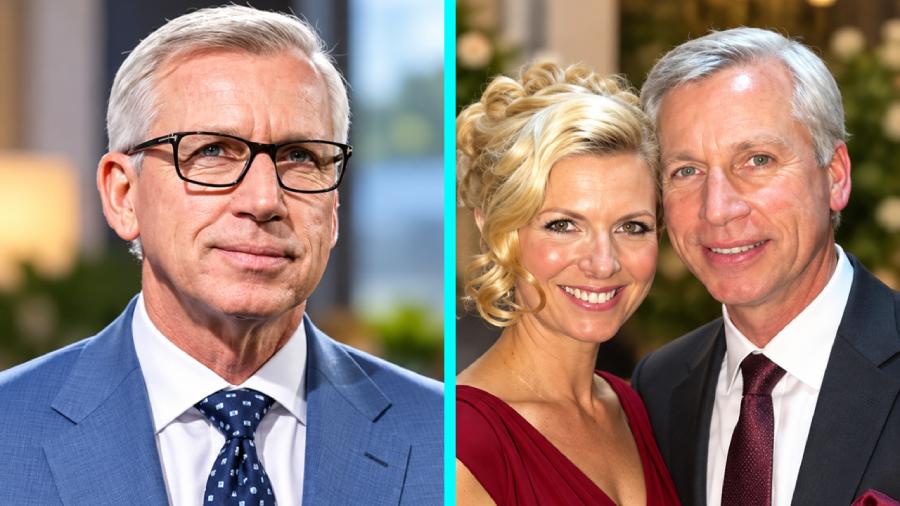
Alan Pardew is an English association football manager and former footballer whose career stretches from Sunday-league obscurity in south London to the Premier League Manager of the Season award, and readers searching for him today usually want two things at once: a clear account of a long, turbulent coaching journey across England, the Netherlands, Bulgaria and Greece, and reliable information about the private life behind it, particularly his marriage to Tina Pardew. This article brings both together, drawing only on information that has genuinely been made public, and stating plainly where details have never been disclosed rather than filling the gaps with guesswork.
Quick Bio
| Detail | Information |
|---|---|
| Full Name | Alan Scott Pardew |
| Known As | Alan Pardew, “Pards” |
| Profession | Football manager, former professional footballer, television and radio pundit |
| Nationality | English (British) |
| Birthplace | Wimbledon, London, England |
| Date of Birth | 18 July 1961 |
| Age | 65 (as of September 2026) |
| Playing Position | Midfielder |
| Height | 6 ft 0 in (1.83 m) |
| Education | Not publicly detailed; worked as a glazier while playing non-league football |
| Spouse | Tina Pardew |
| Relationship to Keyword 2 | Tina Pardew is his wife; she is Swedish |
| Children | Two daughters |
| Known For | Managing Newcastle United, West Ham United and Crystal Palace; 2011-12 Premier League Manager of the Season |
| Most Recent Club Role | Manager of Aris Thessaloniki (2022 to 2023) |
| Current Status | Working as a football pundit and analyst |
| Public Presence | Regular media contributor with Sky Sports and talkSPORT |
Who Is Alan Pardew?
Alan Pardew is one of English football’s most recognisable and most argued-about figures, a manager whose name tends to provoke an immediate opinion from supporters of any of the ten clubs he has led. Born in Wimbledon on 18 July 1961, he did not follow the conventional academy route into the professional game; he was still working as a glazier and playing part-time when most future top-flight managers were already full-time professionals. That late arrival shaped everything that followed, giving him a reputation as a coach who understood players from outside the elite pathway and who rarely took a job for granted. Over 859 matches as a manager he recorded 351 wins, a win rate of just under 41 per cent, across Reading, West Ham United, Charlton Athletic, Southampton, Newcastle United, Crystal Palace, West Bromwich Albion, ADO Den Haag, CSKA Sofia and Aris Thessaloniki. His public profile has always carried a double edge: genuine peaks, including an individual award no other English manager has matched in the same Premier League season, alongside well-documented touchline incidents that drew fines and bans. Away from the game, Alan Pardew has kept his home life quiet, and his wife Tina Pardew has never sought the spotlight that came with his career.
Background in Football Management
Alan Pardew’s coaching career grew directly out of a playing career built on persistence rather than privilege, and understanding the first explains the second. He came through Whyteleafe, Epsom and Ewell, Corinthian Casuals, Dulwich Hamlet and Yeovil Town, even stepping away from the game for around six months to work in the Middle East before returning, and he represented England at semi-professional level during that period. Crystal Palace signed him in 1987 for a fee of £7,500, and he repaid it with promotion in 1989 and the extra-time winner against Liverpool in the 1990 FA Cup semi-final at Villa Park, a 4-3 result still replayed every spring. He later joined Charlton Athletic, where he was top scorer in 1992-93, before finishing at Barnet and Reading. Management began almost by accident: he was Reading’s reserve-team boss when he took caretaker charge in March 1998, losing his first match 0-2 to Huddersfield Town, and was appointed permanently in 1999. From there came promotion with Reading, the contested move to West Ham in 2003 that briefly reached the High Court, promotion and an FA Cup final with the Hammers, and eventually the Newcastle job in December 2010 that made him a household name. Every step was earned in stages rather than handed over.
Marriage and Relationship with Tina Pardew
Alan Pardew is married to Tina Pardew, who is Swedish, and their marriage has been referenced in mainstream reporting for two decades without ever becoming a media story in its own right. Reliable public sources confirm the marriage and Tina’s Swedish nationality, but almost nothing beyond that has been disclosed: her maiden name, date of birth, profession, the year the couple married and the circumstances of how they met have not been made public by either of them, and any site presenting such details as fact is going beyond the verifiable record. The most notable moment when Tina Pardew entered the public conversation came in March 2006, when Alan Pardew questioned Arsenal’s lack of English players and Arsène Wenger suggested his comments were xenophobic. Pardew rejected the accusation, and in doing so publicly cited his own marriage to a Swedish woman as evidence that the charge did not fit him. It is a small episode, but a telling one: it is one of the very few occasions when his private life was invoked in a professional dispute, and it illustrates how consistently the couple have otherwise kept their relationship separate from his working profile. Beyond that, Tina Pardew has no known public role, media presence or career in football.
Parenthood and Family Life
Alan Pardew and Tina Pardew have two daughters, a fact confirmed in national newspaper reporting, and that single line is very close to the sum of what the couple have chosen to share about their family. Their daughters’ names, ages, education and occupations have not been publicly disclosed by the family, and out of respect for two people who are not public figures this article does not speculate about them. What can be said fairly is that Pardew’s family life has been lived against an unusually mobile professional backdrop. Between 1999 and 2023 he worked in Reading, east London, south-east London, Southampton, Newcastle upon Tyne, the West Midlands, The Hague, Sofia and Thessaloniki, a pattern of relocation and short-notice dismissal that is standard in football management and unusually disruptive for any household. Managers in his position routinely describe the strain that repeated moves and public criticism place on a family, and Pardew has spoken in general terms across his career about the pressures of the job, while consistently declining to place his wife and children in front of cameras. That restraint appears deliberate and has been maintained even during the periods when his own name dominated back pages for weeks at a time.
Supporting Through the Pressure of Public Scrutiny
The hardest chapter of Alan Pardew’s public life came during his final year at Newcastle United, and it offers the clearest sense of what the years of intense scrutiny must have meant at home, even though the family has never discussed it. After winning Premier League Manager of the Season and LMA Manager of the Year for 2011-12 and signing an eight-year contract in September 2012, he watched the mood turn completely. Newcastle lost 15 of 21 competitive fixtures across the back half of 2013-14, supporters directed sustained personal abuse at him during the final home game of that season, a local newspaper described it as arguably the worst treatment any Newcastle manager had endured at a match, and by September 2014 a group of fans had launched a website campaigning for his dismissal and printed 30,000 leaflets calling for him to go. He also carried the consequences of his own conduct, including a £100,000 club fine, a £60,000 FA fine and a seven-match ban after headbutting Hull City’s David Meyler in March 2014. How Tina Pardew experienced that period has never been publicly described, and it would be wrong to invent an account of it, but the sequence makes clear the kind of pressure that surrounded the household before he moved to Crystal Palace at the end of 2014.
Life After Full-Time Club Management
Alan Pardew’s most recent job in club football ended in February 2023, when he left Aris Thessaloniki by mutual consent after five months in Greece, and since then he has settled into a second career in the media rather than chasing another dugout. That transition was not new territory for him, since he had already worked as a Sky Sports pundit through the 2017-18 season before West Bromwich Albion appointed him, and audiences responded well to a manager willing to explain decisions from the inside rather than simply criticise them. Through 2026 he has remained a familiar broadcast voice, offering analysis on Sky Sports and talkSPORT, giving his predictions for the World Cup on Sky Sports Breakfast in June 2026, and commenting regularly on the fortunes of his former clubs, including a widely reported verdict that Newcastle United were denied a deserved win by a soft penalty in their draw with Liverpool in August 2026. His punditry draws on a rare breadth of experience: promotion campaigns, relegation fights, cup finals, European nights, and coaching in Dutch, Bulgarian and Greek football. Whether he returns to management has not been confirmed, and he has made no publicly announced retirement from coaching.
Career Highlights and Public Recognition
The high points of Alan Pardew’s career are substantial enough to survive the arguments that surround him, and they span both sides of the white line. As a player he won promotion with Crystal Palace in 1989, scored the semi-final winner that took them to the 1990 FA Cup final, played in Palace’s highest ever league finish of third in 1990-91 and lifted the Full Members’ Cup at Wembley. As a manager he took Reading up from the third tier, won promotion to the Premier League with West Ham through the 2005 play-off final and led them to the 2006 FA Cup final, where they lost to Liverpool on penalties after a 3-3 draw widely regarded as one of the great finals. He won the Football League Trophy with Southampton in 2010, the club’s first silverware since 1976. His peak arrived at Newcastle in 2011-12, when he guided the club back into Europe and became the first Newcastle manager to win Premier League Manager of the Season, taking the LMA Manager of the Year award in the same campaign. At Crystal Palace he delivered their best ever Premier League finish of tenth in 2014-15 and reached a third FA Cup final in 2016. In total he reached three FA Cup finals and won promotion three times.
Why People Search for Alan Pardew
Searches for Alan Pardew come from several distinct directions, which explains why results about him are often a confusing mixture. Supporters of Newcastle United, West Ham United, Crystal Palace, Charlton Athletic, Southampton, Reading and West Bromwich Albion each remember a different version of him, and many are simply checking what he is doing now or looking for his verdict on a current match, since his punditry regularly generates headlines. Others arrive after seeing archive footage of the 1990 FA Cup semi-final or the 4-4 comeback against Arsenal in 2011 and want the background to a name they half recognise. A third group is searching for the personal side, typically with queries about his wife, his family or his nationality, which is where the name Tina Pardew most often appears alongside his. There is also a persistent stream of interest in the controversies, from the touchline confrontations with Arsène Wenger to the Meyler incident, and in his decision to leave CSKA Sofia in June 2022 after bananas were thrown at the club’s black players by their own supporters, a departure he made alongside his assistant Alex Dyer. The breadth of that interest is exactly why accuracy matters when writing about him.
Privacy, Accuracy and Public Information
Anyone researching Alan Pardew online quickly runs into a problem that deserves stating openly: a large amount of what is published about his private life is unreliable. Aggregator biography sites contradict each other on basic points, some claim he has no children when reputable reporting confirms two daughters, others misspell his wife’s name or attach unverified net worth figures to him, and one widely copied page states both that he is married and that he has never been engaged. This article deliberately restricts itself to details that appear in credible, checkable sources, which is why the entries on Tina Pardew are short. She is Swedish, she is married to Alan Pardew, and the couple have two daughters; her professional background, birth details, family origins and current activities have not been publicly disclosed, and nor have any details about their daughters. Tina Pardew is a private individual who has not sought public attention, and treating her that way is both the ethical and the accurate approach. Readers who encounter confident, specific claims about her elsewhere should treat them with caution unless they are traceable to a named, reputable source rather than to another biography aggregator repeating the same unsourced text.
Conclusion
Alan Pardew’s story is ultimately one of persistence: a glazier from Wimbledon who was still playing non-league football in his mid-twenties, who reached three FA Cup finals, who became the only English manager to win both the Premier League Manager of the Season and LMA Manager of the Year awards in a single campaign, and who kept working through sackings, protests and self-inflicted setbacks across four countries. It is also a story with a deliberately quiet private half. His marriage to Tina Pardew has lasted through every relocation and every hostile season, yet almost nothing about it has been placed in public view, and the couple’s two daughters have been kept entirely out of the coverage. That contrast is worth respecting rather than filling in. What is documented about Alan Pardew is rich enough on its own, and what has not been shared about Tina Pardew and their family is not a gap for anyone else to complete.
Also read: Riley Mandel: The Inspiring Journey of Howie Mandel’s Daughter in Wellness
FAQs
Who is Tina Pardew?
Tina Pardew is the wife of English football manager Alan Pardew. She is Swedish, and the couple have two daughters together. She is a private individual with no public career profile.
How long have Alan Pardew and Tina Pardew been married?
The exact wedding date has never been publicly disclosed. Their marriage was already being referenced in national reporting by 2006, when Pardew mentioned his Swedish wife during a dispute with Arsène Wenger.
Does Alan Pardew have children?
Yes. Alan Pardew and Tina Pardew have two daughters, confirmed by reputable reporting. Their names, ages and occupations have not been publicly disclosed, and the family keeps them out of media coverage.
What was Alan Pardew’s greatest managerial achievement?
The 2011-12 season with Newcastle United, when he returned the club to European competition and won both Premier League Manager of the Season and LMA Manager of the Year, a unique English double.
What is Alan Pardew doing now?
He works as a football pundit and analyst, appearing on Sky Sports and talkSPORT. His last club role was managing Aris Thessaloniki in Greece, which ended in February 2023.
Which clubs did Alan Pardew manage?
Reading, West Ham United, Charlton Athletic, Southampton, Newcastle United, Crystal Palace, West Bromwich Albion, ADO Den Haag in the Netherlands, CSKA Sofia in Bulgaria, and Aris Thessaloniki in Greece.